Tag: Team

  • The Talisman of Leadership – Everything you need to know

    The Talisman of Leadership – Everything you need to know

    The Talisman of leadership is needed as although there is So much of the work-oriented culture around, still, most people believe in some magic and luck factor. There goes the word ‘talisman’ of a leader as high and parallel to the word ‘effort’.

    To a maximum extent, we cannot ignore luck and magic when it comes to delivering the output. But, yet there are few qualities in a particular area of the workforce that are termed talisman.

    Like say, leadership, all good decisions and a welcoming team effort can assure the best result out. 

    WHAT’S IN IT?

    Qualities of a leader

    The qualities of being a leader are so vivid and diverging that no one can sink in all the details of being a leader by just going through one blog. The magic and the special powers that leadership provides is any day admiring and influential.

    When we roam around on the ground level, we see the people going through different styles of handling leadership positions. Some being result-oriented, and some being process-oriented.

    A good leader can backpack some essential qualities, like interactive communication, empathy, gratitude, and decision-making. A reasonable observer who can easily differentiate between factual details and an individual’s opinion can be a well-suited leader.

    While taking a tough call or a new decision, one should be well equipped with the data available regarding the same and at the same time. Also, one should be responsive enough towards the opinions provided by their team members and there comes a significant part of the interactive competition.

    A Good Motivator
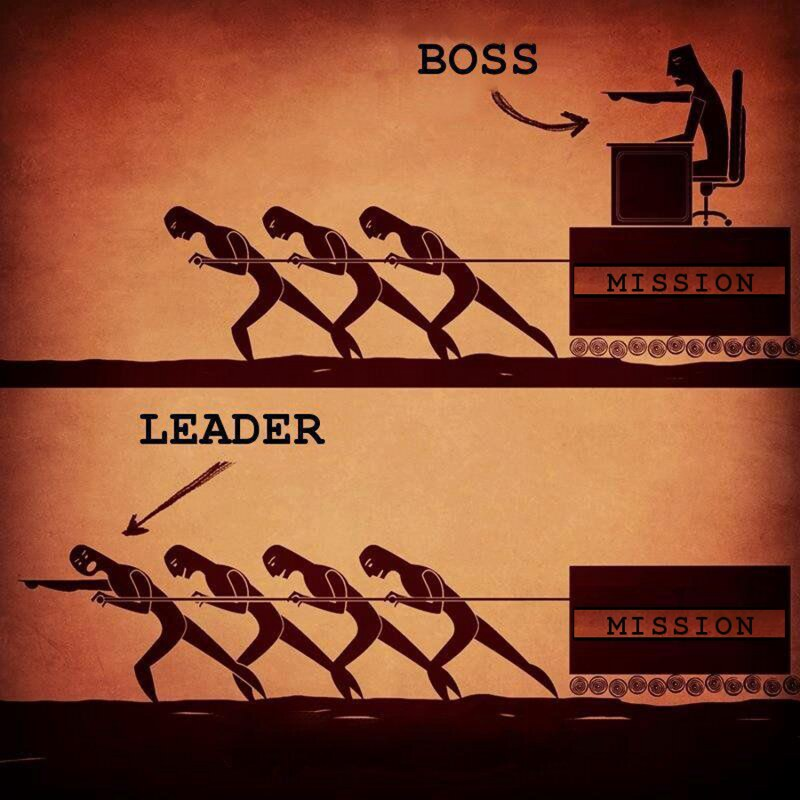
    image depicting difference between a leader and a boss.

     More or less, a good doer is a good motivator. Instead of just asking what to do, one of the talismans of leadership is the self-improving quality to inspire the other teammates to expand well enough and fit well in their leader’s space.

    Like in the case of one of the top cricket teams, India has appointed the captain as Virat Kohli, who has held his fitness standards so high that other players need to raise themselves close to him to do well in cricket.

    When it comes to the decision-making dilemma, everyone is a noob at the start and only grows and learns with experience. But how they carry forward their mind and handle their responsiveness towards the critical situation shows one of the leader’s magical and admiring traits. 

    So, what else makes a leader worth admiring and believing?  It’s the gratitude and the well-settled understanding of empathy of a leader who handles even messy situations.

    Authentic Leaders

    Some leaders are complete with their characters. Such leaders are also termed, authentic leaders. Such leaders are skilfull and contain sheer brilliance in handling difficult situations.

    They know the do’s and don’t s of the project. 

    Authentic leaders also believe in promise-keeping and reliable delivery of the product. They don’t compromise with transparent communication and work ethics.

    Team Leaders resonating with Team Members

    image depicting teamwork

    For situations like starting a business or moving to a transition, the start of anything is always self-motivating and disciplined. But being motivated and disciplined throughout the process is quite a tough job. In that case, a leader should be influential and entertaining enough to keep the process inflow.

    Added to the quality of decision making and interactive communication, a good leader also possesses some embedded qualities like the talisman to the particular purpose like gratitude and backing your team members.

     Like, amid this COVID situation, one of India’s leading entrepreneurs and the global head of TATA industries, Mr Ratan Tata. He has stated quite boldly that layering employees in this lockdown crisis are never a good idea. Because the company, as well as the customers, have developed goodwill with the employees.

    These employees are the people who have worked on the ground level for all these years, and it’s high time the companies should support them.

    Years before, in a very different field than business. In cricket, the two most successful captains of the Indian Cricket Team, Sourav Ganguly and MS Dhoni may have varying styles, varying techniques, and varying attitudes. Still, they share what they share as a good leader backing their team members. 

    Decision and Celebration

    It’s always said that a team or a company is as good as a leader, and there are several living examples in the world right now that state the same. They are skilfull as well as decisive in nature and can take decisions quickly. Most of the great leaders are process oriented. They always remind themselves about the sustainability of the situation.

    When you thoroughly equip yourself with the attitude you pursue, when you engage and dedicate yourself entirely towards the team you work with, a few faults can always be ignored. At any point, one can easily say that good luck favours the brave.

    Leadership also comprises how you celebrate again or win and handle the criticism and take the blame for any loss. Mostly it is seen that a great leader puts their team forward when it comes to getting an appraisal. Also, at the same time, he/she stands like a shield between them and any type of criticism.

    Leadership skills also comprise putting the right people in the right place at the right time for the work to be accomplished.

    The Hidden Charisma

    More or less, a leader is a kind of magician who’s whole effort is behind the scenes. His actions mainly do not reflect the final result. Rather than the output, but in the absence of a leader, the same work might get many minor bugs and toughs to process to the product.

    The main work of most leaders is not to do the activity by themselves. But they are supposed to find the best people for the role. Also, it is their primary role to bring out the best in them with their leadership.

    Conclusion

    We can see at the surface of any project the techniques and the team members’ efforts. Whereas what one cannot see is the guidance, the overnight ideas and the decisions taken by the team leader.

    Any day, we can slander or blame the team leader for results not going in favour. But at the same time, we could never deny the fact that great leaders build significant territories.

    One can gain Technical skills through practice recursively. At the same time, one can only nourish his/her leadership skills. That’s the magic or one can call “The talisman of Leadership”.

    At last, I would quote one of the most exemplary American author John Maxwell on his idea of leadership-

    “The pessimist complains about the wind. The optimist expects it to change. The leader adjusts the sails.” 

    Also, you can read our blog on How to develop a Competitive leader for the future?

    FAQ’s

  • Everything about strength-based leadership – Best qualities of a leader

    Everything about strength-based leadership – Best qualities of a leader

    The word leadership qualities can bring many meanings to your mind. Like a political leader leads youth for their interest by their strength-based leadership skills or a team leader leads the team for mutual success. 

    One can achieve their dream and goal by a leading team no matter how evil their plan will be. Leaders not only help themselves but also help their section to achieve mutual goals. Leaders set goals, direction, build a vision and create something new. Leadership is all about figuring out what you want, where you want to go. And last but not least how to win with their team and organisation.

    Leaders guide and inspire team members and manage their team by management skills to recommend them to achieve a common goal. This article will learn about strength-based leadership, but before that, we have to know what leadership is. 

    WHAT’S IN IT

    What is Meant by Leadership: 

    Although there are many definitions of leadership out there, only a few are accepted, according to leadership and performance beyond expectations book by James McGregor Burns in 1981. The ideal leader does the following.

    • Set clear goals.
    • Know when to stop. 
    • Know what to say in front of team members. 
    • Show a big picture of the end goal or show vision to team members. 
    • Builds a team and teaches them to achieve a common goal with other team members. 
    • And has high expectations. 

    What are the Leadership qualities: 

    Many people still believe an organisation is born to be a leader. No one knows how it can be possible, but there are some qualities that you can practise to become a good leader.

    Here are some leadership qualities:

    Confidence: 

    To achieve a common goal, you ensure that you have the confidence to guide your organisation and team. As energy confidence also travels from leaders to team members. If you are not confident enough about your goal and step, you can’t achieve your goal.

    Honesty: 

    When we are small, our teachers and parents taught us early that honesty is the best policy. But how many of you follow this policy? Without honestly, a team can’t achieve a goal, whether it is a football team or an army. Integrity and honesty is the main ingredient that decides the chances of your team success. 

    image of a team

    Passion: 

    The only difference between successful and unsuccessful men is passion besides hard work. If your team senses that you are not passionate about a goal, it would be tough for your team and organisation to achieve it. The best way to show your team that you are intense enough is to take the first step towards your goal and work hard then your average team members. 

    Communication: 

    While passion and hard work help you to be a successful team leader, at the same time, communication helps to transfer passion and knowledge to your team members. Whether it is business or a relationship, the greater you are in contact, the greater your chances of success. 

    Purpose and Vision: 

    Vision and propose is the main ingredient which makes leaders from ordinary people. To visualise a big image to your team members, you must adopt purpose and vision showing skills.  

    What is Strength-Based Leadership Theory: 

    Some people called this theory a strengths-Based Organizational Management theory. Strength-based leadership is the method of maximising the efficiency and productivity of your team. With strength-based leadership, you can increase your team’s chances by focusing on the strength of resources. Resources including people, computers etc. 

    Common Belief of Strength-Based Leadership:  

    The common belief of strength-based leadership is that team members have more potential for growth building than their weaknesses. A strength is referred to as a person able to do any work to near perfection in a given time. Strength-based leadership ignores weakness and generally focuses on strength. 

    Rather than a weakness, team leaders in strength-based leadership follow their team members’ strength. 

    Principle of Strength-Based Leadership:

    Don’t Just Ask Them: 

    According to Forbes, in strength-based leadership, don assigns the specific task of the team member. Instead of this, they just ask them to choose a particular job according to their specification. 

    image of a leader with leadership qualities

    Doing this will generate passion in team members toward a specific task. Also, doing this will help your team members to grow more in their dynamic field. 

    Don’t Concentrate on Gathering People: 

    Generally, leaders solely focus on gathering people from different field. But in strength-based leadership, you should just focus on gathering people from other races, languages, areas, backgrounds and gender. 

    Doing this will help you to accumulate ideas from all races, genders and languages. Also, doing this simple activity will help you to be more creative and lead to more ideas. 

    Allow Your Team to Be Bold: 

    As a leader, you should give your team members some space. This space will help them to grow more in terms of creative dreams and imagine. I know some leaders see this step as a risk, but this small risk can help you grow your business and help you achieve more. 

    Don’t Ignore Transparency: 

    Trust between the team members and leader is one factor that decides the chances of success in an organisation. Trust can be rooted in team members through transparency. Transparency is one of the processes that ensure the developing and embedding of trust. By transparency, your team members will be more passionate and comfortable about their jobs. 

    What Other Organization Thinks About Strength-Based Leadership: 

    Not only a small organisation. But also Gallup organisations embrace strength-based leadership as one of the best leadership qualities that one team member should have. In addition to this, strength-based leadership also welcomes other leadership qualities such as organisational psychology, appreciative inquiry and positive psychology.


    Big Organizations that Follow Strength-Based Leadership: 

    Facebook: 

    Facebook is one of the best examples of a big organisation that has strength-based leadership qualities. This organisation allows its developers and software engineers to pursue a job that they are passionate about. 

    Also, engineers and developers on Facebook are allowed to rotate and work on any field they are passionate about after 18 months. 

    This small change brings new perspectives and ideas to Facebook. These small changes also ensure that they don’t force any developer or an engineer to do something they are not passionate about.  

    image of facebook, that follows strength-based leadership

    Facebook also provides their employers with unlimited food and beer. This small service makes a good environment between employees and employers.   

    3M:

    3M is another organisation that embraces these changes. The matter of fact is that we still don’t know that they embrace this change even before Google and Facebook. 

    3M gives 15% time to their employees to generate more ideas and creative ways that ensure success to this enormous organisation.

    However, we should never forget to mention that some small organisation believes that strength-based leadership is hard to achieve and unreliable.   

    Some independent research also concludes that strength-based leadership increases an individual team member’s efficiency but decreases the team’s net efficiency. Hence strength-based leadership is not only an option or way to improve your team productivity and leadership qualities.

    Conclusion: 

    Applying leadership qualities and strength-based leadership is the only way to boost the productivity of the team. We should never forget that leadership is a privilege and not a right. And we should treat leadership according to them.

    One can achieve everything by improving leadership qualities, and one can lose everything without enhancing their leadership qualities. Leadership is the way to unleash team members’ productivity to the fullest and help them find what they love. 

    Also, read our blog on How To Help Your Team Feel Good

    FAQ’s  

  • Team Management Skills building in 22 ways

    Team Management Skills building in 22 ways

    Team management skill is the ability of a leader to monitor and coordinate a group of individuals to perform a task and achieve a result.

    A lot of you would-be entrepreneurs; you would be project managers, project leaders, department managers, divisional managers, or the directors of the organization.

    Whether you are in a small startup or a big company, you will always want your organization to scale up. Performing in a team is the best way to achieve maximum results in a minimum time frame. And the most important role in making this possible is of team manager.

    So, here are ways to manage performance and maximize results with your team. Make sure to follow them.

    Team management skills

    WHAT’S IN IT

    1. Identify “Top Goals”

    Firstly, this is important because an organization running in different directions can never achieve excellence; and consequently, never manage performance and maximize results.

    If you want to manage performance and maximize results, then you have to link every department of the company to the organizational goal.

    2. Manage the team to meet the goal of the organization

     This is about identifying the past reality and current reality, not about results expected. Identify the direction with the previous track and patterns in which your team is moving.

    3. Create ‘Performance Metrics’

    Create a clear performance metrics for every department. Work should be done in terms of quality, not in terms of quantity. But you have to help every department/employee to find out its metrics and convert them into measurable performance. This is important because unless you cannot measure, you cannot improve.

    4. Identify ‘skill deficit.’

    Team management skills

    You have to identify the skill deficit of each team member. For this, you have to take individual meetings and determine what changes are required in their training.

    5. Opportunities for improvement

    You have to discover opportunities for their growth and discuss with them to create an individual professional development plan. 

    6. Ask Solution-oriented questions

    Start asking solution-oriented questions. For example: How are you planning to contribute to the main organizational goals? This will inspire him to think about company improvement.

    7. Find game-changing ideas via employees

    Ask the employee to come up with a great idea for his department to achieve organizational goals. This is an Empowering activity to engage employees. This creates retention in an organization as people start felling involved. And involvement is directly proportionate to commitment. Hence commitment of employees increases. Committed employees are the real resource. Remember that Henry Ford used to say,” Take away my entire organization, take away my machinery, take away my whole plant but give my top people to me, I will come back in five years, and I will come back even better.

    Team management skills

    8. Give the Feedback in Future tense

    Never repeatedly discuss the past mistakes of your team member. This will only spoil the present and future. Reduce your offerings of correction to your employees. Correct them in future tense and give them future action plans.

    9. Measure their performance

    You have to help employees to create their scoreboard and maintain it. And it should be visible to you also. This is a powerful tool that helps in knowing currently that I am winning or losing.

    10. Trust-correction rule

    Before telling any correction to the employee, the first talk about any specific good thing they have done in their past. Then talk little about correction. You have to invest trust in team members because to gain confidence, you have to extend trust. First, Extend trust, then offer correction and then again glorify him. This will give the member more enthusiasm.

    11. Communicate with your team

    Being a team manager, you have to handle many ones to one meeting, but they should be fruitful. 

    Keep brainstorming sessions with teams. Become an active listener during the meeting helps in avoiding mistakes and misunderstandings between the group.

    12. Communicate outside your team

    If your boss assigns you and your team a task, then don’t feel afraid to ask him multiple times what he exactly wants. Take full time to understand your boss. Before asking for advice from your boss, make sure that you have thought about that as far as you can. 

    Protect your team from unnecessary pressure, and negotiate for additional resources for them.

    Manage your team how they communicate with other concerned groups.

    13. Manage time discipline

    You have to manage time discipline for yourself and your team. This is the most difficult part as sometimes it depends on external factors. But internally keep a check on employees for timing.

    Don’t take direct action for not giving results on time; instead, the first talk in private and know for the real reason. Talk to him if it affects the work of any other coworker.

    14.Update yourself

    Do not rely on your current knowledge and technical skills. It is necessary to develop your professional skills and people skills. Keep reading self-improvement books such as “how to win friends and influence people.”

    15. Organize the space

    Always have a clean workspace with proper charts and boards. If you struggle in keeping these things, ask for help from your team. It will help in keeping the team on the same page.

    16. Industry skills

    Teams do not respect the manager, who does not have much technical knowledge. It is the same as having a captain of a ship who doesn’t know how to sail. This doesn’t mean that he should have top-notch knowledge, but; simply, he can make the goals meet within the timeline. 

    17. Confidence

    6 ways to boost your confidence as a teacher

    First of all, the leader should have the confidence of knowing himself the best. You should understand your strengths to use them better. To achieve this, get out of your comfort zone.

    Attend a motivational seminar or movie with your team weekly or monthly.

    18. Be Fair

    Employees hate it most when a leader shows favoritism towards a particular person. This acts as a poison in the team. If you like some members, ten create professional boundaries. 

    19. Respect the team

    Being a good leader doesn’t mean always getting yes answers from members. Ask others for their opinion and respect them even if you disagree.

    20. Identify strengths

    To begin with, first, identify the strength of each team member and make him responsible for that particular work. Then apply individuals’ strengths to achieve overall teams’ goals. Help them knowing each other’s straight and suggest them to take advantage of each other’s skills.

    21.Team building activities

    In brief, these are simple outdoor or indoor exercises performed by the entire team to build trust and understanding between them. Particularly, The human Knot is a team-building activity, and this game allows members to be comfortable with each other as it includes physical touch.

    Also you can read our blog on How to Build Trust inside your Team

    22. Guide by example

    This is the most important role of a team manager. Instead of imposing rules and giving orders, the leader should inspire others by walking on the path himself. 

    CONCLUSION

    In conclusion, Team management requires skills of teamwork, communication, appraisals, respect, confidence, and knowledge. To be a good leader or manager, one should master these skills.

    A leader should be a democratic one and who consults all before making the final decision.

    Also, We should let conflict come in the idea as it drives discussion.

    FAQ’s

  • Improving Commitment And Engagement Of a Team

    Improving Commitment And Engagement Of a Team

    We have frequently seen, many people are very committed to their work and try to improve it. Even organizations also focus a lot on improving the commitment and engagement of a team. But have you ever thought about why they do so? Why do they especially focus on commitment and engagement? Just think of it. 

    Yes, you are right. They work so on commitment and engagement because it increases the productivity of work and also develops better relationships among team members. This, in result, gives significant benefits to the organization.

    This gives an idea of how deeply organizations work for its success and development.

    Let’s explore more about it.

    WHAT’S IN IT

    Introduction

    How to Write an Essay Introduction for Various Essay Formats

    As we are discussing the commitment and engagement of team members, it’s essential for us to first know furthermore about them. So, here the question is, What are Commitment and engagement?

    Commitment in a team means all the members of the team agreed and contributed to achieving team objectives. The team must be specifically committed towards their goal. It increases their focus, and also they surely achieve their goal successfully.

    Generally, engagement of a team means all the team members get engaged to each other for a particular work. Team members equally share a relationship with their organization; they have a mental as well as an emotional connection towards their team and workplace.

    Difference Between Commitment and Engagement

    Before studying more about improving the commitment and engagement of a team is essential to know the difference between them. Very frequently, people think that commitment and engagement both are the same. But they are not. There is a vast difference in them. 

    People who had already worked in a team or currently working with a team almost know the difference in them or maybe some might not. Therefore, we need to know about them. 

    So, let’s compare them and know more about them.

                  COMMITMENT                                                  ENGAGEMENT

    It specifically describes persons/teams enthusiasm towards the company/organization they are working for.Moreover, it describes persons/  team enthusiasm towards their job.  
    Refers to teams/employee/persons satisfaction and identificationwith an organization.Refers to the involvement of person/  employee/team making their efforts for attaining organizational objectives/goals.
    It is a company/organization oriented. It is work/job oriented
    Act as personal motivation.It is an emotional/mental connection.
    It is a bond that a person/employee shares with an organization.The fundamental concept, which is both qualitative and quantitative.

    Why improve the commitment and engagement of a team?

    10 Ways to Improve Team Efficiency And Productivity

    As we are talking about improving commitment as well as the engagement of a team, definitely a question is arising in your mind. Why should we have to improve the commitment as well as the engagement of employees? Is it necessary to focus on it? Why is it necessary? 

    So, here is the answer. If the organization does not focus on the engagement and commitment of its employees and team, then it will affect the overall working of an organization. Just think, have you ever worked in a team, either in a game; school or college.

    Yes, you have. I think you have experienced that when you all work together with engagement and commitment towards your work, then you have achieved your goal with success. And when you all hadn’t engaged with your team and were not committed towards work at that time you hadn’t completed and achieved your work successfully, even a lot of arguments had occurred between the team members.

    Particularly, the same happens in organizations as well. Therefore, it’s the reason why organizations focus on the commitment and engagement of the team. So, the team can achieve organizational goals successfully with strong determination and less argument.

    How to improve the commitment and engagement of a team?

    Organization as well as managers know that they have to improve the engagement and commitment of a team. But the main difficulty arises here because they don’t know how to improve this. And without improving them, the organization can not build team-spirit in the team chiefly. 

    So, here are some ways through which an organization can improve them:

    • Encourage flexibility
    • Communication
    • Promote short breaks
    • Feedback
    • Clarify objectives/goals
    • Provide a good working environment
    • Build a good relationship
    • Conduct skills grooming and training programs.

    Encourage flexibility

    The best way particularly to improve it is to give flexibility to the team members. Don’t make a strict working schedule for the team. Give team flexibility to work as per their own. This will make them relaxing and more engaged as well as committed to their work. Flexibility will increase their productivity.

    Communication

    Communication is very important in building a team spirit. Managers must communicate with their team frequently, and this will establish a good bond between them. Leaders need to clear all the doubt of the team members. This will build trust, and the team will engage better.

    Promote short breaks

    Taking five-fifteen minutes short break will relax the team and will relieve their stress. A leader should promote taking a short break, it will refresh the team’s mind. It will also increase team focus on their work and goal. Taking a break from the computer will also relax the eyes of employees.

    Feedback

    Adjusting Your Employee Feedback Methods | Exude

    Taking five-fifteen minutes short break will relax the team and will relieve their stress. A leader should promote taking a short break, and it will refresh the team’s mind. It will also increase team focus on their work and goal. Taking a break from the computer will also relax the eyes of employees.

    Clarify objectives/goals

    One of the effective ways of improving them is to clarify all the objective and goals of the organization to the team. Clear all the doubts of the team related to objectives. This will make team more committed and engaged in their work.

    Provide a good working environment

    Above All, Good working environment plays a vital role in improving t of employees and team. Leader and them manager should try to make a unique, creative and comfortable environment for the team. This will quickly increase team engagement.

    Build a good relationship

    Building a good relationship with the team also seems to improve their commitment and engagement. A leader must focus on creating a friendly and caring relationship with the team. This will build trust among the team, and they will engage more and commit to work.

    Conduct skills grooming and training programs

    It is one of the most effective ways of making the team engaged and committed. Providing several skills grooming training programs will not only increase the skills and abilities of the team, but it will make them feel worthy in the organization. This, in result, will increase the commitment and engagement of the team.

    Importance of commitment and engagement

    Firstly, Team commitment and engagement is significant for being a successful organization. For taking an organization to a new peak of success, every organization focuses on improving it. But many people don’t know several other benefits and importance of it. 

    Here are the points describing the importance of them:

    • Increases team and employees productivity.
    • Enhances the culture of an organization.
    • Increases profitability of an organization.
    • Greater team satisfaction.
    • Less absenteeism.
    • High retention.
    • Team loyalty increases
    • High sales
    • Long-run success

    Conclusion

    Firstly, For a successful organization, it’s necessary to improve the commitment and engagement of the team. Team members’ commitment and engagement can take a company to a new peak. It not only builds team spirit but also increases the productivity of the employees as well. Although commitment and engagement are not the same, still they both affect each other indirectly.

    It’s not challenging to maintain commitment and engagement if a team, but all an organization needs to do is to put efforts. And the team also needs to cooperate with the organization. Therefore, every team should coordinate with its organization. And every organization should also put their efforts into improving the commitment and engagement of a team.

    FAQ’s

  • Building A Happier, More Satisfied Team

    Building A Happier, More Satisfied Team

    Working in an organization means working with a team. Teamwork is not as simple as it seems. The most challenging responsibility of a leader is to build a team spirit and build a happier, more satisfied team. It’s a challenging task that a leader can ever face. But it becomes comfortable with the cooperation of the team.

    Keeping a team happy and satisfied leads to higher productivity. Therefore, it’s essential to keep the team happy and satisfied.

    Let’s figure more about it.

    WHAT’S IN IT 

    Introduction

    Happier and Satisfied Team

    Building a happier and more satisfied team is very important for the leaders. The team that stays happy and satisfied loves their work. Such a team stays focused as well as enthusiastic at work. Happier and satisfied people enjoy their work, and they collaborate better with their colleagues as well.

    Leaders and teams can work well only when they feel happy, satisfied and surrounded by positivity. People love to work with happy and positive people/teams. Such teams accomplish their goal quickly and also come with great innovative ideas. 

    Therefore, a positive, happy and satisfied team and people always succeed in their work. 

    Why build a happier, satisfied team?

    We all know the more happy and satisfied will be the person; the better will be the result. When you feel comfortable, you work with your full spirit, and when you are not satisfied at that time, you don’t work correctly. Why does this happen? 

    It’s effortless. Happiness and satisfaction are directly linked to our work. When our team feels happy and satisfied with the work, they do the complete job better. They never get bored with their work. We have frequently seen that many motivational speakers say to keep a team happy and satisfied. But why did they say though?

    They say, though, because a happy and satisfied team works effectively. They give better results. It’s why in most companies and corporations, organizations and leaders focus on making their team jovial and satisfied.

    A happy and satisfied person is as important as the profit of a company. Therefore, it is always advised to focus on building a happy and satisfied team for achieving the goal of an organization.

    Benefits of happier, satisfied team

    Happier and Satisfied Team

    A happy and satisfied team is one of the significant elements of an organization. Many organizations mainly focus on the satisfaction and happiness of the team. But still, some organizations don’t focus on the team’s happiness and satisfaction. And they didn’t find the reason behind the low production of the team.

    This happens because their team is not happy and satisfied. This kind of organization doesn’t know the benefits of a more pleased and satisfied team.

    So, let’s discuss the benefits of a happier and satisfied team:

    • A happy and more satisfied team is more productive than other employees/teams.
    • A happy and satisfied team tends to have a low-stress level, which results in less absenteeism.
    • These teams maintain the right work-life balance.
    • They achieve their goals more effectively.
    • Such a team makes a positive working environment.
    • This team is more loyal than any other team.
    • The happy and satisfied team is more creative than others and came up with great ideas and innovations.
    • Such a team collaborates and supports each other. 
    • Happy teams provide better services and are more likely to stay in the organization.

    Ways to make a happier, more satisfied team

    Now, we all know the significance of a happy and satisfied team. Here comes the biggest challenge. As we have stated in the starting, building a happier, more satisfied team is itself the biggest challenge for the leader. Leaders must find appropriate ways to make a happier, satisfied team.

    We all know that not all happiness and satisfaction always comes from money. Apart from money, many other things matter for the joy and comfort of the employees. 

    Some of those are given below:

    • Always be honest and real
    • Communicate and listen to them
    • Encourage them and say ‘Thank you.’
    • Let them know they are supported
    • Find common interests
    • Give them opportunities
    • Make some time to enjoy and fun
    • Team building activities
    • Support their creativity and innovations

    Always be honest and real

    The team will never feel happy and satisfied if the leader will hide anything from them. People like honest and real people. If the leader shows a fake side, then no employee will feel good and satisfied, even they will also not trust him. Therefore, it’s essential, to be honest, and real with the team.

    Communicate and listen to them

    The best way to build a happier, more satisfied team is to communicate with them and to hear their thoughts. The team will feel happy and satisfied if the leader frequently communicates with them and shares his strategy and ideas with the team.

    It is essential to ask the team members; this will make them feel their worth and value in the team. This will establish a happy and satisfied team.

    Encourage them and say ‘Thank you’

    A good leader always encourages its team members. Encouragement and saying thank you to the team will make team members happy and satisfied. Encouragement will motivate team members to work efficiently. Saying ‘Thank you’ to the team for their work will make them feel good, and they will work in a better way.

    Let them know they are supported

     People feel good when someone supports them. Leaders must show their team members that they are being supported by him. Let team members know that you are supporting them. This will make them happy and enthusiastic.

    Find common interests

    For communicating with the team, leaders must find the common interest between the team members and him. He should talk about that common topic that will make team members happy. Leaders should also tell some stories related to that shared interest. This story related to common interest will make a good bond between the leader and the team.

    Give them opportunities

    The Art to Being Open to Opportunities; They Shall Not Pass - SR Group |  Coaching - Mentoring - Training - Speaking

    The best way to make team members happy and satisfied is to give them various opportunities and voice. The team likes dealing with new tasks. New tasks give them new opportunities to grow. People learn new skills through new assignments. People get bored by doing the same work. Therefore, new tasks and opportunities make them feel happier and satisfied.

    Make some time to enjoy and fun

    Working continuously makes people tired and frustrated. Therefore, it’s essential to make time for relaxing and fun. Leaders should organize some fun activities related to work for the team members. This will provide relaxation to the team members, and this, as a result, makes them happier and more satisfied.

    Team building activities

    Leaders need to conduct some team building activities for the team members. Team building activities will not only increase the skills of the team, but it will also establish better coordination between the team members. When members share a better relationship, they will feel happier and more satisfied with the teamwork.

    Support their creativity and innovations

    One of the best ways to make team members happier and satisfied is to support their creativity and innovations. People feel so glad when someone supports and encourages their creativity and innovations. Leaders must help team members whether their creativity will come in work or not, leaders must support them. This will make the team happier, more satisfied.

    Maslow’s Hierarchy of needs

    To build a happier, more satisfied team, one must go through Maslow’s Hierarchy of needs to know the team members’ needs. Maslow’s Hierarchy gives a complete look at the thinking of people’s wants and needs. This theory describes in detail all the basic needs of the people.

    Maslow hierarchy consists of five elements:

    • Physiological (Physical) needs
    • Safety/Security 
    • Social (Love/Belonging) needs
    • Self-esteem/Ego
    • Self Actualization

    Maslow’s Hierarchy

    This theory of Maslow states that the need for a person starts with the basic needs after achieving basic needs; the person strives to make its psychological needs. Then after this, only the higher needs, i.e. self-fulfilment needs can be met.

    The diagram shown above describes each level:

    Physiological (Physical) needs

    Physical needs are the biological needs that are the essential needs of a person to live. It includes air, water, food shelter, etc. These are the basic and the most substantial needs of a person because, without them, a person can’t live. So, it is the 1st satisfaction that a person wants.

    Safety/Security

    Security or safety is the next basic need of a person after physical needs. Every person wants safety and security in its life and workplace. Therefore, managers must provide a safe environment and workplace for its employees. 

    Social (Love/Belonging) needs

    After basic needs, a person strives for its psychological needs. In psychological needs, the first comes belongingness and love needs. In this, the person comes in relationship and love with another person, and sometimes when a person cant comes over it, they feel loneliness. Therefore, managers should help the person by ensuring its engagement and motivation

    Self-esteem/Ego

    Now, here arises another psychological need of a person, self-esteem/ego. At this level, a person seeks for self-esteem. They want pride and accomplishment. Therefore, a manager must ensure to make employees feel valued and respected in the organization

    Self Actualization

    This need for a person can be fulfilled only after fulfilling the above-stated needs of a person. In self-fulfilment, a person wants to achieve its full potential, including creative activities.

    Therefore, a manager needs to help its employees to achieve their objective; otherwise, employees will feel demotivated and unsatisfied. They will look for another place to seek satisfaction and happiness.

    Conclusion

    Finally, it is apparent that building a happier, more satisfied team is very important for leaders and managers. A happier and more satisfied team will not only keep the team happy but also increase the organization’s productivity. It will increase the profit and will take the organization to a new height of success.

    A happy and satisfied team gives their best for their work and tends to stay in the organization. They bring new creative ideas and innovations for the organization. Such teams also create a positive working environment in the workplace. Therefore, managers and leaders must focus on building a happier, more satisfied team.

    Also You can Read our Blog on Manager Dependency – A Negative Aspect Of A Company

    FAQ

  • Managing Team Emotions

    Managing Team Emotions

    Emotions are part of our life. We stay connected to people and work just because of our emotions.  And when it comes to the workplace and team then our work-spirit determines our attachments and emotions towards our team and work. Thus, managing team emotions are very important to us. 

    Emotions of the team can either make the task impressive or it can ruin the whole task. As emotions can be positive or negative, it’s essential to determine which emotions can make or ruin our work. Yes, it’s a challenging task, but not impossible.

    Let’s explore more about managing team emotions.

    WHAT’S IN IT 

    Introduction

    5-tips-reduce-manage-employees-emotions-pressure - Potential

    Emotions play a vital role in the workplace of an organization. It impacts the entire environment of the organization, it doesn’t matter whether it’s an employee emotion or team emotions. Emotions change the entire work of the employee and its team.

    We have seen when an employee is happy then he does his work with full efforts. He put his soul in completing that work. But when an employee is sad then he doesn’t even want to do his work, and if he does so then he completes it like a formality. The same happens with the team also. 

    When the team feels happy they work with better coordination without any stress and tension. But when they don’t feel good that time they don’t work well. You can see any coordination in them and their work will also not be completed well.

    It’s the reason why leaders and managers try to manage their team emotions. So that they can work well with better coordination and their work will not impact the workplace.

    Types of emotions

    Managing Team Emotions

    As we have discussed, emotions play a large role in the workplace and organization. And not all emotions means they are good. Emotions are personally related to the person or employee. Every person’s emotions are related to some events. Whether it’s a good or bad event. 

    Good emotion gives good impact and vice-versa. Emotions can be divided into two types:

    • Positive Emotions
    • Negative Emotions

    Positive Emotions: These are those emotions that give a positive impact on employees. Positive emotions help people and employees to give favourable and good outcomes for the employees. Such as job enrichment, achievement, good environment, better coordination etc.

    It also makes employees self-confident. Positive emotions make employees emotionally strong, intelligent, and positive mood. Emotionally positive employees tend to get more successful than other employees.

    Negative Emotions: These are those emotions that give a negative impact on the employees. Negative emotions do not give favourable outcomes to the employees. They are like stress, anger, sadness, guilt, hostility and fear give bad coordination and stressful environments at the workplace. 

    Such emotions affect the mood and attitude of the employees. It increases tension and lack of self-confidence in the employees. Emotionally negative employees have fewer chances of success than emotionally positive employees.

    Ways to handle team emotions

    List of Useful Adjectives to Describe Feelings and Emotions - ESLBuzz  Learning English

    We all know it’s very difficult to overcome our emotions. A time comes in everyone’s life when we surround ourselves with negative emotions. We feel very upset and try to seek how we can get rid of our negative emotions. It becomes challenging to stay calm at that moment. 

    So, here are five ways through which employees and persons can keep themselves calm and can handle their negative emotions in tough times. They are:

    • Try to find what is going wrong
    • Give examples for encouraging
    • Check changing emotions
    • Spot early sign of emotional crises
    • Get help and take action

    Try to find what is going wrong: We can’t handle our emotions until we find the reason behind it. All we need to do is identify what is going wrong with you. When we find what’s going wrong with us. Then only we can get over it. So try to find the issue which is causing negative emotions in you.

    Examples

    Give examples for encouraging: Leader and other team members can also help the employee suffering from negative emotions. Leaders and other employees should encourage and support them for overcoming negative emotions.

    They can give their real-life examples for encouraging the suffering employee. This will give him motivation and will stimulate his mind to get over from negative emotions.

    Check changing emotions: Another thing that leaders and other employees, as well as the suffering employee, can do is they can check his changing emotions. When emotions change in person then it impacts the entire behaviour of the person. Hence, they can detect negative emotions before they cause severe problems for the employee. And they can diagnose it easily.

    Spot early sign of emotional crises: We can spot early signs of emotional crises easily. If we spot an early sign then we can help the person before it’s too late. Some of the early signs are stress, social distancing, Poor engagement with other members of the team, etc. By detecting these symptoms we can help employees get severe emotional crises.

    Get help and take action: One of the best ways that one can do to handle team emotions is if you face negative emotions and you can’t get over it, then get help and take action. It happens many times that an employee tries but they can’t control their negative emotions. At this moment, one needs to do is take action, go and get help from others and get rid of such emotions.

    6 Mental habits for the team to manage their emotions

    We know that managing team emotion is as difficult as it seems. Even people try to handle their emotions but they can’t control them. And the reason behind this is that such negative emotions surround them strongly and it becomes tough for them to get rid of it. In such conditions, it’s better to prevent problems instead of curing it.

    Managing Team Emotions

    For this, the team can adopt 6 mental habits to manage their team emotions. They are:

    • Put boundaries for people who make you angry
    • Always respond, don’t react
    • Stop trying being perfectionist
    • Stop regretting and feeling guilty
    • Don’t compare with others
    • Pause before replying

    Put boundaries for people who make you angry

    The best step to managing your emotions is to set boundaries for all those people who make you angry. Building this mental habit will help you to manage your emotions. It is said that the people who make you angry impact your emotions more than any other people. Therefore, start putting boundaries for the people who make you angry.

    Always respond, don’t react

    Another mental habit that a team can adopt is always responding to people instead of reacting to their actions. If we react to other people it will harm our thoughts and feelings, not theirs. Therefore, for handling your emotions it’s better to adopt a habit of responding instead of reacting.

    Stop trying being perfectionist

    Studies state that one of the major reasons behind emotional crises is trying to be a perfectionist. Nowadays, people try to make themselves perfectionist and when they fail in it, this causes emotional crises.

    Therefore, stop trying to be a perfectionist and accept the truth that no one is perfect. You can just improve yourself. So keep improving and stop seeking perfection in everything.

    Stop regretting and feeling guilty

    Another habit that a team can adopt is to stop regretting your past and stop feeling guilty for whatever you did in your past. The team needs to understand that whatever happened in the past cannot be changed. All you can do is learn from your past and keep improving yourself. So, stop regretting and feeling guilty and focus on your present and future.

    Don’t compare with others

    We have often seen people try to compare themselves with other people. They try to copy others and this results in losing self-confidence. The team needs to understand that all people have different qualities and abilities. So, stop comparing yourself with other people and appreciate yourself the way you are.

    Pause before replying

    The team should adopt the habit of taking a pause. To manage your emotions. All you need to do is before replying, just take a 6sec. Pause and think well. This will help teams escape from unwanted arguments. Therefore, always pause before replying and control your emotions in that pause.

    Conclusion

    On a whole, it’s clear that emotions play a very important part of everyone’s life. Whether it’s personal or workplace or either be a team. It not only impacts teamwork but also harms the workplace environment. It’s difficult to manage emotions, but it’s not impossible. Therefore, Everyone, need to take steps and control their emotions.

    There are several methods through which a team can handle their emotions. All they need is support and encouragement. It’s not only one’s duty to handle everyone’s emotions. Every person in a workplace needs a support team for handling their emotions. So, stop escaping and fight against your negative emotions.

    Also You can read our Blog on How to use Cause and Effect Analysis to Easily Solve any Problem

    FAQ