Tag: Goals

  • Action Plan for Small Scale Planning Detailed Guide

    Action Plan for Small Scale Planning Detailed Guide

    Do you know what Action Plan is? Yes, you know what the Action Plan is. It is the process of completing any task or object on time. Do you know how Action Plans works for small scale business?

    Action Plan is a process of listing down all the task and objective of a business to analyse that which project or purpose is running late to improve their action plans to achieve their goal on time.

    So in this blog, I will discuss all the things about the action plan, which small scale businesses use to achieve their goals.

    WHAT’S IN IT

    Characteristic of Action Plan

    There are three Characteristic-

    • Timetable

    It is essential because it helps manage time and complete tasks on time.

    When the team sets a task or objective, they decide the deadline for all the employees to complete their task till at his deadline.

    This makes them not waste their time and can work efficiently in the organisation. This helps them to achieve their goal or complete their task on time.

    a time table is necessary for action plan
    • Goal-Oriented

    This is also another main point why it is so important because it is beneficial to set a timetable according to its goal.

    When the team sets a task, an action plan helps them develop the study accordingly, achieving its goal.

    This makes them not waste their time and work efficiently in the organisation. This helps them to achieve their goal or complete their task on time.

    • Clear Description

    This is also another main point why an action plan is essential because it clarifies its objective.

    When the team clears the company’s objective to the employees, they start working to achieve the goal.

    This makes them not waste their time and work efficiently in the organisation. This helps them to achieve their objective or complete their task on time.

    Process of Action Plan

    There are three steps to make it

    • Identify Tasks

    This is the first step to make the Plan. In this step, they identify all the tasks, the company’s goal, what is the current position, and what the work will in the future. So this step makes clear to all that what the objective of the company is.

    a lady identifying tasks for action plan
    • Analyse and Delegate Tasks

    After completing the first step, this is the second step in which when the team sets a task or objective, they analyse all the functions & employees and delegate the task to them according to their efficiency.

    And they decide the deadline for all the employees that everyone should complete their task on time. This makes them not waste their time and can work efficiently in the organisation.

    This helps them to achieve their goal or complete their task on time.

    • Double- Check the Action plan

    After completing the first and second steps, this is the last step in checking that the plan or task they have decided on includes everything to achieve the company’s final goal.

    If Yes, they stick to the plan, and if No, they again identify their company goals, then analyse & delegate tasks, then Double – Check their Plan.

    Importance

    • It helps the employees of the organisation to achieve their goals efficiently and effectively.
    • This helps to complete their work within a specific period.
    • It helps them to decide what to do and how to do it.
    • Top management analyses all the tasks & employees and delegates the job to them according to their efficiency.
    • This helps the organisation to measure the performance of all the employees.

    Limitations of Action Plan

    • It reduces creativity

    Once the Plan is made by top management, then all the employees blindly follow it.

    They stop giving suggestions and new ideas to the management for any changes due to change in a business environment.

    • It involves a considerable cost

    This process causes huge costs because the company has to hire experts to make the correct plan, which takes a considerable cost and time.

    There is no guarantee that the Plan they will make is always correct because of change in the business environment.

    • It is a time-consuming process
    action plan is a time consuming task

    It is a time-consuming process because experts take lots of time to execute the final plan, due to which action is delayed.

    So when the business environment changes, they have to start making a plan from the beginning, which involves lots of time.

    • It does not give any guarantee to success

    They do not give any guarantee that the plan will provide good results consistently. It is not guaranteed that the Plan that had worked successfully in the past will always work successfully in the future.

    The top management or experts must make changes in their plan regularly according to change in the business environment.

    • Lack of Accuracy

    This is another limitation of the action plan, which fails whole planning because the future is uncertain; every day, the business environment changes.

    The planning can be successful at present, but it is not confident that it will work in the future.

    Tips of Action Plan

    • We should use the visualize list while making an action plan for the company because whenever the particular action plan is completed, we can remove it from the list.
    • Every day we should record daily activities that tell us whether we are on the right path to achieve the company’s goals; if not, then start changing the action plan from time to time.
    • We should allow all the employees to give their opinions about the progress in their work. Whether there is any problem with the action plan, we can improve it and know whether there are any new ideas that we can implement to achieve the company’s goal quickly.
    • When we set tasks or objectives, we analyze all the tasks & employees and delegate them to employees according to their efficiency.
    • The top management or experts must make changes in their Plan regularly according to change in the business environment.

    Types of Action Plan

    There are three types of plans-

    • Strategic Plans- In this, the management analyses the company’s weakness and strengths and checks whether the company can survive in this competitive environment.
    • In this, Tactical Plans make the organization’s blueprint and made short-range objectives that are followed by middle and lower-level management.
    • Operational Plans- In this, they cover complete company goals and objectives, which are put in action to achieve strategic plans.

    Conclusion

    In my opinion, every company and organisation should make an action plan to achieve their goals. By following an action plan, we can analyse all the tasks & employees and delegate them to employees according to their efficiency.

    And we can decide the deadline for all the employees that everyone should complete their task on time. This makes them not waste their time and can work efficiently in the organisation.

    This helps them to achieve their goal or complete their task on time. But It is not guaranteed that the Plan that had worked successfully in the past will always work successfully in the future.

    The top management or experts must make changes in their plan regularly according to change in the business environment.

    Also, you can read our blog on What is an Action Priority Matrix?

    FAQ’s

  • Top 8 Ways To Beat The Fear of Failure

    Top 8 Ways To Beat The Fear of Failure

    Every person I do know is scared of failure. It’s in the attribute. Once we get out of our temperature, we feel scared. As a citizenry, our ego and identity become so bound up in what we do, that when things don’t go as we would like, we will literally feel frustrated and have the thought we are getting to die.

    Simple ways that will show you whether you are able to learn to use failure for your advantage instead of dreading it. Here are 8 proven strategies to maneuver through your fear of failure.

    WHAT’S IN IT

    Reshift Your Goals

    First, reshift failure by shifting your goals. Extend your goal by including learning something new and you’ll never technically “fail” because there’s always something you’re getting to learn.

    For example, rather than having a hard and fast goal like “Earn a minimum of ₹10,00,000 from this new business in one year,” extend your goal by including “You will learn something new about the way to successfully run a business”.

    You’ll still target ₹10,00,000 in revenue, while at an equivalent time attaching yourself to the goal of learning something useful about launching a replacement business. This way, you can’t “fail” because no matter the result, you’re sure to learn something valuable.

    goal setting

    Imagining Obstacles

    According to an experiment, there have been two groups of school students who were asked to write down about what lay the future for the approaching week.

    One group was instructed to imagine that the week would be great. and therefore the other group was just asked to write down down any thoughts about the week that came to mind without instruction.

    Group one students who were asked to imagine the week would be great reported feeling less energized and went on to accomplish less during the week than the control group.

    As a result, positive thinking wasn’t alone enough. because the research has shown that the simplest outcomes are created once we balance positive thinking with visualizing the longer-term obstacles and struggles we’ll encounter.

    Imagine a situation during which you’re scared of failure. Visualize yourself now hitting an obstacle, allow yourself to feel the fear, then see yourself moving forward.

    Next time, just spend a couple of minutes planning the way to overcome whatever obstacles may substitute your way. Then see yourself succeeding regardless of the obstacles are.

    overcome obstacles

    Reveal Your Story

    When you take failure very personally, you are always – always – associating the failure with a bigger story about yourselves. You are taking the failure to mean “I am not better enough”, “I will never be successful as a human being”, “My associates are awful”, etc.

    When you feel very upset about a particular failure, ask yourself “What are the thoughts I have about this situation?”  See if you can reveal the big, heavily overvalue story you are telling yourself about this particular failure.

    Try to separate the story from the facts.  Facts:  New Business launch generated ₹5,00,000 of revenue as compared to the goal of ₹10,00,000.  Story:  Everyone was right, I’ll never make it on my own. I’m a swore loser.

    Once you reveal the story, notice that it is just that. A story. And see if you can re-create it by thinking a more positive response such as  “I’m going to take risks, And learn from my mistakes and carry on.”

    Questions 3 Things

    The best response to perceived failure is to ask oneself these three powerful questions:

    1)   What I have learned from this situation?

    2)   How can I grow as a person from this experience?

    3)   What are three positive things about this situation?

    When you first attempt to list three positive things about the “failure”, your mind may be very resistant. But if you stick with this exercise, before you know, you have a new opportunity that can come out of this “failure.”

    For example, you might think; “Well, losing a bigger project can give me time to focus on my smaller project and get more clients. And I will also have more time to chase after that other potential new business outlet.

    And I learned that my project demo needs to be improved, so I can make changes before targeting these new clients.”

    Feel The Fear and Giving it Up

    Most of us allow our fear to freeze us because we don’t like feeling fear. But if you simply notice yourself feeling the fear when it shows up, you will learn that it quickly vanishes and suddenly the situation feels more reasonable.

    The next time you notice yourself getting stroked out or feeling afraid of something that is not working out, get alone, sit quietly by yourself, set your timer for two minutes, and start taking deep breaths. Notice where you feel rigidness or hypertension in your body, and simply breathe into that area for two minutes. 

    When the timer sets off after two minutes, chances are the thoughts have shifted. The more you do this, the more you will control your body’s natural calm response and you will move through fear with greater ease.

    Not to Be Afraid of Failure

    It’s important to realize that in everything we do, there’s always a chance that we’ll fail. Facing fears will have a chance, and embracing it, is not only courageous – it also gives us a fuller, more rewarding life.

    However, here are a few ways to reduce fear:

    Analyze all possible outcomes

    Many people experience fear of failure because they fear the unknown. Remove that fear by considering all of the possible outcomes of your decision.

    Learn to think more positively

    Positive thinking is an incredibly powerful way to build self-confidence and neutralize self-sabotage.

    Look at the worst-case scenario

    In some cases, the worst-case scenario may be genuinely disastrous, and it may be perfectly rational to fear failure. In other cases, however, this worst-case may not be that bad, and recognizing this can help.

    Have a contingency plan

    If you’re afraid of failing at something, having a “Plan B” in place can help you feel more confident about moving forward.

    fear of failure

    Set approach goals

    Goals can be classified as approach goals or avoidance goals based on whether you are motivated by wanting to achieve a positive outcome or avoid an adverse one. Psychologists have found that creating approach goals, or positively reframing avoidance goals, is beneficial for well-being.

    When you’re dreading a tough task and expect it to be difficult and unpleasant, you may unconsciously set goals around what you don’t want to happen rather than what you do want.

    Though nervous about the process, Rohan’s desire to become an Athlete was an approach goal because it focused on what he wanted to achieve in his career rather than what he hoped to avoid.

    Although he didn’t land the first Athlete job he tried to get, he did not let that fact deter him from keeping that as his objective and getting back out there.

    If Rohan had instead become discouraged about the outcome of his first C-level interview and decided to actively avoid the pain of rejection by never vying for the top spot again, he would have shifted from approach to avoidance mode

    While developing an avoidance goal is a common response to a perceived failure, it’s important to keep in mind the costs of doing so. Research has shown that employees who take on an avoidance focus become twice as mentally fatigued as their approach-focused colleagues.

    When failure is possible, view it as a challenge

    Completing important tasks—tasks that you could fail at—is stressful. But how you choose to approach this stress is up to you.

    If you think of stress as a threat, as many of us do, your body will prepare for battle—and you’ll feel like you’re in a battle. On the other hand, if you choose to view this stress as a challenge, then you’re more likely to think you are capable of handling it. As a bonus, thanks to the calming effect it has on your body, you actually will be more capable and less likely to fail. 

    To build a challenge mindset, reflect on past challenges that you’ve overcome. Let’s say you’re worried about a meeting with your boss. Take a moment to think back to past meetings.

    Did you handle them successfully? What exactly did you do? When you remind yourself that you have succeeded before, the task in front of you doesn’t seem so insurmountable.

    Next, visualize success. By imagining yourself doing well, you feel more positive, which can enhance your performance. On the other hand, if you ruminate about what could go wrong, your fear builds, and the failure you fear becomes more likely.

    Keep in mind that even if you can shift your brain to stop seeing something as a threat, you may feel similar physical sensations, like nerves and shakiness. If you notice these, try to see them as excitement, energy, and “good” stress—evidence that what you’re doing is important to you.

    Conclusion

    Everybody has a fear of failure when they think to do a work that is out of their knowledge. It is obvious to get scared while leaving your comfort zone. But, it is the first and crucial step for the progress that you deserve.

    Even if you fail at the first attempt, deal with that failure by shifting your goals and going ahead in the right direction by learning from your past mistakes. Instead of giving up at an early stage, ask yourself a few questions and have a contingency plan.

    Also you can read our blog on Golden Rules of Goal Setting

    FAQ’s

  • Start visualization to achieve your goals

    Start visualization to achieve your goals

    Did you want to know what goes in the mind of an athlete while they complete? So, There are millions of people watching them, they felling nerves, seeing their competition.

    Hence, Did you want to know how they deal with that level of pressure? Hence, Visualization is a technique that athletes do with their practice to keep the focus on a goal and imagine that before archive. So, Even a well train athlete can miss out on their gaming practice but never take visual mistakes.

    You also can use this technique to imagine your goal before archiving and keep working hard for that until you get it. So, in this blog, I will explain you can use visualization technique to archive your, but doesn’t matter whatever your goal is?

    WHAT’S IN IT

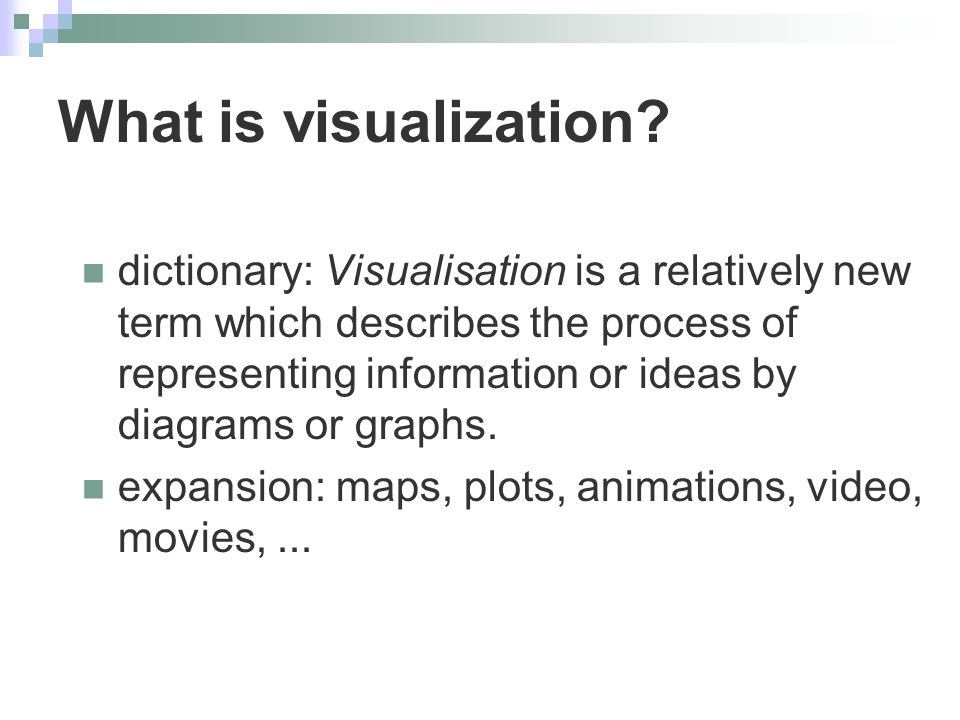
    What is visualization?

    visualization

    Hence, Visualization is the practice to create an image of a future event in mind now. Also, Through the great practice of visualization you have a complete idea of any of future event that you want to archive or do, so can prepare for that properly. So, As I said above athletes use this technique to create the image of goal winning moments in their minds so they can prepare for that very well. Similarly, if you will have an interview in the future and you so much feel nervous.

    So instead of thinking negatively through the visualization, you can also imagine that interview goes well. Also, You answer well all the questions asked by the interviewer. So, That’s vision feels you better and now can prepare better for your interviewer.

    How does it work?

    Visualization or mental energy works because when you create an image of your goal archiving moment, and is your mind doing exactly what you want, So, physiologically a neural pattern creates in your mind also, just as you do that activity physically.

    Also, Through this technique, you train your mind to work for exactly what so, you want the result and create a neural pattern in mind. Hence, In competitive sports, so, most coaches teach the player to work on 90% mental and only 10% on physical skill.

    That is because researches show that athlete who work more on their mental power archive much better result.

    When to do visualization?

    Depend upon the what kind of goal you want to archive the visualization period also changes like

    For motivation

    visualization

    Also, imagine in your mind about your goal that you want to archive again & again help to keeps focus and archive your goal. Meanwhile, Many athletes, actors, and singers “see” and “feel” them self performing that activity several times before their actual performance.

    To familiarize yourself with the event

    Visualization technique also helps to be familiar with any event that may go to do so the first time like a job interview, competition site. So, You should do it at least 2 weeks before the event.

    For great outcome

    Also, Imagine yourself performing at a high level, archiving goals, also being you want to for a long period helps to archive that level.

    To be patient

    Hence, Visualization or imagine any event in your mind helps you to keep patient and focused that helps you so much to archive that goal.

    How to Visualization

    Sit at the silent place

    Also, Go to a silent place where you can sit alone keep calm. Meanwhile, Sit with the straight back position and close your eyes.

    Picture the scene

    Start visualizing the final scene of your goal that you want to archive in detail. Also, Like if you want to crack an interview then imagine the room, sitting position of the interviewer, questions asked to you, and all in detail.

    Add emotions

    visualization

    Consequently,  Add emotions, felling, and your senses to your vision. So, As said above if you go for an interview then start felling vibes of the interviewing room, what goes in the mind of people around you and all.

    Keep practicing

    Start practicing it daily twice a day for about 10 minutes and also try to complete it in the early morning and before going to bed. Also, Maintain positive thoughts and a good attitude until you archive your goal.

    Benefits of visualization

    These are the following benefits you will get if you keep practicing visualization-

    • It will keep you motivated and inspired.
    • Also, Helps to improve your skills.
    • Meanwhile, Helps to increase your focus to archive your goal.
    • You will get a positive attitude through it.
    • It will increase your self-confidence.
    • Subconsciously your mind will start working toward your goal.
    • Boost your positive imaginary and reduces negative emotions.

    Conclusion

    So, In a nutshell, we can say that the visualization technique seems like a super-power that helps us to create a clear picture of our goal that we want to archive.

    We all have that power but unfortunately, we don’t use it and so visualization helps to keep the hyper-focus on goal with complete confidence.

    Also you can read our blog on How to get more done in less time: 10 simple productivity hacks

    FAQ’s

  • Personal Goal Setting: How to Set a Goal

    Personal Goal Setting: How to Set a Goal

    “If you want to be happy, set a goal that commands your thoughts, liberates your energy and inspires your hopes.” —Andrew Carnegie Many people want to achieve something in their life. But only a few can achieve what they want. Also, Everyone dreams of something and it is ok to dream for something you want. But it is not that much easy to achieve. For instance, many people never achieve that and the personal goal setting is important to achieve something. People work hard their entire life but at last, they don’t seem to get anywhere and they feel adrift in the world. It is because they don’t actually have their goals to achieve them.

    So, The personal goal setting process is a technical process. We should know how to set a goal so that we can get what we want in our life. Also, Here we are going to talk about the process of goal setting and discuss some of the ideas about goal setting suggested by professional and successful people themselves.

    WHAT’S IN IT

    1. Difference between goals and Vision

    Image result for 1. Difference between goals and Vision

    So, People often get confused about their goals and visions. They think about their vision and their goals and misunderstand the concept of personal goal setting. But, Vision is something like dreams.

    It is an imaginative form. If we wish for something then it is vision. But the goal is something different and Hence, The goal is a more concrete form. So, We can see progress and achievement in goals but we can’t on vision. For example: if you think you want to earn $1 the millions of dollar then it becomes your vision because you haven’t specified how you’re gonna make it. But, if you think you want to make $50000 this year from your business or whatever you do then it will become your goal.

    So, What I meant to say is that the goal is specific and concrete that you can see the progress of achievement but the vision is not specific and we can’t evaluate the process of achieving the vision. Hence, We should have our vision but we should also know the difference between vision and goals.

    So, Most of the time, people think of their vision as their goals and end up achieving nothing great.

    2.Why we need personal goal setting

    Image result for personal goal setting

    Personal goals setting is the way to think about plans and ideas needed to make your imaginary future vision into reality. Also, Many successful businessmen, actors, artists, athletes and other successful people make their goals. So, The main reason for personal goal setting is to get the direction where you want to go in future.Hence, If we look into the interviews and read about famous and successful people, we can find that what they have achieved is all because of their personal goal setting. So, we need a personal goal setting because of these benefits.

    1. Goals make us focus on our dreams.

    2. They give ideas about the actions we need to take for the future.

    3. Goals help us to improve in new skills and learn new things.

    4. They give momentum and energy to get our work done.

    5. Goals make our mind stable and give the proper path and direction to the brain.

    3. How to set a goal

    Goal setting gives a long term vision and short term motivation to achieve something. So, It is important to set a goal which helps you to get what you want.Also, In the personal goal setting, the main thing you need is a technique to set a goal.

    So, Here I am going to share some of the ideas which help you in your personal goal setting. These points are also suggested by most of the successful people in the world.

    1.Unlock potential:

    Let’s start with an example. suppose you put a pigeon in the case and pack it in the box, take it long away and release it. What do you think a pigeon does? Obviously, it flies over the sky for some time and it manages to find its nest anyhow. This is the potential of that pigeon.

    Similarly, we humans have way more potential than pigeons for our goal seeking. But often we can’t find out our potential. Hence, We think that we don’t have the potential to achieve something and often we neglect to select a particular goal. We are not aware of our success in achieving potential. so before you make any goal you should know about the potential in us, which is obviously very high. So, That means we can achieve anything, just we need a proper goal. So, never underestimate setting a goal.

    2. Take charge:

    Image result for Take charge

    Emotions play a vital role in our personal goal setting. Especially, negative emotions are never going to make our goals achievable. People often blame others for what they haven’t achieved, which is not something you should do. In Fact, you should take a 100% charge of anything so that you can set a personal goal for yourself to improve yourself.

    We can think from two perspectives. If we blame others for everything then we actually never find out our potential to grow but if we stop justify our negative emotions we can focus on ourselves and make goals more feasible.

    So, the main idea of this point is negative emotions can affect your good goal-setting so we should avoid them. In fact, we have to avoid all these negative emotions so we can clearly set our goals.

    3. True Goals:

    If you set the goals, you have to achieve them. The main reason for setting goals is to achieve them. But many times we can’t get what actually our true goal is. Many people don’t know what they actually want but set goals in which they are not really interested. This happened with us also. for eg. maybe you have a passion for creative writing but you don’t know your passion and set a goal to be an engineer. This type of goal cannot be achieved. So you should make true goals.

    BLUE SKY THINKING Technique

    The best technique to find a true goal is BLUE SKY THINKING technique. In this technique, you set your goals looking to the sky, not in the land. I mean to say that you set your goals limitlessly. In this technique you make a note of all the goals you want to achieve in your life and think that you have all the abilities, money, support to achieve your goal then you can choose what will be the best goal for you.

    For this, you have to ask some questions to yourself and give a genuine answer to those questions. This exercise helps you to find your true goals:

    you should have a clear answer to these questions:

    • Write down your three most important goals in life right now.
    • What are your three most pressing problems or worries right now?
    • If you won a million dollars in cash, tax-free, tomorrow, what changes in your life would you make immediately?
    • What do you really love to do? What gives you the greatest feelings of value, importance and satisfaction?
    • If you could wave a magic wand over your life and have anything you wanted, what would you wish for?
    • What would you do, how would you spend your time, if you only had six months left to live?
    • What would you really want to do with your life, especially if you had no limitations?

    If you have answers to these questions then I hope you will get your true goal. You should focus on your true goal and beside true goal you can also work for your side goals. But remember the true goal is important for your happy and peaceful life.

    4. Planning for your goals:

    Image result for Planning for your goals:

    Planning is important for personal goal setting as well as to achieve them. If you got your clear goals then the next step is to make a plan to achieve them. It’s ok to not have a clear plan but you should always have a plan for how you’re gonna make your goal achievable. So the next question is how to make a plan?

    There is a proverb that if you want to eat an elephant then the best way is one bite at a time. The same thing applies here also. If you want to achieve some big goals then you have to make a plan by separating your goal into the year, months, weeks and days and you have to complete it at that specific time.

    ● First, understand your big goal and estimate how many years it will take to complete.

    ● secondly, you separate that goal into the littler and littler makes a speciality of which you need to hit to reach your lifetime objective.

    ● Finally, you have your plan and now you can work into your personal goal setting to achieve them.

    So manage your every morning to make a plan for that day, what you are going to do to achieve your goal.

    5. Measure Progress:

    I already mentioned above that goal is measurable. You have to measure your progress on your goal frequently. If we complete our goal in time then our brain releases endorphins which give us happiness and also it motivates us to improve our skills also. So It is necessary to measure the progress of achievement of your goal.

    To measure the progress, examine whether you are doing good or not and give a score. Also, you can give a proper deadline for your goal. This helps to activate the subconscious brain and help to achieve your goals subconsciously.

    6. Focus on one goal at one time and don’t wait for anything to start:

    Most people focus on multiple goals at once and want to achieve them at once. But this idea is not worthy. Yes, you can make multiple personal goal settings but you have to give the most preference to one important goal only.

    The other thing that people often do is that they wait for something for their personal goal setting. For eg; Many people wait for new years and take a goal that day often those goals were never continued by them.

    What I want to say is that we should not wait for anything to take a goal. If you want to achieve something big then start from now, take a goal and start working

    4. SMART personal goal setting

    Image result for SMART personal goal setting

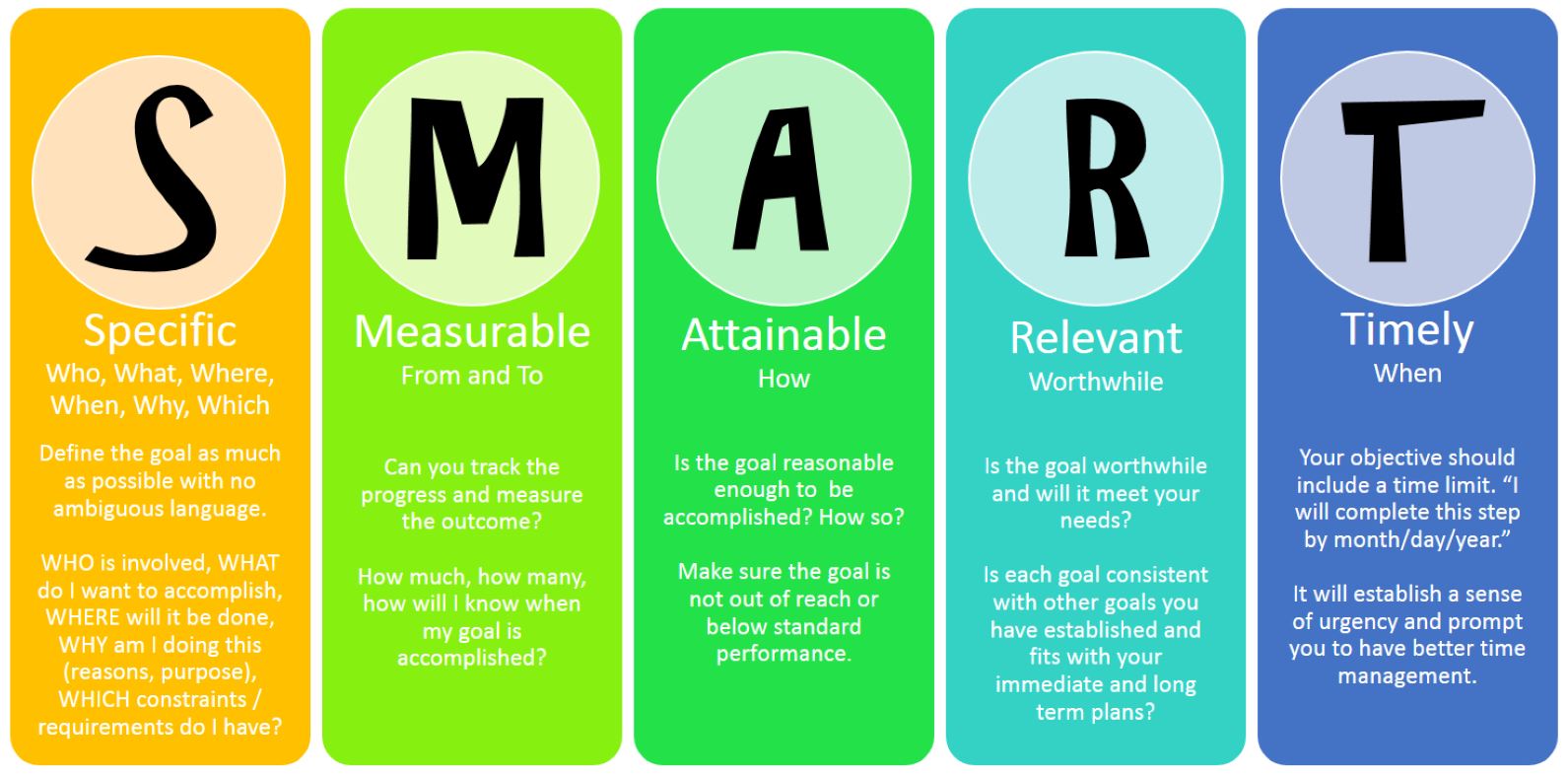
    SMART goal setting is one of the ways to make your goal more powerful. It has various meaning but it usually stands for

    • S – Specific (or Significant).
    • M – Measurable (or Meaningful).
    • A – Attainable (or Action-Oriented).
    • R – Relevant (or Rewarding).
    • T – Time-bound (or Trackable).

    Using this mnemonic, our goal becomes more concrete and specific. For example instead of putting the goal as “I want to visit the world” you can put your goal using a SMART technique as “I will finish my world tour on 22 March 2030.” Check out goal-setting theory to learn more about the goal-setting process.

    5. Achievement of Goal

    Personal goal setting is one thing but achieves your goal is another. So, you manage to achieve your goal then take a time and enjoy the moment of your achievement and If the goal is very significant then don’t hesitate to give yourself a deserving reward. It will help you to set further goals and it also helps to increase confidence in you.

    ● Evaluate the process of achievement. if you have achieved them easily then set your next goal harder

    ● If you have achieved that goal very hard then you should have your next personal goal setting quite easy.

    ● During the process, if you learned new skills which help to change other goals then do so.

    Conclusion

    Personal goal setting means motivating yourself to turn your future dreams into reality. Every

    successful person has their own goal setting techniques. Here we have discussed

    some of the professional ways of your personal goal setting. Remember that you should

    have specific, measurable, achievable, relevant and time-bound goals.

    Also you can read our blog on How to Start a Day -Manage Morning When You’re Not a “Morning Person”

    FAQ’s