
Living in a society controlled by network invention, people can easily connect to services available in the market and with each other.
Networking has tremendous effects as it has not only helps in connecting with other people but also helps in marketing your business or products.
Networking has completely changed the rules to not only how we market products, and value is created, but also how a reliable business infrastructure is developed and maintained.
Have you ever thought why companies like Twitter, Facebook, LinkedIn, Snapchat, Facebook, etc. are ruling in their niches without fear of their opponents.
Have you wondered why people prefer these platforms?
No, let me tell you, it is because of the phenomena of a network effect.
Network effect refers to an environment where a rise in the adoption or use creates more value for all members in a community or network – it’s called a positive network. The reverse is also true and is called a negative network effect.
It is the idea that a product or service becomes more refined as people use it. For instance, only a few users were there—outside people given minimal preference when the Internet came into existence. But if we talk about today, billions of people are using the Internet.
I hope now you have little understanding about network effect, let’s delve more into this and discuss its benefits, type, and power.
WHAT’S IN IT
What Exactly is Network Effect?
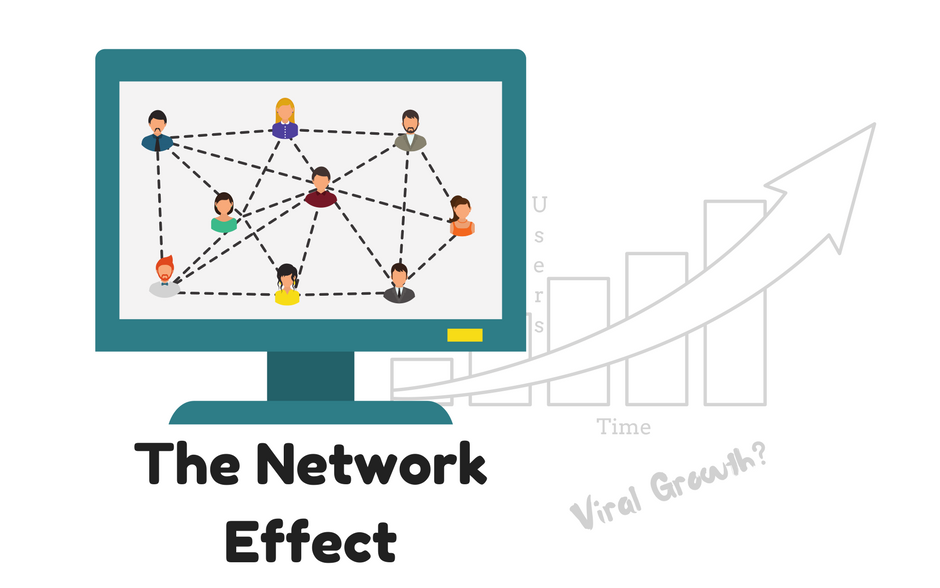
The network effect’s theory is responsible for a fast-growing company and a product or service of the Internet era. It becomes more relevant for users as a large number of people are using it.
The network effect is how the value of something to customers changed when the number of other people also use it to improve. It is also known as demand-side economics od ale and network externality.
For instance, having a smart mobile phone has become much more valuable as the number of customers connected to the telephone network is proliferating. Simply put, it is an aspect in which the goods or services are gaining more value as more customers are using them.
Phone and social network is a real example of how network effects may influence the service or product. As more people begin to adopt this technology, it becomes vital for communication. It enhances their value for existing and future users and the weakness of this alternative.
For example, when landlines phones came to existence, and everyone started using this technology. It had become the most accepted way to talk to people, increasing the user base of these phones, need, and value while reducing the telegraph’s need.
Furthermore, when the bulk of people and businesses begin to connect on Facebook, it has become the most accepted way to communicate with the rest of your network, increasing its user base, need, and value while reducing the value of MySpace.
As you can see, using the network effect can significantly increase the size of your user base, the market share of your company, and it’s a product or service value.
How Does the Network Effect Work?
In evidence to the market, the network effect is when a service becomes more valuable as more people use it, thereby causing an expansion in the number of adaptors.
For the organization, the network effect means the organization’s actual value is exponentially higher than the number of individual members. As a member, you make connections with one another. Metcalfe’s law is one of the first attempts to estimate the network’s effect and proposes that the network’s value is proportional to the square of the number of users (n ^ 2).
So, if you have 10 users, then the network’s value provides 10 ^ 2 = 100. In other words, your association can facilitate 100 connections between the different members.
But, some experts argue that the law only accounts for a connection one-to-one and does not fully appreciate the group-forming networks’ ability.
A newer mathematical statement comes in the form of Reed law – which shows how much coverage to evaluate network effects. Reed believes that the network is how many unique “connection group” members you can form are represented by a power of two (2 ^ n).
If in the association you have 10 users, the same group has the power to grow the 1024 connection, a unique subgroup (2 ^ 10 = 1024).
One of which is the one that may be the genesis for the link of a lifetime, new business chances, or brainstorming session, which causes the “ensuing great thing.”
Why Your Marketplace Needs Network Effects?

Although the network effect sounds like a common term, they have been around for ages. When the phone networks first appeared in 1878, it creates added value for its users every time a new phone installed. What has changed is how important it has become, especially for the online market.
As the global market such as Amazon and Alibaba entrench their hold on the global B2C and B2B retail and vertical market-focused mushrooms, competition for consumer wallets will get more fierce.
It has become essential to differentiate the value proposition of your market competitors. As already mentioned, the network effect can make them competitive advantage by promoting a higher ratio of a match between what sellers are offering and what the buyers want.
Another significant advantage of focusing on the trigger network effects is that it heals fantastic businessman syndrome ‘if we build it, they will come.’ And it has forced the owner of the market to put the relationship between buyers and sellers in the core of the development platform, which means continuously analyzing user behaviour and use the fast iteration to build the product-market fit.
What are the types of Network Effects?
We can make the network effect’s model in different ways. But they don’t work in the same way, and they can generate different results. There are four types of network effect business models:
Direct Network Effect
Direct network effects are defined as the value of service increases naturally as the number of uses increases. It is also known as the same-side effects.
Things shared by many digital platforms benefit from the network effect quickly, which means that the platform is even more engaging to users because the number of users on the same side of the platform grows.
The telephone network and online games are examples of direct networking effects.
Indirect Network Effect
The indirect network effect is a phenomenon in which an increase in the use of the product leads to the increased value of complementary networks or products, which adds to the value of the original product. It is also known as the cross-side effect.
Examples of indirect network effects are Windows and Android operating. Increased use of OS enhances the value of the applications made to work on this platform, which, in turn, enhances the value of the operating system.
Two-Sided Network Effect
It is a kind of network effect that uses the properties of both Direct Network Effect and Indirect Network Effect.
Amazon’s business model is the best example of a two-sided network effect in which middleman connects sellers and buyers.
Local Network Effect
The microstructure of a network of underlying connections often affects the importance of network effects.
For example, using the instant messaging, each user is immediately impressed by the choices of only a petite group of other users – that they are “connected” to.
Network Effects are not Virality.
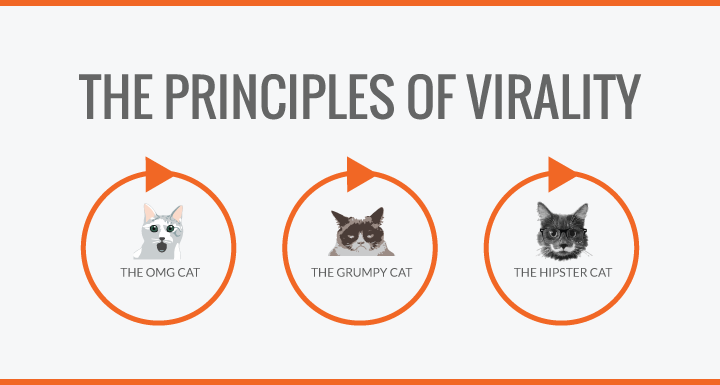
Network effects and Virality are two different concepts. A viral product is the one whose adoption rate increases with each new user. Whereas network effect has no concern with volume, it is only responsible for additional value.
The network effect is all about growth in values, whereas Virality is more about an increase in numbers. Marketplace like Airbnb has a strong network effect but low Virality.
Network Effects are not Economics of Sale.
Economies of scale occur when there is an adequate volume of results to massively reduce costs so that the most significant player can maintain the most leading margin profitability.
Network effects are distinct from economies of scale because they produce higher value for the marginal increase in cost. While the networks grow, cost increases, but the product’s value increases more rapidly.
Steps to Make Use of Power of Network Effects
To attract users to your platform with satisfaction, follow the following steps:
- Build a product feature that creates a unique value declaration for all users.
Make sure that your platform following the requirements of complementary products.

- Deal with the industry that develops complementary products.
It can be combined with your platform to build value for users and boost your platform’s overall power. It will attract more users, and reach other businesses to build a complimentary product for your platform that will lead to the emergence of indirect network effects, develop a mutual advantage of each other.
- Create an adequate business model.
Tailors to each buyer segment and assure that it is scalable to handle growth over time.
- Build a strategy and go-to-market.
To initial interest buyers, selecting the initial market section as a unique market niche proves the product-market fit you. Then plan for continued expansion into other markets.
- Bettering economics of scale on both the demand and supply sides.
It gives innovative products to consumers on the demand side and provides cutting-edge technology/software providers on the supply side. It helps create a unique value analysis and difference for your users to solve the “unmet” needs. Creating a brand will help benefit more buyers.

Conclusion
The network effect is a compelling method for a successful business. All large organizations are using this method in their business strategies to upgrade to unimaginable heights.
In this generation, where almost everything depends on the media and technology, using network effects are preferably easy and genius. All you need is to have the next great idea.
Also You can Read our Blog on INTERNET MARKETING AND ITS TYPES| 6 STEP PROCESS TO START