Category: Strategy

  • Action Plan for Small Scale Planning Detailed Guide

    Action Plan for Small Scale Planning Detailed Guide

    Do you know what Action Plan is? Yes, you know what the Action Plan is. It is the process of completing any task or object on time. Do you know how Action Plans works for small scale business?

    Action Plan is a process of listing down all the task and objective of a business to analyse that which project or purpose is running late to improve their action plans to achieve their goal on time.

    So in this blog, I will discuss all the things about the action plan, which small scale businesses use to achieve their goals.

    WHAT’S IN IT

    Characteristic of Action Plan

    There are three Characteristic-

    • Timetable

    It is essential because it helps manage time and complete tasks on time.

    When the team sets a task or objective, they decide the deadline for all the employees to complete their task till at his deadline.

    This makes them not waste their time and can work efficiently in the organisation. This helps them to achieve their goal or complete their task on time.

    a time table is necessary for action plan
    • Goal-Oriented

    This is also another main point why it is so important because it is beneficial to set a timetable according to its goal.

    When the team sets a task, an action plan helps them develop the study accordingly, achieving its goal.

    This makes them not waste their time and work efficiently in the organisation. This helps them to achieve their goal or complete their task on time.

    • Clear Description

    This is also another main point why an action plan is essential because it clarifies its objective.

    When the team clears the company’s objective to the employees, they start working to achieve the goal.

    This makes them not waste their time and work efficiently in the organisation. This helps them to achieve their objective or complete their task on time.

    Process of Action Plan

    There are three steps to make it

    • Identify Tasks

    This is the first step to make the Plan. In this step, they identify all the tasks, the company’s goal, what is the current position, and what the work will in the future. So this step makes clear to all that what the objective of the company is.

    a lady identifying tasks for action plan
    • Analyse and Delegate Tasks

    After completing the first step, this is the second step in which when the team sets a task or objective, they analyse all the functions & employees and delegate the task to them according to their efficiency.

    And they decide the deadline for all the employees that everyone should complete their task on time. This makes them not waste their time and can work efficiently in the organisation.

    This helps them to achieve their goal or complete their task on time.

    • Double- Check the Action plan

    After completing the first and second steps, this is the last step in checking that the plan or task they have decided on includes everything to achieve the company’s final goal.

    If Yes, they stick to the plan, and if No, they again identify their company goals, then analyse & delegate tasks, then Double – Check their Plan.

    Importance

    • It helps the employees of the organisation to achieve their goals efficiently and effectively.
    • This helps to complete their work within a specific period.
    • It helps them to decide what to do and how to do it.
    • Top management analyses all the tasks & employees and delegates the job to them according to their efficiency.
    • This helps the organisation to measure the performance of all the employees.

    Limitations of Action Plan

    • It reduces creativity

    Once the Plan is made by top management, then all the employees blindly follow it.

    They stop giving suggestions and new ideas to the management for any changes due to change in a business environment.

    • It involves a considerable cost

    This process causes huge costs because the company has to hire experts to make the correct plan, which takes a considerable cost and time.

    There is no guarantee that the Plan they will make is always correct because of change in the business environment.

    • It is a time-consuming process
    action plan is a time consuming task

    It is a time-consuming process because experts take lots of time to execute the final plan, due to which action is delayed.

    So when the business environment changes, they have to start making a plan from the beginning, which involves lots of time.

    • It does not give any guarantee to success

    They do not give any guarantee that the plan will provide good results consistently. It is not guaranteed that the Plan that had worked successfully in the past will always work successfully in the future.

    The top management or experts must make changes in their plan regularly according to change in the business environment.

    • Lack of Accuracy

    This is another limitation of the action plan, which fails whole planning because the future is uncertain; every day, the business environment changes.

    The planning can be successful at present, but it is not confident that it will work in the future.

    Tips of Action Plan

    • We should use the visualize list while making an action plan for the company because whenever the particular action plan is completed, we can remove it from the list.
    • Every day we should record daily activities that tell us whether we are on the right path to achieve the company’s goals; if not, then start changing the action plan from time to time.
    • We should allow all the employees to give their opinions about the progress in their work. Whether there is any problem with the action plan, we can improve it and know whether there are any new ideas that we can implement to achieve the company’s goal quickly.
    • When we set tasks or objectives, we analyze all the tasks & employees and delegate them to employees according to their efficiency.
    • The top management or experts must make changes in their Plan regularly according to change in the business environment.

    Types of Action Plan

    There are three types of plans-

    • Strategic Plans- In this, the management analyses the company’s weakness and strengths and checks whether the company can survive in this competitive environment.
    • In this, Tactical Plans make the organization’s blueprint and made short-range objectives that are followed by middle and lower-level management.
    • Operational Plans- In this, they cover complete company goals and objectives, which are put in action to achieve strategic plans.

    Conclusion

    In my opinion, every company and organisation should make an action plan to achieve their goals. By following an action plan, we can analyse all the tasks & employees and delegate them to employees according to their efficiency.

    And we can decide the deadline for all the employees that everyone should complete their task on time. This makes them not waste their time and can work efficiently in the organisation.

    This helps them to achieve their goal or complete their task on time. But It is not guaranteed that the Plan that had worked successfully in the past will always work successfully in the future.

    The top management or experts must make changes in their plan regularly according to change in the business environment.

    Also, you can read our blog on What is an Action Priority Matrix?

    FAQ’s

  • Equity Theory of Motivation

    Equity Theory of Motivation

    Equity theory exists in the real world, and with the help of social media, this is rising. In organizations, we can feel that people are suffering from this theory, and that’s why they are lacking motivation. Now without further delay, let us understand this theory in detail. And let us first start with a real-life incident I faced.

    WHAT’S IN IT

    Example of equity theory of motivation

    This incident will help you in understanding how the problem arises. 

    One of my friends got placed from campus at an excellent salary package in a multinational company. After joining, he was delighted as the salary was high, he was getting it on time, and the job was challenging as well as exciting. After a few months, he called me, and he was sounding like really low. So I asked him what happened, you were delighted when you joined. Then he replied and told an exciting thing. He said that this company hires from IIT(Indian Institute of Technology) as well as from NIT(National Institute of Technology).

    My friend was from NIT. In that situation he said that there is a huge difference in salaries, he was getting a very much lower wage than from IIT guys, almost half from them. And one important thing he said was that the designation, job profile, job nature everything was the same; the only difference is in terms of salary. In some positions, freshers from IIT have been positioned on senior posts than him. This all made him demotivated in the situation. 

    If you observe this situation, my friend is comparing himself with others. Our society has got this notion; we keep on comparing things, jobs, children, etc. This must be happening with you also. 

    So, my friend was unhappy due to a comparison of his salary and salary of IIT students. He is suffering from equity distress.

    EQUITY THEORY

    John Stacy Adams proposed equity theory in 1963. The theory says that employees tend to compare their job inputs with job outputs relative to others. But now this theory is not only limited to employees; every person feels it. 

    The inputs are– effort, experience, educational qualifications, and competence ( skills). We take all four things as inputs that we are putting efforts into; we have the best experience, we come from an excellent educational background, and we have the best skills.

    The outputs are – salary levels, appraisals, recognition. We usually take these three things as outputs that how much salary we are getting, what promotions or evaluations are we getting at year-end and how are we recognized in the company.

    Research shows both males and females make comparisons, one engaging thing in the study is that they both prefer same-sex analogy; a male would likely to compare with another male and a female will probably compare with another female.

    But, the way women empowerment is on the rise, this same-sex comparision part of theory will get failed. It will be more common in the future that males and females will be compared with each other, which is already started. 

    EQUITY THEORY OF MOTIVATION

    After Comparison, there are three situations which can be generated, let’s talk about those situations:

    SITUATIONS OF EQUITY THEORY

    1. the ratio of output to the input of an employee is equal to the ratio of output to the input of another employee ( referent). In this condition, you feel equality, fairness, and organization are very good. Here equity exists, and this is the ideal condition that rarely exists.

    2. The ratio of output to the input of an employee is more than the ratio of output to the input of another employee ( referent). In this condition, there is inequity due to overrewarded. It feels suitable for a few days for being the employee in this situation. But  Sometimes, this also creates a problem because when you think overrewarded than anyone else who has done the same hard work as you; you start developing a feeling of guilt. 

    3. In this condition, the ratio of output to the input of an employee is less than the proportion of output to the input of another employee ( referent). This is the most common situation, and here also inequity exists due to being under-rewarded. Most employees find themselves in this situation that their organization is not recognizing their hard work well.

    EQUITY THEORY OF MOTIVATION

    WITH WHOM EMPLOYEES COMPARE

    1. Co-workers– This is the person with whom we compare the most.

    2. Neighbours–  We compare our houses, cars, living standards, etc. with them. Sometimes we also compare our children.

    3. Friends- We have a regular comparison with friends also in terms of education, hard work, money, etc.

    4. Present Job with Past job– Sometimes if you do not compare with the above three ones then you compare your past career with the present one. 

    Comparision has become our natural trait, every time we keep comparing. Nobody is immune to it particularly more due to social media. 

    These comparisons create four types of referent comparisons.

    TYPES OF REFERENT COMPARISONS IN EQUITY THEORY

    1. Self Inside

     It means we compare the personal experience in different positions in the current organization. Sometimes we work at different positions in the same organization, then we start comparing those positions. For example, – I was working in marketing. Still, I was shifted in HR ( Human Resource), Now will think that I used to get more incentives in marketing jobs or I was not getting a sitting position in marketing, but I am getting a sitting job in HR.

    2. Self Outside

    Here, we compare personal experience in a situation or position outside the organization. In another organization, either our friend is working or our roommate who is in the same position with whom we share our experiences.  Now we start comparing our position with the same position but in another organization. 

    3. Other’s inside

     here, we start comparing other individuals or groups inside the organization.

    This is the most common one.

    4. Other’s outside

     here, we start comparing other individuals or groups outside the organization. 

    How Employees deal with Inequity experience

    Investigating Workplace Bullying Allegations: 10 Tips for Success | i-Sight

    1. Change the Input

    The day you feel that whatever hard work you do, nothing happens and the company prefers someone else; the same day you change your input. And you think why I should be hard for the company when I know someone else will be rewarded.

    We can compare this with our school life when the teacher used to favor another student, and on the same day, we stop giving responses to teachers.

    2. Change the output

    When an employee observes his talent is not appreciated, he starts focusing on quantity more than quality. He tries to increase his production because his class is not being measured. If a company does not take care of employees’ self-respect, then why will employees take care of the company’s reputation for quality.

    3. Choose a different referent

    This is a good trick. If you compare yourself with others and you feel frustrated with it, then change the referents. You should see yourself ahead of those who are behind you, rather than thinking yourself behind of those who are ahead of you. For example, when I used to rank 10th in school exams, then I used to think that I am ahead of 30 students rather than I am behind 9 students.

    4. Quit the Job

     If you feel that this inequity tension has increased so much that it is unbearable, then simply you quit the job. But when you join another organization then the same process starts happening there also.

    5. Change the self-perception

     you start thinking that the input I am giving is not sufficient for getting the desired results. You start pushing yourself.

    6. Change the perception of others

    Here you start thinking that the job of others is more important than yours, that’s why they are getting more rewards.

    Although in the first place, people should not make comparisons, they follow the above-told strategies because it somewhere it gives them relief from inquiry distress.

    Conclusion

    Adam’s Equity Theory of motivation states that a higher level of motivation and positive results can be expected only when employees feel their treatment is fair. The situations of equity theory depend on the ratio of output to input. The people with whom employees compare themselves are co-workers, neighbors, friends, and themselves. The people develop inquiry stress within themselves due to these comparisons, and they deal in different ways, as discussed above.

    Also you can read our blog on Role Of Brikshaw four-dimensional model

    FAQ’s

  • 15 Practical Steps to Minimize the Cost of Customer Acquisition

    15 Practical Steps to Minimize the Cost of Customer Acquisition

    Every company aims to acquire as many consumers as possible for growth to provide a lifetime loyal consumer base to the investors and gain the company’s advantage. The expense of gaining new consumers is called the cost of customer acquisition.

    Acquiring consumers is a long process that includes advertising, marketing, marketers team, sales team, technology, and most important expenses.

    Getting distinct users involves convincing them to try our and then make a buying or register with your app.

    Businessmen consider the cost of customer acquisition as a necessary step in estimating how much value consumers bring to their businesses.

    The cost of customer acquisition is calculated by dividing the expenses incurred by the return revenue from consumers. 

    However, if your cost of acquiring consumers is more than your revenue, you need to implement some practical measures.

    Let’s find practical ways to m1inimize the cost of customer acquisition to earn more profit and balance the company.

    WHAT’S IN IT

    Meaning

    CAC: Customer Acquisition Cost This is... - Hany Sewilam AbdelHamid |  Facebook

    Web-based advertising and internet companies use the cost of customer acquisition metrics to track their consumers.

    It is used by investors and companies to track the conversion rate of leads into paid and loyal consumers after spending money on the acquiring process.

    Investors use Customer Acquisition Cost(CAC) to know about the profit of a company. For example, if a company is extracting more consumers than the cost of acquiring it, it would be profitable for investors to invest in those internet-based companies.

    Marketing specialists always finds ways to reduce the cost of extracting the consumers and want to know about their investments in advertisements. 

    CAC identifies the right resources needed by the company to attract consumers. You need to reduce your cost of marketing to attain higher profits.

    How to Calculate the Cost 

    You need to calculate consumer acquisition before finding out the results about your profit and implementing steps to reduce it.

    The formula to calculate the cost is 

    CAC= expenses incurred on sales and marketing divided by the number of new consumers acquired in a specific period.

    The cost of sales and marketing includes money spent on advertisements, employees of marketing as well as sales team’s salaries, chatbots, marketing automation, creative and content price, production and inventory maintenance cost, and technical and publishing cost.

    Steps to Calculate CAC of your Company 

    • The first step is to identify the period of your evaluation of cos, which can be quarter, month, or year.
    • The next step is to calculate the total expense of marketing and sales. Calculate your metrics correctly while making investments at the early stages, like the initial stages of SEO.
    • The last step is to divide the number of consumers you acquired by the process of a question from the total cost. 

    Difference Between CAC and CPA.

    What's the Difference? - A Newsletter for the Curious and Confused

    CAC stands for consumer acquisition cost, and CPA stands for cost per acquisition, and both are different from each other.

    CAC calculates the money spent acquiring a paid consumer while CPA calculates the expenses of acquiring a non-paid consumer.

    CPA helps as a leading indicator of measuring the CAC as a whole concept. Both work differently in B2C and B2B models; also, the freemium models use it.

    The formula for calculating CAC is provided to you above. The method for calculating CPA= total marketing costs divided by the one metric that matters acquisitions cost.

    Steps to Reduce the Cost of Customer Acquisition

    You might not feel the need to reduce your CAC, but at one stage, you have to reduce it to boost your profit.

    The following are the practical steps to minimize the cost of customer acquisition.

    Target Right Consumers:

    You need to define your target to get the right customers according to your need for the ideal as well as the perfect consumers. It helps in putting marketing efforts in the right place. Sometimes you need to perform retargeting with the changes in the market to make a consumer loyal to you. 

    Improve the Conversion Rate:

    Develop a plan and strategies to improve the conversion rate and keep track of how many customers perform the desired actions and make a change in your company if required to boost the revenue.

    Focus on Customer Retention:

    It is easy and cheaper to keep track of your old consumers and retain them than acquiring new ones. You must serve the best quality of products and services to satisfy their needs and provide excellent experience through loyalty programs. It also increases the chances of referrals.

    Lower your Churn Rates:

    Every time a single user quits for service and products, it increases your CAC, so you need to keep track of your churn rates and take the right measures to reduce it by making your brand more attractive.

    Automated Marketing Efforts:

    Automation in the marketing process gives results faster as all the activities like generating leads, or e-mail marketing is performed quickly. It helps in increasing revenue, which means more CAC.

    Apply the ‘Pareto’ Principle:

    According to the Pareto principle, 20% of your efforts give 80% of the result. However, you need to know which 20% of your consumers will return you 80% of revenue and then need to focus on them.

    Create Engaging Content:

    Ways to Create Engaging Content for Your Audience - Stan Ventures

    Content marketing does not involve any cost to generate leads. Create a substance that attracts your targeted customers based on their preferences.

    Also You can Read our blog on Everything Explained About referral marketing.

    Unique Sell Proposition:

    USP defines what your company believes in because you need to differentiate yourself from other companies in the market to sell yourself as unique.

    Optimize your Marketing Funnel:

    Ensure proper mechanisms at each stage while quantifying it to generate leads, opportunities, and actual paid customers. Understand the inefficiency, if any, at any stage of the funnel.

    Implement Pricing Strategy:

    CAC is dependent on the recovery, thus focus on gaining the cash from payback. Use value-based pricing to earn profits as soon as possible.

    Sales and Marketing Expenses:

    Filter your channels to find the effective ones and spend on them to get results. This will reduce your CAC as the right channels will be optimized. 

    Save Time for Engaging:

    The product engagement process should be quick per customer to reduce CAC. It should be less time-consuming. Otherwise, it will cost you more. 

    Brand Equity:

    Use your brand equity to minimize your marketing and advertising expenses. Established brands gain a higher conversion rate because of their reputation and reliability.

    Know your Business:

    Analyze whether your industry or sector has high or low CAC and how much your sector influences the CAC. Implement the correct marketing campaign according to your business to reduce your expenses.

    Optimize the Lifetime Value:

    Your products and services should add value to your consumer’s life so they can provide you lifetime value ratio,o which should be higher than CAC.

    Cost of Customer Acquisition by Industry and E-commerce

    The cost of customer acquisition is the most critical metric in the e-commerce industry. 

    The industry needs to make money by an online platform and also needs to retain old consumers at any cost. 

    This requires a perfect parameter to calculate its costs spent on marketing and sales to make money and grow.

    Customer acquisition cost by industry means it is different in every industry in terms of the value of purchase, sales cycle, lifetime value, and lifespan of consumers, purchase frequency, marketing, as well as company maturity.

    CAC is a metric also helpful in google ads, Facebook marketing, and it has different channels for business models.

    Cost of Customer Acquisition in SAAS

    What is the future of SaaS? - Xlate Group

    Software as a service-based company is dependent on CAC. It needs to balance consumers, sales, and marketing costs.

    Excellent SAAS uses the cost of customer acquisition effectively and uses the results to improve its marketing funnel. CAC shows the direct reflection of SAAS companies. 

    Suppose you own a SAAS company or thinking to remember to use CAC to spend time and money back and forth for seeing faster results of return on investments.

    It helps in optimizing the ratio of CAC and LTV, determining and improving the payback period, and helps in keeping track of rate and CAC.

    The payback of the benchmark of CAC returns significantly in software as a service company. 

    How to Improve your Customer Acquisition Cost

    The cost of acquiring a customer is amongst the top concerns for a business master as it directly impacts the operational funds.

    By saving on CAC, you can share a more significant part of your marketing funds in other vital areas, which will finally allow you to run your business successfully.

    You need to continually take measures to improve your CAC for more profitability and growth through the optimization.

    You need to focus on improving the on-site conversation rate, interaction, and messaging in campaigns, targeting the customers to have good LTC: CAC ratio. Explore new channels and mediums to find new customers and profitability.

    Calculate your cost per visit by channel, the average value conversion rate of consumers from a specified channel and stay to purchase price by canal regularly track improvement.

    Improving and increasing the efficiency of CAC is vital because it gets paid consumers faster and quickly, develops consumer’s lifetime value, and maintains a smooth cash flow.  

    Retention VS Acquisition

    How to split your marketing budget between customer acquisition and  retention activities? – Brandalyzer

    Customer retention and customer acquisition both are equally important for a company to grow.

    Customer acquisition means acquiring new customers through marketing, advertising, and implementing strategies. So, its gaining new customers to your business.

    Customer retention means retaining the old customers acquired through the problematic processes by providing them quality service, satisfaction, and loyalty.

    The following are the points of difference.

    Conclusion

    To summarize, the cost of customer acquisition is a measurement that differs in every industry and depends on which strategy you implement. 

    You need to put a benchmark for your company’s CAC by comparing it for lifetime value. The time for recovery and payback also differs.

    Like start-ups take more than one year to pay back around the benchmark while companies, which is SAAS, can pay it back in six months. 

    Big companies performing large scale operations have considerable capital. It takes a long period to recover from them.

    The payback period can also be calculated by three metrics firstly, CAC, secondly, average revenue per account(ARPA), and thirdly, gross margin per cent. 

    The formula for calculating is dividing the CAC by average revenue per account(ARPA), and then you need to multiply it to gross margin per cent.

    Besides the steps given above to reduce CAC, there are several other tactics and strategies to implement in your business to improve its CAC. 

    CAC data helps companies to decide whether they should increase their sales or cut it down.

    FAQs

  • BSE listing – Route to business expansion

    BSE listing – Route to business expansion

    Did you ever think? Why is BSE listing important for a company? Why companies list themselves in the Bombay Stock Exchange? In this blog, we will know three things that you should know about the Bombay Stock Exchange listing before listing your company to Bombay stock exchange.

    What’s in it for me?

    Bombay Stock Exchange or BSE is an Indian stock exchange at Dalal Street in Mumbai, India. It was established in 1985.

    Mr. Premchand Roychand was a founding member of the Bombay stock exchange. The Bombay stock exchange is Asia’s oldest stock exchange and 10th largest stock exchange body globally.

    What is BSE listing?

    The Bombay stock exchange is a securities market Index. Generally, companies list themselves in BSE to generate funds for their business and grow their company.

    When a company plans to issue Initial Public Offering (IPO), they list themself in the Bombay stock exchange. Now you must be thinking, what is IPO?

    The Initial Public Offering (IPO) is a process where a company offers its share to the institutional investors, retail investors, public. The company issue shares to the public and provides them ownership of the company.

    Therefore through the Initial Public offering, the company lists its name in the stock market. BSE listing companies allow the market to trade with their shares.

    BSE bags spot among world's 10 most valued exchanges; Nasdaq tops chart |  Business Standard News

    Why list on BSE?

    To run a business, a company needs capital. In the earlier stage, a company raises funds by approaching friends, family, or relatives.

    Then in the next stage, when a business has started, and the company requires more funds to operate in the marketing, angel investors help them run the company.

    Angel investors are the businesses and entrepreneurs which improve and help companies in their business. However, these investors take some equity of the company.

    Finally, the company is established and looking for more growth.

    This is the situation where BSE listing enters. By listing the company in the Bombay stock exchange, a company will start to grow more. A company is now eligible to raise funds by issuing shares.

    By initial public offering (IPO), a company allots shares to the public after it is ready to list in the BSE and NSE.

    BSE listing helps a company to raise capital. The leveraging ratios get more attractive, and the capacity to raise debt increases.

    Other than this, when a company lists in Bombay stock exchange, it enhances the visibility and credibility of the company. A company gets a broader capital base and an increase in working capital.

    Moreover, a company can raise funds at low rates and comparatively on relaxed norms by BSE listing.

    BSE Sensex and Nifty ends red after two days green

    How to list on BSE?

    The Bombay stock exchange has various criteria for different companies in the market.

    Let’s start with startups

    BSE Startup platform provides a friendly environment to the entrepreneurs and Investors. This platform helps them to list their company in the stock exchange and open for the way of finance for further growth and development.

    Bombay stock exchange has a platform called “BSE SME” for small media enterprises and startups. BSE Startup is for new companies that are registered under the Startup India Standup India scheme.

    Through the BSE SME platform, startups can avail INR 25 lakhs to INR 1 crore as initial investment by BSE listing.

    Terms to list company in BSE SME

    • A company should have issued the capital of INR 3 crore minimum after listing in the Bombay stock exchange.
    • It should have at least three years of experience with tangible worth INR 3 crore.
    • In the case of a new company other than startups, INR 5 is the minimum issued capital for SMEs for BSE listing.
    • For high tech startups, no minimum capital, no past records are required for registration and listing process.
    • A company should be registered as a limited liability company (public limited) under the committee of the ministry of government.

    Listing Criteria for company

    • The company should have a website with all the details of the company.
    • The minimum application and lot size should not be less than INR 1 lakh.
    • 50% of independent directors on the board should agree.
    • The company should have a full-time company secretary.
    • No ending petition is admitted in court.
    • No regulatory cases were pending of the company or its directors.
    • The company should not be a part of the Board of Industrial and Financial Reconstruction (BIFR). However, if the company has come out of it, then, in that case, it is eligible for BSE listing.

    Migration from BSE SME to the Main Board 

    When a company settles in the platform, it can migrate to the leading board platforms to compete with giant companies.

    Here are some parameters a company should follow to migrate from the BSE SME platform to the Mainboard platform after BSE listing.

    • The company should be listed and traded in the BSE SME platform for at least two years.
    • At this stage, the company should have a paid-up capital of minimum INR 10 crore or more and market capitalization of INR 25 crore or more.
    • Shareholder approval to be sought by special resolution and other eligibility criteria of the main board should be fulfilled.

    In the case of underwriting:- 100% underwritten by the underwriter. Under section 106P(2) of Issue of Capital and Disclosure Requirements (ICDR) regulations, at least 15% of the issued size be underwritten by the merchant banker in his account.

    Generally, the Marchant banker is the broker who acts as a link between the company and the investors. A Marchant banker knows the necessity of business. He helps to fulfill the financial needs of the company.

    Therefore he has the authority to underwrite corporate securities and advice on issues like Merger.

    In the case of market-making:- At least 5 market-making people are required three years of market-making. It is mandatory to have the liquidity of shares in the company and a minimum one year from the date of registration.

    Let’s discuss

    How much will it cost to list a company in BSE?

    The capital includes Equity shares, preference shares, fully as well as convertible debentures, Indian depository receipts, etc. In the case of debenture capital listed before 1 April 2017, the fee will be 75% of the below fees.

    In the case of Equity segment

    • The initial listing fee is INR 20000. After that, if the listed capital is more up to INR 100 crores than INR 2.5 lakhs annually for commonly listed companies and INR 3 lakh for exclusively listed companies.
    • Listed capital of a company of INR 100 crores but up to INR 200 crores than INR 3 lakh annually for commonly listed companies and INR 3.25 lakh for exclusively listed companies.
    • From the listed capital of INR 200 crores to INR 300 crores, the annual listing fees will be INR 3.75 lakhs.
    • Above INR 300 crores but not more than INR 400 crores, the annual listing fees will be INR 4.50 lakhs.
    • From INR 400 crores to INR 500 crores, then INR 6 lakhs will be the annual listing fee.

    If the listed capital exceeds INR 500 crores to INR 1000 crores, the annual listing fee will be Rs. 6.05 lakhs with additional listing fees of Rs. 3530 for every increase of Rs. 5 crores.

    For the listing capital of Rs. 1000 to 2000 Crores than the annual listing fee is 9.90 lakhs with additional fees of Rs—3930 on every increase of Rs. 5 Crores.

    In the case where the listed capital exceeds Rs. 2000 to Rs 3000 Crores than the annual listing fee is Rs 10 lakhs + Rs 4270 additional on the increase of every five crores.

    Above Rs, 3000 crores listing capital Rs10.20 lakhs is the annual listing fee with addition to Rs 3910 on every increase of Rs 5 Crores.

    All the fees are applicable for the full year.

    In the case of Private debt securities 

    The initial listing fee of privately placed debt securities is the same as the equity segment. Rs 20000.

    The listing processing fee is applicable only for private companies, which is Rs. 4500 per ISIN and with issued size up to Rs 5 crore is Rs. 2500 per ISIN.

    If the issued size is more than Rs 5 crore but up to 10 crores, the annual listing fee is Rs 3750 per ISIN.

    If the issue size lies between Rs. 10 Crores to 20 Crores than in that case, Rs 7500 per ISIN.

    However, if the issue size is above Rs 20 crores than an additional fee of Rs. 200 for every increase of 1 crore.

    In the case of the SME segment

    The annual fee is INR 25000 or 0.01% of full market capitalization. Whichever is higher.

    In the case of the Mutual Fund segment

    In the case of the mutual fund segment, the initial listing fee is nil. The annual listing fee for the tenure of scheme payable every month or part thereof. With the processing fee of Rs. 10000.

    • In the case where issued size is up to Rs. 50 crore than Rs 1000 per month.
    • In the case where issued size is up to Rs. 100 crore than Rs 1300 per month.
    • If the issued size is above Rs.100 crore up to Rs. 300 crore than Rs 2800 per month.
    • If the issued size is up to Rs. 500 crore than Rs 5300 per month.
    • Between Rs. 500 to Rs 1000 crore than Rs. 9300 per month
    • and above Rs. 1000, the annual listing fee will be 14800 per month.
    BSE listing - Route to business expansion

    Conclusion

    Finally, in this blog, we discuss various topics from What is BSE listing to How much will it cost to list a company in BSE. BSE listing is a great platform to raise funds. The best thing about BSE is that it has funding and trading platform for every business.

    A new company can also list them in BSE and avail the benefits of it. So, in my view, you have to list your business on the BSE platform. It will increase the authenticity and build goodwill in the market. It also helps you to raise funds according to your need.

    FAQs

    1. What is BSE Listing how can it help the business?

    BSE listing is a process where companies list themselves on the BSE platforms to trading in stock exchange. This will raise funds for the business. 

    2. What are the criteria to list high-tech company?

    Generally a high- tech new company can list in the BSE SME platform. Its does not require any prior expirence and issue capital. 

    3. Is it compulsory to have a website for listing?

    Yes, it is compulsory to have a website to list on BSE platform. The website shloud have every information related to the company (from contact details to operations)

  • Accelerator vs Incubator- Step By Step Complete Guide

    Accelerator vs Incubator- Step By Step Complete Guide

    Are you about to start a Business? So, Or are you looking to mentor your startup? If yes, then you are in the right article. Hence, In this blog, we will tell you about the business accelerator and Incubator and what you should choose for your startup.

    What’s in it for me

    Are you planning to do business? Also, Are you about to start your own company? According to Money Control, 90% of Indian startups fail in the first five years source

    So, Running a startup is not an easy task. It requires knowledge, funding, investments, experience, and many more things.

    Therefore this is where accelerators and incubators come to help these startup businesses. Let’s check out what these accelerators and incubators are and how these programs work.

    Accelerator vs Incubator

    What is a business accelerator?

    Business Accelerators work for companies and startups to grow their business and guide them for a short period. Usually, they provide services for 3 to 4 months. Meanwhile, The accelerator increases the size of the company.

    Accelerators invest some money in the startups to grow them, and in return, they take some percentage of equity. Accelerators generally charge for their services.

    Generally, accelerators work for startups to boost their company in the initial stage. They provide seed funding, guidance, and help them to convert their ideas into reality.

    Accelerators focus on increasing the valuation of the startups. Accelerators focus on scaling up the businesses unless making them profitable.

    Now we have an overview of what a business incubator is. Let’s know how it works.

    How does business accelerator work?

    As we have discussed above, a business accelerator helps to grow the startup in the initial stage. The accelerator programs are different from Venture capitals.

    Accelerator programs mentor the startups and help them grow. They rarely profit investments and charge for their services, whereas venture capital is a funding mechanism that primarily aims at financial funding.

    A business accelerator is funded and run by successful businesses and well-established corporates. Their main aim is to mentor startups.

    They provide structural guidance and prepare them for the market and grow them to get their first round of funding. The duration of an accelerator program lies between 4 to 6 months, depending on the program you choose.

    For all these services, accelerators charge a fee or some part of equity.

    These are some examples of Business Accelerator.

    Here are Indian based accelerators.

    However, this is not the case with an incubator. Let us know what an incubator is and how it works.

    Accelerator vs Incubator

    What is a Business Incubator?

    Business incubators help businesses, entrepreneurs, and startups grow their companies until they get the first round of their funding. They work for long term periods depending upon the program. They usually don’t charge or take little to no equity of the company.

    These programs usually funded by grants, universities, governments. The Incubator mentors the startups by providing guidance, workspace, networking, and many more services that help the startup grow.

    Incubators do not provide any funding or investment, but they prepare the startups to get funding and settle in the market.

    Now we have an overview of what a business incubator is. Let’s know how it works.

    How does business Incubator works?

    The concept starts in America and now booming in countries like India. A business incubator is a company that helps new and startup companies to develop by providing services such as management, networking, training, office space etc.

    According to the National Business Incubation Association (NBIA), -A business incubator plays a significant role in national economic development.

    A business incubator provides mentorship to avoid mistakes. They provide secure funding options and valuable networks and connections.

    Incubator provides marketing assistance and several other business-related services. They have reliable contacts for funding and loans. Thus, they have access to angel investors and venture capital.

    In incubator programs, the mentors ensure the overall growth of the startups and their members. For this, they improve their presentation skills. They provide links with strategic partners, higher education resources.

    The Incubator will get some percentage of the company in return for their services and grow it to the first level of funding. Generally, incubators don’t charge for their service like an accelerator.

    Therefore It is not a funding mechanism like the venture capital and angel investor. However, An angel investor is a successful entrepreneur or a business that invests in the startup and takes some equity in return.

    Accelerator vs Incubator

    Types of Business Incubators

    There are different types of incubators in the market that help startups grow and stabilize enough to survive in the market.

    To begin with

    Academic institutions

    Academic institutions like universities run their incubator programs to promote startup culture among students. These institutions generally provide seminars, working space, and guidance to grow startups.

    Non-profit development corporation

    There are non-profit corporations that provide incubator programs for free. Generally, these corporations are by the government and Non- profit organizations to encourage startup culture.

    These corporations provide guidance, workspace, networking, management, and many more things which we have discussed before.

    For-profit property development venture

    Similarly- profit venture provides incubator services and charge some amount of fees or share in equity.

    Venture capital firm

    Venture capital firms generally provide funding to startups. However, their main motive is to increase the valuation of the startup. Therefore, they do not focus much on profit-making.

    Combination of all above

    Finally, there is one more category, which is a combination of all these companies that have all the qualities and services of all the incubators.

    However, joining an incubator program is not an easy process as an accelerator. A startup has to pitch the Incubator to join their program.

    Incubator programs have very tough competition for admission when compare to the accelerator model.

    Some more drawbacks of the Incubator are that the scheme revolves around the mentors, and you have to take others’ opinions and inputs in your startups.

    These are some examples of Business Incubator.

    Here are Indian based accelerators.

    Accelerator vs Incubator

    Comparison between Accelerator vs. Incubator?

    Purpose The main purpose of the business accelerator is to accelerate the business in the initial stage. While Incubator focuses on converting an idea into reality by providing them all the resources.

    Duration A duration of an accelerator program lies between 4 to 6 months. In comparison, incubator programs lie between 6 months to 1 and a half years or more depending upon the project or program policy.

    Availability, On the one hand, it is easy for startups to join the accelerator program. But on the other hand, it is difficult to join an incubator program because of high demand and high competition. 

    Fees The accelerator generally charges for services. In some cases, they take some percentage of equity. Meanwhile, the incubators usually do not charge for their services. In some cases, they rarely charge little to no money. 

    Funding Opportunity Accelerators have a more extensive network with VC, angel investors. Their primary focus is to increase the valuation and prepare for the first round of funding.

     Incubators do not focus on funding instead of that they focus on stability. Their main aim is to make the idea into something that attracts the investor.

    Source of Funding These are for-profit corporations established by business and successful corporations. On the other hand, these are non- profit corporations. Universities and governments run these programs.

    Conclusion

    To conclude what we have discussed in this blog. Firstly we have discussed what an accelerator is and how it helps boost the startup in their starting phase.

    Secondly, we have discussed what incubators are how they help startups from scratch. In addition to that, we have seen some of the examples and comparisons between the two.

    However, both corporations help to support startups. They both promote startup culture. If you are looking for something that can help you grow your business in a short time, then a business accelerator is the right choice.

    Meanwhile, they provide infrastructure, mentorship, seminars, and workshops, funding in exchange for equity in the company, Legal guidance, Networking opportunity, etc.

    But on the other hand, if you are someone who needs infrastructure, networking, financial advisory/ intellectual property teams/ legal advisory, contacts for potential investors, manufacturing, initial financial support, training, and guidance, than Incubator will be a good option for you.

    FAQs

    1. Which is better accelerator or Incubator?

    It depends on your needs and stage of your business. If your business is at an early stage and looking for fast growth then you should go for an accelerator.
    But if you have an idea and you are looking for guidance and necessary resources than you should go for Incubator.

    2. How much accelerators charge for their services?

    Generally, business accelerators charge a little percentage of equity and program fee. It can be on a monthly or lump sum. 

    3. Who fund incubators and how much they charge for their service? 

    Incubators usually funded by government, universities and other educational institutions.They do no charge for their service. In some cases they take little to no percentage of equity.

    4. How is accelerator different from venture capital? 

    Accelerator helps the business to grow by providing necessary resources and fund a little amount in the business. But venture capital is a funding mechanism that aims to fund business to increase the valuation of the company.

  • The Ultimate Guide to Raise Funds by BSE

    The Ultimate Guide to Raise Funds by BSE

    Money is the most significant element that is required to run any business. Do you know how we can raise funds by BSE? Yes, I know by listing our business on BSE. But do you know how it is done? So, in this blog, we are going to explore how to raise funds by BSE.

    What’s in it for me?

    What is Fundraising?

    Fundraising is a process of arranging funds for a business. Funds are an essential part of a business. They act as blood for business. It is challenging to run and grow a business without money. .

    But knowing how to get funding, let’s get familiar with different levels of funding that a business raises during its entire life.

    Firstly in the stage of Startup

    In this case, the startups’ founder is looking for an initial fund to start their business. Therefore the owner raise fund from friends, family, and relatives by borrowing. It is difficult for a business to raise funds by BSE in the initial stage.

    Secondly in the stage of early Startup

    Usually, in this stage, when the business starts operating in the market it needs working capital to run the business properly. For this, they look for angel investors.

    An Angel investor is successful businessmen or entrepreneur who invest in the business and fulfill the monetary needs. However, Angel investors take some percentage of equity in return. It is difficult for a business to raise funds by BSE in the early stage.

    The ultimate guide to Raise Funds by BSE

    Growth stage of a startup

    On the other hand, venture capital is a funding mechanism that invests in startups and helps them grow. They provide seed capital for business. Thus, venture capital increases the valuation of the Startup.

    Venture capital generally seeks technology, biotech, software-based companies. However, Venture capital does not focus on profit-making. In the growth stage, venture capital can help the business to raise funds with BSE.

    Their primary focus is to increase the size of the valuation. It works at high risk. Venture capital focuses on sales and market share so that they can raise more funds from the market.

    Business loan by banks

    Not everyone can approach and pitch the angel investor or venture capital. Another way to get funds for business is through bank loans. Banks provide business loans on interest rates of 11% to 16% annually.

    Banks loans are much more comfortable than taking funds from investors.

    Maturity stage of a startup

    In the maturity stage, startups usually seek private equity investments. Unlike venture capital, private equity focuses on all types of businesses, whether manufacturing, retail, IT, or FMCG.

    It demands stability in business. Private equity mainly focuses on profit-making. It brings growth capital for business. Private equity works at low risk. It gives stability and profit to a business.

    Private equity generally comes at the stage of expansion. It gives comfort to repay investment money, Unlike bank loans. Private equity exits by issuing the IPO of the company in the market where a company can raise funds with BSE. 

    Stage of expansion

    After the growth stage and maturity stage when a company seeks expansion. The best way to do it is by IPO.

    Initial Public Offering(IPO) is a process of offering shares of the company to investors. The company sold the shares to investors to raise funds for working capital, debt repayment, etc.

    By IPO, entrepreneurs list their companies on the BSE to raise funds from the public.

    Let’s understand what BSE is? What are the funding platforms? And how to raise funds in BSE.

    The ultimate guide to Raise Funds by BSE

    Introduction to BSE

    BSE (formerly Bombay Stock Exchange) established in 1875. It is Asia’s oldest and now the world’s fastest Stock Exchange. BSE is India’s leading exchange group and has played an essential role in developing the Indian capital market.

    The BSE provides an efficient market for trading in equity, debt instruments, debentures, currency, interest rate, mutual funds, and stock trading.

    BSE also has a successful platform for trading in equities of small and medium enterprises (SMEs). BSE also has a platform for fundraising.

    It has a global reach with customers across the world and a nation-wide presence. BSE’s systems and processes are designed to protect market integrity.

    Raise funds by BSE platform

    To promote the startup culture, the Bombay Stock Exchange is Asia’s oldest exchange launched the ‘BSE Startups’ platform on December 22, 2018.

    As part of the launch, the leading external currency market has signed an agreement with Cornerstone Ventures Investment Advisers LLP and Venture Catalysts Private Limited. This initiative will help startups to raise funds by BSE.

    The collaboration with the two firms will help the BSE to incentivize the startups in the field of IT, Fintech, 3D printing, biotechnology, and life sciences, space technology, and e-commerce.

    The platform will also help in listing startups of hi-tech defense, drones, genetic engineering, nanotechnology, artificial intelligence, big data, virtual reality, e-gaming, and robotics.

    According to Ashishkumar Chauhan, MD & CEO, BSE, -, “BSE is the origin of capitalism in India. Bombay Stock Exchange helped India to create a wealth of more than USD 2 trillion.

    In the future, hi-tech startups will require less capital but will be able to create Excessive wealth. Indian youth need to get involved in more startups and raise funds from other Indians using BSE Startups platform.

    Hi-tech companies will come and raise funds from investors through this platform, helping immense wealth creation for startups, investors, and the country by creating jobs.

    How to raise funds by BSE

    Till now, we have learned what BSE is, and It’s funding platform. Let’s explore how to raise funds on the platform.

    The BSE has a startup platform called BSE SME for startups and small, medium enterprises. This platform allows SMEs and startups to list their company in BSE.

    In the last eight years, more than 311 companies have been listed in BSE. Out of which 66 companies have been migrated to the main board platform, They raise ten crores on an average.

    BSE listing will help the companies to build the trust for funds. BSE promotes capitalism without capital. Investors from different places can invest in the company through the BSE platform.

    The ultimate guide to Raise Funds by BSE

    Procedure for listing

    A company with three years of market experience can list their company in the BSE. A company will have an issued capital of Rs 3 crores after listing in BSE.

    The company raises funds by BSE on the basis of their equity. A new company that is registered in Startup India can raise a fund of Rs. 25 lakh to 1 crore.

    Especially High tech companies can list their companies and raise funds with zero capital and no prior experience.

    Firstly the company has to appoint a merchant banker who helps them in listing.

    Then the merchant banker will arrange all the documents and formalities for the listing like material contracts, the financial documents, promoter details, government approvals, etc. and prepare documents for IPO, which include IPO structure, share issuance and other financial requirements. 

    After the documentation process, the draft prospectus and DRHP are submitted to the stock exchange.

    The BSE official will visit the company site and verify all the documents

    For more detailed information about BSE listing, you can read our blog on BSE listing. After the post, site visit the promotor interview listing advisory committee

    After a satisfactory interview and site visit, The BSE will issue an In-principal approval.

    That the ROC approves the opening and closing date of the issue, the Marchant banker intimate the exchange about the opening dates of the issue along with the required documents. Source

    At last, the Initial Public Offer (IPO) opens and closes according to schedule. The company submits the documents to the BSE SME for allotment. After the allotment, BSE issues a notice for listing and trading.

    So this is how a company starts issue IPO and raise a fund using BSE.

    The ultimate guide to Raise Funds by BSE

    Conclusion

    We have seen in this blog that capital is required in every stage of business. In this blog we understand that what is fund raising and what are the stages of funding. Then we see how a business can raise funds with BSE and what are the procedure of doing it.

    FAQs

    1. When will a company raise fund with BSE?

    A new hi-tech company that is resisted in startup India can list in BSE directly. For a company other than hi-tech has to follow the listing criteria.

    2. What are the criteria to list company in BSE?

    A company should have issued capital of Rs. 3 Crore after listing. A company should have at least 3 years of experience.

    3. How much money does a company raise with BSE?

    A new company that is registered in Startup India can raise a fund of Rs. 25 lakh to 1 crore.

  • Investor Relation (IR) – Meaning and its Importance

    Investor Relation (IR) – Meaning and its Importance

    Meanwhile, The best way to describe the investor relation is to think of the CEO of a publicly-traded corporation.

    The CEO is the topmost person of the corporate pyramid and is entirely responsible for running the entire company to make it even more recognizable than before.

    Let’s take an example of a company that everyone knows very well such as Apple, the current CEO of Apple is Tim Cook.

    Tim Cook gets a report card, just like most students. But instead of getting grades on Maths, English, and receiving A or B grade.

    He gets grades on the basis of his company’s performance, and then the grid is the stock price over time people feel at the CEO.

    In this case, Tim Cook is really doing a very excellent job, and it also reflects Apple’s company’s performance. Hence, The stock is likely to go up for the CEO.

    Hence, It means recognition and a lot of money, considering that many companies compensate their CEOs through their stock options.

    In addition to their salary, the price of the stocks increases the value of all those options.

    However, if investors have no faith in the CEO to increase the firm’s value, or they think that the CEO is taking the company towards the wrong direction.

    As the stock prices decrease when this occurs in many cases, the CEO’s compensation will go far down.

    And since it happens over a long period of time, the company can fire the CEO or ask him to resign.

    How important the stock price is to the CEO?

    So, Let’s look at how the stock prices move in different directions.

    Stock prices move higher or lower due to the economics of supply and demand.

    Meanwhile, I am assuming here that the supply of shares remains relatively consistent the whole year.

     So, If the demand increases or decreases, it will affect the price of the stock.

    So, How does the CEO effectively and for their stock? 

    This is when investor comes into play, though many small as well aS micro capital public companies may have a dual role.

    CFO or investor relations manager or officer most mid-cap and more giant corporations have a dedicated investor relations team ranging from one individual so words of 10.

    What’s in it

    What is an Investor Relation?

    Corporate management makes relations with its investors, so they protect the investors’ interest in their company.

    Hence, In every public company, there is a separate department for working on this relation. We call it the Investor Relation (IR) department.

    The IR department provides information as well as Financial records about the internal affairs of the company to the investor.

    Based on this information, they decide whether they invest in their company or not.

    Responsibility of IR Manager

    Investor Relations

    The investor relations team in two major segment; the first significant responsibility for the Investor Relations team is to build demand for the stock.

    One can accomplish this by proactively reaching out to investors, going to investor events or holding meetings with investors.

     The other responsibilities of the Investor Relations team are to keep close communication with current investors.

    The investor relations team is responsible for keeping those investors up to date with everything that occurs with the company and how the company is doing financially by following the current investors well-informed.

     The investor relations team would hope to stem any potential selling and entice further buying of the stock from current owners or stockholders.

    The Investor Relations team is an integral part of any publicly traded corporation and typically answers directly to the CEO or CFO.

     It is not usual for the Investor Relations team to be in very close communication with the CEO and CFO and even travel together to meet it.

    Investor Relations

    Where to Find Investor Relation Page or Tab

     Go to any public company’s official website you will find a tab or page named as investor’s relation.

    Open the page or click on the tab you will get to know the company’s financial records balance sheets and statements.

    Major public companies provide the information regarding the company’s internal affairs like the company’s growth and performance in this year or this quarter, financial data, accounting records, financial statements, balance sheet, profit and loss account, and reporting all compliances.

    They provide such data to educate investors, so they can invest in the company.

    Work of Investor Relations Department

    The investr relation department has to communicate regularly with the accounting, legal, and executive management departments to take information about the company’s internal affairs and be aware of the investor timely.

    The investor relations department informs them the company is fairly trading on the stock exchange and the future of companies is bright.

    Hence, The investor relies on this information and invests in the company on the basis of this available information.

    The investor relations department also communicates with all financial groups like investors, shareholders, and government organizations.

    Investor protection act 2002 governs all activities of investor relationship manager or investor relation department, and this act has all the provisions regarding investor relation.

    The Four Investor Relations Skills Your Company Needs

    Qualifications for an Investor Relations Manager

    Generally, a Bachelor’s degree in Finance, Accounting, Communications, Economics, or relevant fields is required for investor relations manager. A Master’s degree (like M.B.A.) is unnecessary, but it is considered an asset.

    Or a work experience of 2 to 7 years in such a position.

    He should know the investor protection act 2002, financial, legal, and accounting compliance.

    Conclusion

    In every public company, an investor relations department must inform and educate the company’s financial and internal affairs to its investors.

    Investors analyze this data and decide whether they should invest in the company or not.

    FAQ

    1. What is investor relation?

    The company has to make relations with its investors to make them loyal to the company and protect their interests through regular communication or sharing the company’s internal affairs.

    2. What is the role of IR department?

    The role of Investor relations team is two;
    The first significant responsibility for the Investor Relations team is to build demand for the stock.
    Second, the Investor relations team is also responsible for marketing the company to investors to entice them that their company is a significant investment.

    What does the IR department do?

    The investigation department has to communicate regularly with the accounting, legal, and executive management departments to take information about the company’s internal affairs and be aware of the investor timely.

  • Fundraising Strategies – Best 6 Ways and their Steps

    Fundraising Strategies – Best 6 Ways and their Steps

    When business is small, then the proprietor makes all the expenses of his business. At some points, you need more funds and fundraising strategies to grow and expand your business.

    By the end of this article, you will learn:

    What is Fundraising Strategy?

    A document which gives specific fundraising tasks and strategies, including who will be responsible for completing them and the time frame of when they need to be accomplished

    6 Steps to Develop Fundraising Strategies 

    1. Identify your assets

    2. Develop a case statement

    3. Set your goals

    4. Create an action plan

    5. Evaluate your strategy

    We were going to go through six steps to create a fundraising strategy

    Fundraising Strategies - Best 6 Ways and their Steps

    1) Identify your Assets

    When the first steps for us knowing your assets how do we identify your assets

    How do we identify you know early on are there any weaknesses about your organization that we need to start paying attention to.

    So we’re going to need to find a way to identify your assets, and you know probably speaking here we’re looking at your human resources and your current organizational strengths.

    Examples of Assets
    • Compelling mission
    • Public support· Well-connected staff and board
    • High traffic website
    • Name recognition
    SWOT Analysis

    One technique to identify your assets is to use one of these classic strategic planning tools called a SWOT analysis.

    SWOT means s stands for strengths W weaknesses O stands for opportunities, and T stands for the thread.

    Part of your strategic planning process, doing a SWOT analysis or SWOT matrix at the very beginning, is an excellent way for you to brainstorm as a team.

    So when we start to jot down your strengths and weaknesses, these are usually seen as internal driver’s opportunities and threats.

    I’d like you to view them as external factors their technological changes happening in the world today that could be an opportunity or a threat to the way you work other social, cultural shifts happening in the world today that might be potential opportunities for your work or threats.

    So the SWOT analysis visualizes a piece of paper, turns it into four corners, and labels those corners one corner upper left-hand side you might want to mark as strengths.

    It is in the ultimate goal of doing a SWOT analysis is to identify your assets. This is part of a funding strategy process that would take, but you are also using it to figure out your advantages in this sector.

    It’s good to know our advantages, but we also want to know where we are weak because we can always improve, so you want to jot down your strengths label another box weaknesses one box won’t be labeled opportunities and one table will be labeled threats.

    this is yeah you might have to brainstorm as a team about this, but it shouldn’t take you that long to fill out a SWOT analysis and again our opportunities and threats are

    Develop a case statement

    2) Develop a Case Statement

    It is a document usually viewed as an internal fundraising piece.

    This is a memo that you write. It could be four to six pages in length.

    Contents in case statement:

    • Mission and values
    • rograms and services
    • Accomplishments
    • Plans for future
    • Budget needs

    It sets forth in you know really clear, concise, and compelling writing. It sets forth all of the reasons why your organization deserves and merits financial support right now and way into the future to develop a useful, persuasive case statement.

     You’ll want to get a sense of who you want to be like ten years from now. You’ve got internal documents that address your mission and the values that your organization holds.

    You definitely should have documents describing the programs and services that you are offering the public and their outcome.

    Fundraising Strategies - Best 6 Ways and their Steps

    3) Set your Goals

    It’s time to set realistic annual fundraising goals I mean you know exactly how much money you have in your budget next year to run your organization, and you should know how much it costs to do everything you want to do in your organization.

    Start small build your confidence and then your funding history of how much money you’ve raised from which source is going to show you where you should be moving next year.

    so the best advice here to set a realistic fundraising goal is to start exactly where you are if you’re not the money person in your organization sit down with somebody who has a much better sense of where the money has been coming from for the last couple of years

    So you have to know simply who your current funding partners are?

    Who are the largest funding partners?

    Where could you strengthen your funding base?

    Fundraising Strategies - Best 6 Ways and their Steps

    4) Create an Action Plan

    This action plan tells me exactly how much money you’re going to raise next year from investors and how you’re going to do it your fundraising plan.

    You’re going to set a revenue goal for each of these strategies.

     If you’re going to raise money from corporations and businesses, I’m going to see which months and how much you’re growing from local companies as well as which months and how much you expect to be getting a more substantial amount from a multinational company.

    So when you’re doing your action plan when you’re crafting it, you have to create a chart or time table with some kind of description and the person responsible for that activity.

    Fundraising Strategies - Best 6 Ways and their Steps

    5) Evaluate Your Strategy

    We go through the fundraising plans because it’s teamwork together everybody achieves more.

    It builds consensus among your team. It helps you prioritize what your fundraising strategies should be in the first place. There is a tremendous amount of communication internally and externally happening with these fundraising plans. You’re going to evaluate it monthly.

    At the end of the year, you have to evaluate because you have to decide what worked and what didn’t work. Did we raise more money from investors, and we thought we were going to how did we do it? Did we not secure as much corporate support as we thought?

     We were going to secure what worked, and you know your fundraising success builds, so we already know that we’re putting significant amounts of time into the pitch in the proposal writing process and the follow-up calls.

    Some fundraising ways are given below:

    1. Loans:

    Loans are risky. They are not widely recommended and they luckily for many people harder to get than.

     It would seem because you can get a personal loan possibly if you have good credit, but most people who try to get a lot of investments to end up not having good credit because they spend the money and then they have to pay the thing back right, and then they ruin their credit history.

    Most banks don’t loan to companies that have not started.

    • Risky, if the business will not succeed you still have to pay back the money with interest
    • Bank does not give loans to new companies.
    • You can try Lendio.com,Microlending.com and crowd-lending.com for an online loan.
    CrowdBit: conheça a primeira plataforma de crowdfunding com criptoativos do  Brasil

    2. Crowdfunding

    • Websites that provide loans to the new business.
    • Laws are different in all countries.
    • Competition is high.

    3. Investors: 

    The investors invest in the kind of business that you have; of course, after seed investors, there are angel investors.

    There’s always a lot of overlap between angel investors and seed investors.

    Generally, angel investors are a little bit later in the game. Of course, the top of the pyramid here is venture capital. They typically give large ventures around, so your business has to be pretty established and have pretty high growth.

    • Incubators Like YCombinator, TechStars, ERAccelerator, and many others provide funding to the new businesses.
    • Seed Investors
    • AngelList.com and gust.com
    • Angel investors
    • VC (Venture capital)

    4. Bootstrapping

    Bootstrapping, which is not raising money but running your business more practically with a deep, slightly different business strategy, you aren’t going to need a lot of money.

    You should have a good business strategy because it’s easier to make that tend to raise money.

    Pros and Cons of Bootstrapping Your New Business | Fora Financial Blog


    Conclusion

    I explained the ways of raising funds. Again, the six steps developing a fundraising plan identify your assets and look at what’s happening externally.

     That’s the opportunities and threats part of it. What do we need to know about our operating environment next year after next year to identify your assets? This will tell you what your competitive advantage is.

    Develop a case statement set realistic fundraising goals for yourself realistic fundraising goals.

    That’s the key to creating this action plan, creating a fundraising plan implemented, doing the work get your team involved, and evaluating your plan monthly.

    You’re going to assess your project by the end of the year because you’re working on your fundraising plan.

    FAQ

    1. What should we put in the case statement?

    In the case statement of fundraising, you need to write:
    Mission and values
    Programs and services
    Accomplishments
    Plans for future
    Budget needs

    2) What is the term “SWOT”?

    SWOT means s stands for strengths W weaknesses O stands for opportunities and T stands for threats

    3) What are the ways of raising funds?

    Some ways of fundraising, like CRowdfunding & Bootstrapping, are prevalent nowadays.

  • NPS (Net Promoter Score) – Implementation and Calculation

    NPS (Net Promoter Score) – Implementation and Calculation

    Do you know what is NPS?

    When you use/ consume any product or service from any company, if you feel good and fulfill your needs, you may recommend it to your friends and family.

    The product maker or the company uses a measurement system to evaluate the customer experience, customer loyalty, and customer satisfaction.

     This measurement is based on scores & it is called Net Promoter Score (NPS).

    What’s in this article?

     What is the Net Promoter Score?

    FRED Reichheld developed Net Promoter Score at Payne & co. in 2003.

    Net Promoter Score (NPS) is a natural, reliable, and customer-centric tool for the company’s management to measure customer loyalty and satisfaction with their products or services.

    NPS used by a small medium and large company to assess their customers 

    It is an essential metric for growth-driven technology businesses.

    You can measure it by asking one simple question to your customers

    “How likely are you suggest our company’s products or services to your friends/colleagues/family?”

    NPS (Net Promoter Score) - Implementation and Calculation

     How to Calculate NPS?

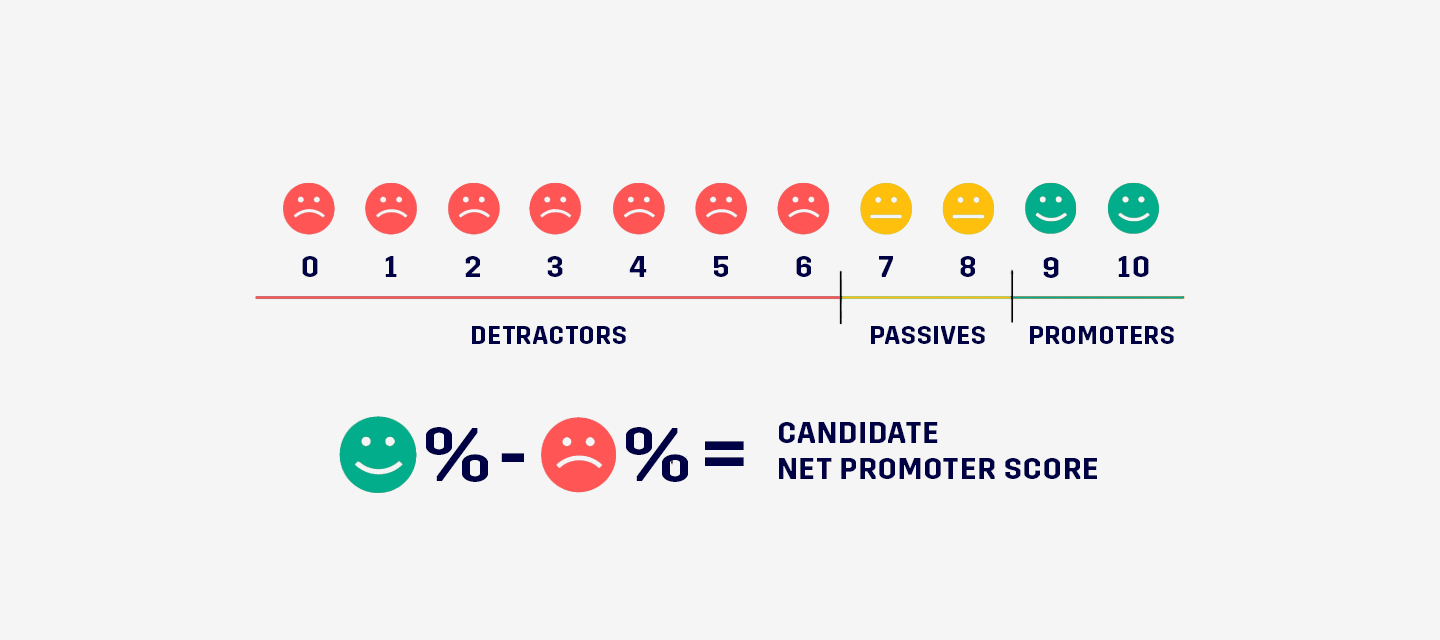
    1. For NPS calculation you need to ask your customer through a survey on how likely you would recommend our products or services to your friends and family on a scale of 0 to 10,
    2. Categorize all responses according to their scores :
    • Detractor, if customers gave you scores between 0 to 6.
    • Passives, if customers gave you ratings between 7 to 8.
    • Promoters, if customers gave you scores between 9 to10.

    Now subtract the percentage of detectors responses from the percentage of promoter responses to determine your NPS that maybe range from – 100 to 100.

    Promoters are loyal and well-wisher customers.

    Leveraging Promoters (9-10)

    • Referral program
    • Ask them to leave reviews
    • Testimonials
    • Social sharing
    • Send them swag

    Nature of a Promoter (9-10)

    • Defenders/advocates of your brand
    • Loyal and Enthusiastic
    • Always refer you to others.
    • Renew, Expand, and promote your product.
    NPS (Net Promoter Score) - Implementation and Calculation

    Passives are Satisfied with your Products but not like Promoters

    Nature of a Passives (7-8)

    • Satisfied with your product but not enough like a promoter.
    • Unenthusiastic
    • Not loyal too much.
    • If your competitor gives them a better deal, they may switch.
    • They are Price sensitive.

    Detractors are unsatisfied with your services, centers who won’t buy from you again, and may even intimidate others from buying from you

    Nature of a Detractor (0-6)

    • They Speak louder than your promoters.
    • They might share negative experiences.
    • Hicustomer’sof customer’s switch
    • You could not build loyalty or a long-lasting relationship with them till yet
    • They are dissatisfied with your product.

    Why NPS Matters?

    1. It helps to Identify the market position and ideal customers
    2. It helps to increase sales and revenue dramatically 
    3. Helps to gain key messages 
    4. Helps to prepare for objections
    5. Consistent referrals and references
    6. NPS helps to create Customer stories and personal Interactions
    7. Trends and themes to inform product development
    8. It gives motivation for prospects tell lead scoring
    9. NPS reduces the volume of future support needed

    How to Take NPS Data?

    To collect data for Net Promoter Score you need to make a feedback form and you have to request your customer to fill that form in order to enhance customer experience.

    NPS (Net Promoter Score) - Implementation and Calculation

    .

    When to Survey?

    • Establish a regular Don’t cycle
    • Don’t survey too frequently
    • Align your transactional survey with essential points in the customer journey
    • Avoid batch of customers
    • Coordinate with other teams to have a comprehensive survey plan

    Who to Survey?

    • All contacts, including customers, policymakers, and key shareholders.
    • Don’t avoid surveying unhappy customers.
    • Don’t survey too early
    • Don’t incentivize

    Where to Survey?

    In-App

    Pros

    Higher response rate

    More relevant feedback

    E-mail

    Pros

    Less likely to be based on a particular transaction or workflow

    Cons

    Lower response rates, resulting in less accurate results.

    Examples of Some NPS survey Question

    You may ask some questions in the NPS survey form like

    • On a scale of 0-10, how likely are you to recommend our products/services to your friends?
    • What is the primary reason for your score?
    • How can we improve your experience?
    • Which product/ service features do you like?
    • What was disappointing in your experience with us?

    Why is NPS Important?

    1. It helps to measure the loyalty of your customer

    2. It helps to improve your services

    3. It improves customer’s experience 

    4. It can find detractors so that we can reach them and improve the loopholes.

    NPS (Net Promoter Score) - Implementation and Calculation

    How to Increase your Response Rate?

    1. Send your survey from a human
    2. Set expectations in the subject line
    3. Make your call to action clear
    4. Ask no more than 2-3 questions
    5. Send a survey reminder
    6. Follow up with everyone who responds
    7. Send more than one survey per year and be consistent.

    Conclusion

    Measurement of NPS is essential for every business so that they can improve and give better customer experience to their customer.

    The product maker or the company uses a measurement system to evaluate the customer experience, customer loyalty, and customer satisfaction. This measurement is based on scores. Hence it is called Net Promoter Score.

    FAQs

    1. Who are the Detractors?

    Detractors are some unhappy customers who do not feel satisfied with your product and services.

    2. Why do we use NPS?

    NPS is a measurement system. It helps to improve customer’s experience.

    3. Why is NPS important?

    Customer ‘ses customer’s recommendations and referrals. 

    4. What are the cons of an app NPS survey/

    More tresemailsg than emails
    Only works for specific segments

  • CRM – Meaning, Importance, Types Strategy, and Examples

    CRM – Meaning, Importance, Types Strategy, and Examples

    In today’s era, Businesses changed from being transactional to relational. 

    Meanwhile, Organizations make sure that customers are satisfied with their products and services for increasing customer loyalty and retention. 

    One satisfied customer can bring 6 new customers with him while on the contrary, one dissatisfied customer carries off 6 customers.

    That’s why they start using this approach Customer relationship management for identifying, acquiring, and retaining the customers, and therefore managing a healthy relationship with them.

    Here in this chapter, we will discuss:

    What is CRM?

    Customer relationship management (CRM) is a mixture of practices, strategies, and technologies that businesses use to manage and analyze customer interactions and data all over the customer lifecycle.

    So, It helps businesses to improve a relationship with their existing customers and creates customer loyalty and retention. 

    After all, customer loyalty and retention are qualities that affect a company’s income. Hence, It is a management strategy that helps in increasing profit for a business. 

    Meanwhile, It helps businesses improve customer experience, satisfaction, retention, and service.

    CRM - Meaning, Importance, Types Strategy, and Examples

    Why CRM is important?

    Today, every business is full of competition, so it is more important than ever to gain new customers and retain the existing ones.

    Customer Relationship Management makes your company more customer-centric so that you are more likely to get 60% of more profit than without CRM business.

    So, A good relationship with your customer can bring you more loyal customers.

    CRM Software

    Hence, Nowadays, Customer relationship management is done by some software and applications, and it is the biggest software market in the world.

    So, CRM software is a tool to bring your sales, marketing, and customer support activities together, and simplify your process, policy, and people in one platform.

     It also helps you to manage the relationship between team members, vendors, partners, and collaborators.

    So, Customer relationship management software takes data from communication channels, the company’s website, telephone, email, live chat, marketing materials, and social media. 

    Hence, It enables businesses to learn more about their target audience and develop the best product according to their customers’ needs and desires.

    Also, Through the CRM system, companies stay connected to customers, processes, and improve profitability.

    How Can a CRM system Grow Your Business? 

    • It helps to make improvements to your backend.
    • Identify and categorize sales opportunities.
    • Also, Helps to Increase preferences from existing customers.
    • It helps to offer better customer service.
    • It helps to develop products and services.
    CRM - Meaning, Importance, Types Strategy, and Examples

    Components of CRM

    Mainly CRM software integrates customer interactions and information into a single database so that company users can more easily access and control it.

    1. Marketing Automation: Marketing automation is a component of Customer Relationship Management software. It can automate recurring tasks to minimize marketing efforts.

    For example, as sales opportunities come into the system, they automatically send the marketing materials, offer details, and product pricing details via email or social media or notifications.

    So, The main aim of marketing automation is to increase sales by converting potential customers.

    2. Salesforce Automation: Hence, In the CRM software, Salesforce automation is a tool that traces customer interactivity and automates many business functions of the sales cycle that are necessary to follow and attract new potential customers.

    3. Call center Automation: Meanwhile, In managing the excellent relationship with the customer CRM system, integrate call centers. So, Call center automation helps assist customer problems through pre-recorded audio and information. It also allows agents to handle customer requests and simplify customer service processes.

    1. Geo-location technology or place-based services: Also, These systems can generate geographic marketing campaigns based on customers’ physical location. It is also used to serve customers and find out new potential customers based on site.
    2. Workload automation: These systems systematically organize all work so that employees do their work in a minimal effort with less time.
    3. Sales lead management: So, Through these systems, sales team manage all inputs, and analyze data for converting potential customers.
    CRM - Meaning, Importance, Types Strategy, and Examples

    Types of CRMs

    1. Sales CRM

    So, The main aims of comapnies is making profit, and sales can make a profit. Hence, CRM provides better features, processes, and advanced tools for making sales through customer interactions.

    Meanwhile, It allows you to build a sales funnel, track leads, and find sales opportunities. It simplifies workflows and enables customer data such as chat, voice, email, and social media touchpoints on a single platform. 

    So, This system is all- in – one sales CRM system for sales professionals. Hence, It involves Sales Leads, contacts, opportunities, accounts, quotations, and proposals, etc.

    Below are some names of few softwares: 

    • Pipedrive
    • Close
    • SugarCRM
    • Dialpad

    2. Service CRM

    Customer service is a vital part of customer relationship management. It contains exclusive tools for customer service and support. 

    It is used by multiple departments such as sales, marketing, and customer service professionals to enhance customer experience and resolve customer inquiries quickly and smoothly.

    So, These systems have customer phone, email, online forms, live chat, social media contact, and online interactions.

    When a customer raises any service related issue, service CRM identifies the problem and sends it to the relevant concern department to resolve the customer’s issue as soon as possible.

    There are some service CRM listed below:

    • Agile
    • NextOS
    • Zendesk
    • SugarCRM

    3. Marketing CRM

    Marketing is the most essential part of any business. 

    It establishes a better relationship and building your brand with the customer.

    Basically it automates all marketing activities to make your product brand top of other brands and also more likely to increase sales.

    Also, it helps you to know how many engagements you are getting on your website, what marketing links customers are more likely to click, and the personal data they shared on a form.

    Marketing CRM form marketing campaigns and also automate them across all marketing channels, get information about the status of mail sent whether it is opened or not by the customer, click-through rate, and use customer interactions to modify the landing page.

    Some marketing CRMs are:

    • HubSpot
    • Drip eCRM
    • Keep – (formerly Infusionsoft)
    • Creation (previously BPM’Online Marketing)
    • Zendesk Sunshine
    • Mailchimp

    CRM for Small Business

    There is some CRM system that is made only for small businesses.

    Small business owners are looking out for simple, automatic layout and operating in low data interactions, this software integrate and manage their small business.

    If you have been running a small business, then you can use following software for your business:

    • Nimble
    • NoCRM.io
    • Copper
    • Capsule
    • Insightly
    • Zoho
    • Freshsales
    • HubSpot CRM

    Meaning, Importance, Types Strategy, and Examples

    CRM Strategy

    • Set a target
    • Be a customer-centric company
    • Remove all communication barriers
    • Track your customer interaction
    • Sync every data on your system
    • Measure, analyze and improve

    Examples

    Social CRM: It includes attracting potential customers directly from social media like Facebook, Twitter, LinkedIn, etc. social media is an open platform for all customers to share experiences and promote your products as well.

    Contact Centre: Sales and marketing teams acquire data and update the CRS system with information throughout the customer lifecycle.

    The agents of contact centres collect data and revise customer records through service calls and technical support interactions.

    Mobile CRM: These applications are made for smartphones, and tabs are a tool for sales and marketing employees. Through mobile CRM, they can access customer data anywhere and do their work when they are not in the office.

    Conclusion 

    Nowadays, businesses are more concerned with customer-centric rather than only sales-centric.

    That is why customer relationship management comes into existence.

    It is now in the software, which records all customer interactions and sends output to the user when required.

    FAQs 

    1. Which is the biggest software market in the world?

    The CRM software market is the biggest software market in the world.

    2. What is customer relationship management?

    Customer relationship management is a mixture of practices, strategies, and technologies that businesses used to manage and analyze customer interactions and data all over the customer lifecycle.

    3. What is CRM software?

    CRM software is a tool to bring your sales, marketing, and customer support activities together, and simplify your process, policy, and people in one platform.
     It also helps you to manage the relationship between team members, vendors, partners, and collaborators.