Author: lapaasindia

  • How to Start Gym Business? Marketing For GYM Complete Guide- Is Gym Business Profitable in India?

    How to Start Gym Business? Marketing For GYM Complete Guide- Is Gym Business Profitable in India?

    Do you want to Start GYM Business? By 2025, the Fitness Industry will exceed by $2B. Health and Fitness industry is growing rapidly in India because awareness of health and fitness is increasing every day.

    It is expected in  People are very conscious related to their health and that’s why they join GYM to keep themselves healthy and fit. Most of the Gym businesses failed due to lack of marketing here we will learn a detailed guide of the marketing of Gym.

    It is expected that in 2020 the Fitness industry will generate 1786 Million USD. A gym is a place where people go for exercise intending to fit themselves. So this awareness provides a great opportunity to start a gym business in India.  So in this blog, we will explain how to start and market A Gym Business.   

    What’s In It For Me

    1. Gym Business
    2. Business Model of GYM
    3. How To Start Gym Business 
    4. Investments Required For GYM Business
    5. Legal Requirement For Gym
    6. Branding For GYM
    7. How to Market GYM Business
    8. Offline Marketing For Gym
    9. Online Marketing For Gym 
    10. Franchise GYM
    11. Marketing Ideas For GYM
    12. Marketing Funnel For GYM

    Gym Business Guide Marketing For GYM Business How to Start Marketing Business

    1. Gym Business 

    A gym is a place where people go for exercise intending to fit themselves. In Gym, there are all types of fitness equipment and also a fitness coach who will teach you how to exercise. Treadmills, Rowers, stationary bikes, cross trainers, versa climbers, steppers, and rowing machines are some great equipment people often look at when they want to choose their gym.

    A gym provides many services like Weight loss, Weight gain, bodybuilding & personal trainer. People pay a monthly fee to the gym for doing exercise in the gym. There is a great opportunity to start a gym business because the fitness industry is about to grow at 30% per annum. In 2017, the Fitness Industry valued at 7000 Crore in India with a growth rate of 25% per annum.

    Gym business is growing more because nowadays people become conscious about their health and they are now aware of their health. A lot of people are facing an overweight problem and they want to reduce their weight. Some people are very conscious regarding their and they want to keep their body fit and away from diseases. So they are looking for the best gyms to go to. So next we will read different models of the gym.

    Gym Business Guide Marketing For GYM Business How to Start Marketing Business

    2. Business Model of GYM

    Business Model is a way that explains how your business makes money. In a business model, we can define how much it costs to provide a product and service, how we deliver product and service to our customer and how revenue comes.

    So it will be a great advantage if you formulate a business model for Your business. A good business model provide you an action plan to generate huge profit So let’s Understand the different models of GYM

    1. Membership  Model The Membership Business Model is the most used business model by Gym. In the Membership model, your customers pay you monthly subscription fees.

    The great advantage of the Membership Model is that it will pay you recurring income. But the membership model will make you profitable only when you have a large number of customers to subscribe to your subscription. For Example, if owned a GYM and your monthly expenses is 50000 per month and your subscription fees are 2000. In this case, you need at least 25 clients to achieve break-even.

    2. Pay As You Go  Pay as you go is another great business model you can choose for your GYM. Pay as you go Business model is cleared by its name itself, your customer pays you whenever they visit the gym for example you create a package of 1000 for 10 visits. So your customer can visit your GYM 10 times as they want to visit.

    The biggest advantage of this business model is that in this model people buy the package easily because they understand the cheap and it will also good for the people who are not committed and just try to develop fitness habits.

    In the membership model, your customers pay you a subscription fee for a month whether he or she will visit the gym or not, but in the pay, as you go, model, your customer pays only when he or she visits the gym. This model is also good for new people if they find the GYM and its environment good then they will subscribe to your monthly fees.

    3. Dynamic Pricing Dynamic pricing is a new business model in the fitness industry and will only work for high-income groups. In the Dynamic pricing business model, you make a customizable plan according to your clients’ fitness needs.

    So you can choose this model if your gym located in high society and big cities like Delhi & Mumbai. 

    4. Integrated Model  The Last Business Model Gyms use is Integrated Business Model. The integrated business model is a model in which your Gym also uses the method described above means your gym uses a subscription model as pay as you go model as well.

    This model is the best model for the gym because it provides multiple streams of income.  So these are the best business models a gym can use. You can choose the business model of your GYM on your own.

    Gym Business Guide Marketing For GYM Business How to Start Marketing Business

    3.How To Start Gym Business 

    After understanding the business model of GYMs let’s learn how to start a gym business. 

    1. Find a Space The first step in starting the GYM is to find a space in which you want to start your gym. The success of your gym business depends on how good is the location of your GYM. You can open a gym in a residential area as well as a commercial area.

    Always try to find a location that is suitable for your targeted clients. The location of your business is must be a good place and easy to reach the place. So the first thing you need to do if you want to start Gym business is to find a location whether you own the property or you want to take it on lease.

    2. Gym Equipment After selecting the location of your gym the next step to do is buy the right equipment for your gym. You can buy the types of equipment of your gym according to your budget and fitness services you want to provide to your customers.

    Also, consider the space of your gym before going to buy gym equipment because you can not install types of equipment more than your Space. So when going to buy the equipment always remember the space of your gym.

    3. Hire Certified Trainer The next step is to hire a certified trainer for your gym who will give fitness training. The success of your gym is also depending on the fitness trainer you want to hire because the employee is an important asset of any business.

    When hiring a personal trainer for your GYM always hire a trained and certified trainer. You can hire a certified trainer from many renowned institutes like the Indian Academy of Fitness Training (IAFT), Gold’s Gym Fitness Institute (GFFI) or Certified Bodybuilding & Gym/Personal Trainer (CBT). 

    Gym Business Guide Marketing For GYM Business How to Start Marketing Business

    4. Investments Required For GYM Business 

    Investments are the most important factor when you want to start any business. The Investments required to open a gym in India is dependent on following Factor

    1. Area & Rent- The first investment you have to do is Space. The cost of space is dependent on the area and the location where you want to take it. If you want to buy your property it will depend on the price of are and the square ft you want to own for example if the price 10,000 per sqft or you want to buy 1200 sqft it will cost you 12000000.

    You can also buy the space on rent and lease. If you have a large gym then you can install more equipment and your gym has more space so you can charge more from your clients. Rent will cost you 30000-500000 depending on the location. So buying a space is the first investment you have to make.

    2. Equipment- the next investment you have to make for starting your gym is equipment. The cost of equipment will be anywhere between 2 lacs to 50 lacs. The Cost of equipments depends on the brand you choose. 

    Jerai is the most popular brand you can consider for buying equipment. Only buy the quality and branded equipment because their durability is longer and you don’t have to reinvest on it.

      3. Interior & Setup- the next one-time investment is interior and setup. The cost of the interior is depending on the selection of interior design. Your gym’s interior must be good because it will give the feel to your clients when they are in the gym.

      4. Staff- The next investment is the staff. A good fitness trainer will cost you anywhere between 20000 to 1 lac. You also have to pay a salary to other staff like the manager and the cleaner. 

    5. Maintenance- the next monthly cost is maintenance you have to invest little on your equipment so they will work for longer.

    Legal Requirements for opening a Gym

    5. Legal Requirements For Opening A GYM Business 

     Any Business has its regulation and legal requirements. So when starting a gym you also need to fulfill legal requirements. Legal Requirements for starting a gym in India is following 1.Gym Registration- You need to register your business as like all other businesses. There is three types of entity to register your business Sole Proprietorship, Partnership Firms & Company. You can choose any of them to register your Business. In The beginning, Sole Proprietorship is the best way to start with because it has lower regulation and compliance.  2.SSI Registration- SSI is a Small Scale industry Registration by MSME India which one helps you to get many subsidies and schemes from govt. Your Gym gets Following Benefits from SSI Registration 

    1. You can get Collateral free loan From banks
    2. 50% off in Patent Registration
    3. 1% Exemption on Bank Overdraft
    4. Eligible For Industrial Promotion Subsidiary
    5. Concession in Electricity Bills
    6. Reimbursement in Charges of ISO Certificate 

    3. GST- You have to do Good and services tax registration for your business to collect GST From Users. GST is compulsory if your Turnover is more than 40 lakh or you accept online payments. 

    4. Clearance From The Police Department- Every fitness business must receive clearance from the Police Department. The biggest advantage of Clearance from The Police Department is that You can get help from Police in any dispute that happened in Your GYM.

    6. Branding For GYM Business 

    If you want to develop a successful business you need strong branding. Branding includes your logo brand name and tagline etc. You have to choose a good name for your business which one you will use to promote your business and you also have to create a good logo for your GYM and a good tagline. This Logo and tagline will use everywhere to promote your business. It Will use on social media, offline marketing, and websites, etc. Branding is the strategy which can use how you position your gym in people’s mind. So make good branding so people will always remember your gym brand.


    7. How to Market GYM Business 

    Marketing is an important part of any business. You have started your GYM Nobody knows that you have opened the gym if nobody knows about your Gym how they can join the GYM. Marketing includes two parts-  Online Marketing or Offline Marketing.

    Offline Marketing is a process of marketing when you use offline channels to market your business like Local magazines and newspapers.Offline.Online Marketing is also a part of marketing where you use digital channels to market your business.

    Here is the process to Market your business on Different Online Platforms. So you have to create awareness regarding your gym for this you have to market your GYm. You can market your business online as well as offline. So let’s learn how to market GYM Business

    1. Digital Identity Creation  

    The First part of Digital Marketing For Gym is Digital Identity Creation. You have to Build a Solid Digital Identity so anybody recognizes you as a brand. So let’s Start how & where to build Digital Identity

    Website For GYM

    Website

    Website play a important role in Digital marketing for Gym. A website is an important part of any marketing strategy. The website is your digital entity which can be used for every purpose. You can create a basic 4-5 Pages website with very ease. When creating a website make sure it has a good user experience. You can add your trainer profiles, gym reviews, your service, your Equipment photos, and contact details, etc. You can also create blogs to educate your audience. Blogs will help you to rank higher on google results and it will also create authenticity for your gym brand. If you need any help with a website you can consider a digital Marketing Agency Like Lapaas to do it for you.  local seo for gym

    Local SEO

    Nowadays people search on google before taking any action and they will search on google Gym near and the best gym in particular City. So what would if your website will rank on top when they search for a gym near me and the best gym in a particular area so they will contact you and Join Your Gym. Local Seo is the best strategy to grow your business in a local area. For Local SEO you have to make an SEO Optimized Google My Business Listing. For Google my business listing you can watch this video. You can also make a listing on other local directories like Yellow Pages & Justdial. Make sure to make your all listings with the same details it will help you to rank better on Local Search Results. Also, ask your customers to leave a review on these directories.

    Social Media Profile

    Instagram

    Instagram is the most growing Social Media Marketing platform with 1 Billion monthly active users. On average 500 Million people watch Instagram stories every day. So here we will discuss all the strategies that will help your GYM to grow on Instagram. The first thing you need to create is a Well Optimized Instagram Business Profile. Go to Instagram & create an Instagram account with basic details. After making a profile convert your account into a business account. After creating a business profile you have to well optimize your Business account with a good bio. You have to put a clear call to action. You also have to put your website URL on Instagram. This one is very important because Instagram provides you only one link. Make sure you have to put your logo on your Instagram profile. Instagram for business

    Facebook Business Page

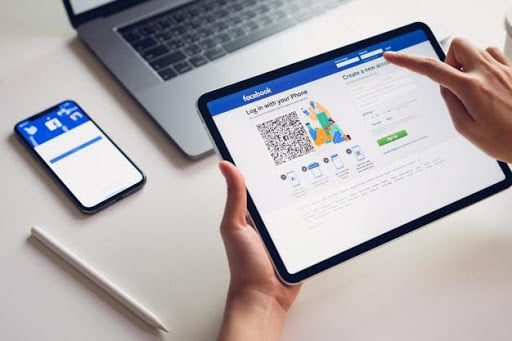
     Facebook is the world’s largest audience and has become the most powerful channel for marketing any type of business. On Facebook, You Have to Create a Facebook Business. Make Sure Your Business Page has All the details & it is fully optimized. Also, don’t forget to put the right Call To Action On Your Facebook Business Page.

    YouTube Channel

    YouTube is the world’s second-largest platform where people will search to solve their queries. Video content is on the boom because a video has high recall value and higher audience retention. So you can start your YouTube Channel with the name of GYM. Click on Menu and tap on Create a Channel and enter required details to start Your YouTube Channel

    2. Awareness 

    The first level of marketing is awareness. In which you are aware of the audience regarding your gym by using content marketing. Content marketing includes blogs, YouTube Videos, and Social Media content. Event and free week pass is also part of this phase
    Content Marketing  

    Content Marketing is a type of marketing in which you have to provide free valuable content to your Audiences. Content Marketing is the best way for Gym to educate their audience. So let’s learn how you will do Content Marketing on Different Platforms

     Instagram Marketing

    After creating a well-optimized business Instagram profile you need to develop a content strategy for your gym that will help you to organically grow on Instagram. If you want to grow on Organically On Instagram You have to regularly post content related to your GYM. 

    Types Of Content You Can Post

    Top 5 How To Tips & Tricks Motivation & Quotes Steps 

    Top Content Ideas For GYM
    1. Workout Tips & Tricks 
    2. Sports & Fitness Tips
    3. Fitness For Beginner
    4. Diet & Nutrition Tips 
    5. Physical & Mental Health 
    6. Personal Stories and Your Journey
    7. Clothing and Equipment
    8. Fitness for All
    9. Professional Fitness
    10. Inspiration and Motivation
    11. Equipment Showcase
    12. After & Before 


     YouTube Marketing
     On YouTube, you can share diet tips and how to do the right exercise, gym tips, and tricks and customer testimonials, etc. On Your Description, you

    can put all the details related to your gym. YouTube also provides you an opportunity to train people online.

    Content Ideas For YouTube 

    1. How-to video 
    2. Testimonial Video
    3. Diet Tips
    4. Gym Tips
    5. Weight Loss Tips
    6. Body Building Tips
    Events

    You can organize free Events to aware people of fitness and help them to achieve their fitness goal. When the event attendee gets some value from your side then they will know about your gyms and also can join your GYM.

    Pamphlets

    You can distribute templates in the local area to promote your business offline. You can Tie-up with a local newspaper boy to distribute your pamphlet. 

    Print Media

     You can use local print media to market your business. You can publish an advertisement in a local newspaper and Magazine. Local Newspaper’ strategy is not best for Gyms located in Big Cities like Delhi & GYM.

    Influencer Marketing

     Use YouTube & Instagram influencers to promote your gym. Offer them to promote your gym on their channel. Influencer Marketing is the best way to get more customers because an influencer has a loyal audience who is already engaged with the audience.  

    Video Marketing 

    Video Marketing is the best marketing strategy to grow your gym business in 2020. Educate your audience through video and post this video on all video platforms like YouTube, IGTV & Tiktok. 

    3. Consideration 

    Next Phase of Marketing is Acquisition when you do content marketing and run ads on Social Media. There are some percentages of the audience who directly become your Customer. For Acquisitions, You Can Do Following Things 1. One Week Free Pass Offer One Week Free Pass to attract new customers for your Gym. Create A Landing page for  One Week free pass and run ads on Facebook. The traffic comes from google ads will land on Your landing and the landing page users can sign up for one Free Week.

    2. Run A Challenge

    You can Run 90 Day Weight Loss challenge for a fixed cost. Challenge is the best strategy to attract new clients in the Fitness Industry. You Can Promote this challenge on every marketing channel. 3. Facebook & Instagram ads Digital advertising is the best way to grow your business quickly. Facebook Ad Platform allows you to run Ads on Instagram. So in these Blog, we will learn how to run ads on Facebook For GYM Objective- Objective is the first thing you need to decide before going to run ads on Facebook. You have to decide what you want from Your Facebook ad and what’s the reason behind your ad. So there are Three Types of Objective- Awareness, Consideration 7 Conversion. Awareness is the first step of marketing where you want people to know about you. Consideration is the second phase of your customer’s journey in which you get their contact details or land them to your websites. Conversion is the last phase where you sell your services to Your Customers. facebook ad for gym

    Facebook Ad Targeting For Gym (Audience 1 For Body Building)

    Location- Area & City where your Gym is Located Age- 18-30 Gender- Select Both if you serve to both and if you serve only to men’s then selectmen. Detailed targeting– Interest in Fitness  Ad Headline- Make A Sweet and short headlines that clearly describe your Gym’s offer. The Main Ad Copy- In These Section, you can trigger the pain points of your Audience like Do you want to Gain Weight? etc. Describe how your gym can solve their Pain Points. Image– In these sections, you can put videos and images. Videos will be good because it has High audience retention. You can use the image of your gym and video of your gym. The Url– Put the down the URL of your landing page where you want to land your audience. Call To Action – In this section you have to put what decision your audience has to make after seeing your ad. 

    Facebook Ad Targeting For Gym ( Audience-2 For Weight Loss)

    Location- Area & City where your Gym is Located Age- 25-50 Gender- Select Both if you serve to both and if you serve only to men’s then selectmen. Detailed targeting– Interest in Fitness  Ad Headline- Make A Sweet and short headlines that clearly describe your Gym’s offer. The Main Ad Copy- In These Section, you can trigger the pain points of your Audience like Do you want to lose weight, etc. Describe how your gym can solve their Pain Points. Image– In these sections, you can put videos and images. Videos will be good because it has High audience retention. You can use the image of your gym and video of your gym. The Url– Put the down the URL of your landing page where you want to land your audience. Call To Action – In this section you have to put what decision your audience has to make after seeing your ad. 

    3. Conversion

    Conversion is the last stage of Any funnel and in Conversion your goal will be achieved. In Conversion, You can Run different offers to join Your Gym. You can convert a client in any phase There is also possible that a client can convert in only awareness phase or someone in the Consideration phase but you need to do the conversion if you want to achieve higher Returns. 

    Remarketing

    When You Do first level marketing which is Awareness then some of them become your customers. You can remarket the remaining audience. Let’s take an example when you organize a free event and you collect data from the attendee and you can run ads on Facebook by this Data.    Remarketing Through Facebook Ads– Facebook provides you pixel id which you have to put on your website. Then through ads, you can show ads to only those people who visit your website. You can also run ads for those People who engaged with Your Previous Ad. If you need help with Facebook remarketing you can Consider a Full-Service Digital Marketing Agency like Lapaas to do it for you.  Remarketing Through Google Ads- Google covers 70% of the Digital ad area. You can show Displays ads to people who visit Your Website on Youtube Banner ad, Website they are visiting or apps they used.  So this is the Advanced Marketing Strategy For GYM By Digital MArketing Expert Sahil Khanna. If You need any help with Digital Marketing you can Consider a Full-Service Digital Marketing Agency Like Lappas to do it for you.  Calls- You can directly call these persons to join Your GYm. Calling is the best strategy to follow up with clients.  Whatsapp- You can also create Whatsapp Groups because You already have a number of interested people. In Whatsapp Group you can share your content or ask them to join Your Gym.

    10. Franchise of GYM

    A franchise is another option which one you can opt for. Instead of starting a business from scratch you can buy the franchise of a popular fitness brand which has already popular in the market and has a loyal customer base. A franchise provides you a readymade business model to get started with your gym. Gold, Fitnessone, Snap Fitness & UFC Gym are some popular brands in India that provide you the franchise opportunity. To buy the Best Gym Franchise you have to find the best franchise option in your area. Research in the market and find the best franchise for your business. You have to fulfill the franchise provider requirement to get a franchise from a particular brand. You also have to pay a one-time franchise fee and some share of profit this is the additional cost of total cost mentioned above. All the things of franchises are almost the same but you don’t need to do branding for your gym and don’t have to make so many efforts on marketing mentioned above. So Franchises is a good option if you have a strong budget and you want to invest in an established brand. 

  • WHAT IS FORECASTING AND DEMAND MEASUREMENTS? Complete Guide

    WHAT IS FORECASTING AND DEMAND MEASUREMENTS? Complete Guide

    Forecasting and demand measurement (in terms of marketing) is a tool required to forecast the future of product life.

    This tool is used by firms to anticipate product life span, how long this product can run in the market. In the process of forecasting and demand measurement, a firm understands the market behaviour, after that, it starts research based on the market environment to exclude survival opportunities for the product.

    In terms of opportunities, the firm must get the following heads:-

    Shape, size, growth, competition, sale strategies, profit potential, marketing, fundraising, etc.

    Forecasting is about taking an idea about future situations of the market, what will be the situation of the market, assuming it before the time is called Forecasting.

    Demand measurement as its name suggests it is the study of the current market, it shows the current situation of the market, In this, you can take an idea about the current expanding market at present.

    Reliance Jio used this strategy and invested 2.5 Lakh crore (25000000000000). Till today it acquired the highest market share of the telecom industry, which we will see in the case study.

    What is in it for me

    1. The 3 different types of Personas
    2. Reason for Forecasting
    3. The types of Forecasting
    4. The 3 Stages of Sale forecast Creation
    5. The 3 Stages of Forecasting
    6. Techniques for Sale Forecasting
    7. Expert Opinion
    8. Jio Case Study

    1) The 3 different types of Personas

    Audience Persona:

    Through this tool, the demand for the product is forecasted

    Product Persona

    Through this tool, the need for the product is forecasted.

    Market persona:

    Through this tool, if the market is for the product, it is forecasted.

    Demand Forecasting and measurement

    2) Reason for Forecasting:

    The world is full of risk and unreliability, and most of the decisions are taken under risk. A company comes across several risks, both internal or external to the operations such as technologies,  employees, recessions, law update by the government, etc.

    3) The types of Forecasting:

    1. Macro Forecasting
    2. Micro Forecasting

    Macro Forecasting 

    A firm calculates the forecasting at a broad level to the market. It determines the demand in the market and calculates future needs.

    Micro Forecasting

     It is concerned with detailed unit sales forecasting. This is for product market share in a specific industry, to guess future product life span.

    Forecasting selection depends upon following heads:

    a) High accuracy

    b) Research and development

    c) Market data information availability

    d) Product lifecycle

    Image result for Demand Forecasting and measurement

    4) The 3 stages of Sale forecast creation:

    1. The total volume of market demand generated through customer groups defined geographical areas, marketing behavior, and time tenure, etc.
    2. firm demand is a firm share of market demand.
    3. Sale forecast is expected firm sale based on the marketing plan, environment, and R&D.

    Future Demand Expectations:

    Future demand expectations for a product is done by risk calculation of the market. Whether an upcoming product can survive or not. It secures from the failure of the product and maintains stability. It makes better sales forecasting and a crucial success factor. 

    5) The 3 Stages Of Forecasting:

    1. Macroeconomics Forecasting Preparation.
    2. Industry sale forecast preparation:-  what will happen to overall sales in a firm based on the issues that influence the macroeconomic forecast.
    3. Company sale forecasting preparation:- it is based on what management expects to happen to the company market share.

    6) Techniques For Sales Forecasting:

    1. What is the customer feedback about the product and its intention to rebuy the product?
    2. What customer is doing in the market?
    3. What customer had done in the market.
    4. Time series analysis.

    7) EXPERT OPINION:

    A firm can gain future expectation reports from experts, dealers, distributors, suppliers, marketing consultants, and trade associations. 

    Dealer estimates are subject to the same strengths and weaknesses as sales force estimates.

    Many industries purchase economic and industry forecasts from well known economic forecasting firms that have more data available and more forecasting expertise.

    Sometimes, the firm invites a group of experts to prepare a forecast. The experts exchange views and produce an estimate as a group or individually.

    PAST SALES ANALYSIS:

    Firms can develop sales forecasts based on past sales. Exponential smoothing projects the next period’s sales by combining an average of past sales and the most recent sales, giving more weight to the latter. Statistical demand analysis measures the impact of a set of causal factors on the sales level.

    MARKET TEST METHOD:

    When buyers don’t plan their purchases carefully, or experts

    are unavailable, a direct market test can help forecast new product sales or established product sales in a new distribution channel or territory. Read relevant topic to understand how it works

     Forecasting makes isolation for businesses. Planning and forecasting are an approach in which companies work together for market share and take responsibility for their actions. The objectives of  Forecasting are to supply chain by generating a need demand and, delivering the right product at the right time to the market, and improving customer services. 

    We can better understand the Forecasting and Demand Measurement through this Jio Case Study:-

    Demand Forecasting and measurement

    8) JIO CASE STUDY

    In 2002, after the death of Dhirubhai Ambani, The Ambani brothers wanted to run a business on their own. And it became a big issue in the media. So, to tackle this situation, their mother decided to do a partition of the business. Anil Ambani gets Reliance Communication, Reliance Energy, Reliance Capital, etc. and Mukesh Ambani got Reliance Industries and I.P.L.

    So there was put a non-competing low against Mukesh Ambani. In 2010 the clause has ended, so, elder brother Mukesh Ambani buy the 96% share of Infotel broadband, and that converted into Jio in 2016.

    Infotel Broadband wanted to set the biggest network tower in India. Now Jio has India’s biggest 4G network, at that time there was not fully working 3G. Jio continuously researches for 5 years and try to set their network in every state. Now, they have to launch themselves.

    Demand Forecasting and measurement

    Mukesh Ambani always made clear that India is the price-sensitive market and if you have to succeed, you have to provide cheaper services. So they started distributing their sims for free of cost, which had unlimited data and voice calling. After the launch, it became a word of mouth and Jio didn’t have to market itself.  Media had a very limited role in its advertising, and  JIO became the fastest growing mobile network in India gradually.

    So, it is the strategy for gaining customers in the initial stage, after building a strong network Jio starts charging for their plans. Jio releases their membership plan for rs.99 And the base plan for rs.149. In their base plan, they provide unlimited data or voice calling so every consumer ready to invest in Jo.

    Mukesh Ambani Invested 2.5 Lakh crore in Jio, which is the total value of Airtel, Vodafone and idea combine. Before Jio, every telecom rules the market after arising the Jio all telecom companies have to decrease their prices. It causes competition and ultimately it’s a win-win situation for consumers.

    As of now, Jio is India’s largest network provider and recently it launches its Jio Fiber that provides free internet for home.

    Conclusion:

    Demand forecasting contains good planning and utilization of resources for the company. Forecasting is the main part of demand marketing since it provides predictions of future demand and the basis for planning and making decisions. Both quality and quantity methods are available to help organizations. Since forecasts are completely accurate for businesses.

    FAQs

    What are the types of Forecasting?

    There are two types of Forecasting- Macro Forecasting, Micro Forecasting.

    How many different types of Personas are there?

    There are three types of Personas-
    Audience Persona, Product Persona, Market Persona.

    How demand forecasting is done?

    The first approach involves forecasting demand by collecting information regarding the buying behavior of consumers from experts or through conducting surveys. On the other hand, the second method is to forecast demand by using past data through statistical techniques.

    Why demand forecasting is important?

    It helps an organization to reduce the risks involved in business activities and make important business decisions.

    What do you mean by Forecasting?

    Forecasting is about taking an idea about future situations of the market, what will be the situation of the market, assuming it before the time is called Forecasting.

  • What are the competitive strategies? Complete Guide

    What are the competitive strategies? Complete Guide

    Competitive Strategies are a part of marketing strategies, where companies make strategies to make a company grow, make their brand grow stronger and make a significant number of the customer base. Competitive strategies can also be coined as SWOT analysis as SWOT is used as a strategy for challenges which a company has to face in the long run and stand out from the crowd. 

    What’s in it For Me?

    1. What are the competitive strategies?
    2. Challenging For Market Leaders 
    3. Competitive Strategies
    4.  Example of competitive Marketing Strategies  
    5. Advantages of Competitive marketing strategies
    6. Strategies for High Market-Share Companies
    7. Risk Reduction

    1. What is competitive strategy?

    A competitive strategy is defined as a long-term plan of any organization for challenging competitive marketing over its other organization after examining the strengths and weaknesses of the market.

    The strategy can challenge competitive pressures; different market positions can suggest different market strategies. attract customers and assist in cementing the company’s market position.

    Suppose a market is occupied by the share show 50 % is in the hands of a market leader; another 30 % belongs to a market challenger, and 20 % belongs to the market follower.

    A market leader has the largest market share in market distribution coverage. Some historical market leaders are Microsoft (computer software), Best Buy (retail electronics), McDonald’s(fast food), and Visa (credit cards).

    50% MARKET LEADER
    30% MARKET CHALLENGER
    20% MARKET FOLLOWER

    2. CHALLENGING FOR MARKET LEADER

    DEFENSIVE MARKETING:-

    A defensive strategy aims to reduce the attack of market shares, every interval of time a new item is launched of three to six brands so the market leader must have ready to defend their share of the market.

    The defensive strategies can be described as a set of actions being used by the market leader of the organization to protect its market share from its competitors.

    Competative Strategy
    Competative Strategy

    Defensive marketing is depending on the quality of the items where they are applied. if the public purchased products for their quality such as cosmetics, medicine, clothes, etc. then the existing customer will be your customer.

    For example:-

    Dabur chyawanprash

    The quality of Dabur chyawanprash remains constant, so this is the reason behind chyawanprash that it holds a market share in the market.

    3. Types of COMPETITIVE STRATEGIES

    Cost Leadership Strategy

    Cost leadership is a challenging task for an organization to implement because it takes a long-term dedication to sell products at an affordable price.

    The challenge is that the organization also has to produce these products at an affordable cost; otherwise, you will lose your profit margin. A large organization that can make their products at low cost and sells them at a concession while still making a profit can drive competitors by consistently sell the products at the lowest cost.

    Differentiation Strategy

    Identifying an attribute that makes your product or service unique is the driving factor in a differentiation strategy.

    If your organization can differentiate its products or services in the minds of the customer, it can hold the market share of the market and higher sales volume in the market, which your organization offers, but your competitors do not.

    Cost Focus Strategy

    A cost focus strategy is same as a cost leadership strategy, but the major difference is that in a cost focus strategy your organization pic out a very specific part of the market and discount that market the affordable prices, available in the market.

    For example, a company that sells mobile phones could target a country that has a high percentage of people where the people want to buy mobile at affordable prices and sell those mobile phones at affordable cost than its competitors, but your competitors do not. The fact that this part of the market is much more likely to buy by a customer.

    Differentiation Focus Strategy

    Like the cost focus strategy, the differentiation focus strategy targets a very specific part of a market, but rather than offering at affordable prices to the customer in the market, an organization offers unique products that competitors do not offer.

    4. EXAMPLE OF COMPETITIVE MARKETING STRATEGIES

    Case Study of MI Smartphone

    MI NOTE 8

    MI company is the manufacturer and marketer of smartphone and consumer electronic products, including mi band, mi trolly, mi smartwatch, and music players.

    The company has achieved a perceptible position in the industry through its competitive strategy, which is at affordable and premium pricing policy. MI has a consistent practice of developing new products and its ability to make a product.

    The company also sets premium prices for its products. The company has intention is to offer a good quality product with features and uses at low prices to the market of added value along with maintaining ing profitability.

    Case study of Motorola phone

    Case study of Motorola phone

    MOTOROLA smartphone company is the manufacturer and marketer of smartphone and consumer electronic products and music players.

    The company had achieved a percentile position in the industry, but it can’t compete in the market for a long time because the Motorola smartphone company strategy is not a pricing policy.

    It did not seem consistent practice of developing new products and its ability to make a product.

    The company had no intention to offer a good quality product with features and uses at low prices to the market.

    5. Advantages of Competitive Marketing strategies

    Before a competitive advantage can be established, it is important to know the:

    1.  Useful:

    A company must know what its product or service provides. And what they can affect in the market It must offer real cost and cause interest.

    2.  Market Aim:

    A company must set up who can purchase from their organization and how they can reach their target market.

    3.   Competitors:

    An organization needs to understand other competitors in the competitive market.

    6. Strategies for High Market-Share Companies

    Some companies examine the profit and risk associated with their market share may conclude that they had extended themselves in the market or certain sub-markets. Their large share puts them on the top too often or includes too many marginal customers.

    These circumstances can lead the company to think about how to reduce its presence in the market.

    Share relaxation for the application of general or selective demarketing principles, such as reducing product quality or convenience features.

    In a period of shortages in the market, these steps may be especially necessary. Several high market-share companies have slightly used demarketing too.

    7. RISK REDUCTION

    Companies concluding that their high share is dangerous may want to adopt strategies reducing the risk rather than strategies reducing the share.

    We have stated that the optimal market share is a function of both profitability and risk and that any success in reducing the risk surrounding a high share is tantamount to optimizing that share.

    Your defensive strategy can require tactics like brand position, improvement in brand features and affordable price, advertising strategies, and sales promotion campaigns. A combination of aggressive marketing tactics and actions will make your defensive.

    Frequently Asked Questions

    What competitive strategy does Walmart use and why?

    Walmart uses the “cost leadership strategy”.If we go back into the time the founder, Sam Walton’s primary motive was to make a high volume of profit by selling goods at a lower price than his competitors. 
    Do check out our blog on Walmart case study for more information

    What competitive strategy is used by Apple Inc.?

    Apple Inc. uses the competitive strategy of innovation and premium pricing policy. The constant development of new products with the most exceptional quality enhances their customer loyalty as well as sets the bar high for its competitors.
    A video on Master strategies of Apple

    What is Under Armour’s competitive strategy?

    Under Armour’s(Sportswear and Apparel) competitive strategy is of differentiation where they stand out among its top competitors, With its secret recipe of innovation.

    What competitive strategy does Amazon use?

    The core competitive strategy used by Amazon is the cost leadership strategy with which it established itself as the “Top global online Retailer”. 
    Check out our blog on Amazon case study

    What’s the difference between Competitive Strategies and Organization design?

    Competitive Strategies is a long term action plan linked to the comparison between both the company and its rivalry’s SWOT  & Organization design is basically the creation of roles and structure for better knowledge of the organization’s goal. Organization design and competitive strategies are both interdependent processes.

  • What is Consumer Adoption Process ? Complete Guide

    What is Consumer Adoption Process ? Complete Guide

    Boost Your Product/Services to be sold with Consumer Adoption Process Strategy. 

    Selling a Product/ Service to the consumer is very EASY! 

    The consumer Adoption process is a strategy to make aware of a product, create interest among the customers, organize a trial run to check how the product is performing and at the end allowing the customers to adopt your product. 

    This process is adopted by many organizations as this strategy helps in allowing customers to evaluate the product and ultimately allow them to purchase them. This strategy will never change irrespective of technology change, market scenario change or whatsoever.

    As we know that selling a product to the consumer is very hard and it’s like chewing iron tablets.

    Everyone is fed up with this problem very much nowadays because of consumer need, want, demand is going in higher standards day by day.

        And in this modern world, human beings are getting smarter, which causes selling a product or service is much harder than before.

    That’s why an American based marketing author, consultant, and professor Philip Kotler (born May 27, 1931) gave the definition and idea of the Consumer Adoption Process and the idea of Marketing Mix Strategy.

    What’s In It For Me?

    1. 5 Stages of Consumer Adoption Process 
    2. Product Awareness
    3. Product Interest
    4. Product Evaluation
    5. Product Trial
    6. Product Adoption
    7. What is Market Adoption Rate? 
    8. Case Study of ADIDAS.

    1) 5 Stages of Consumer Adoption Process

    These are the 5 Consumer Adoption Process

    • Product Awareness
    • Product Interest
    • Product Evaluation
    • Product Trial 
    • Product Adoption 

    2) Product Awareness in Consumer Adoption Process

    Before selling products in Market Place you should aware of the customers of your product in the market for a while in Consumer Adoption Process. And remember in the subconscious mind of the consumer. We can do this by Advertisement in different types of mediums like Newspapers, T.V., magazines, Pamphlets, etc.

         From this consumer can get familiar with our Product. At the time when we launch a product in the market, consumers can recall it from the subconscious mind. Ex. Before the movie comes its trailer comes out first so that the audience will see it and remember that this movie is going to release. 

    You can read more in details in this article Consumer behavior

    3) Product Interest in Consumer Adoption Process

    After product awareness, we have to create interest in the consumer’s mind about our product.

        Now the consumer will try to know about our product from various platforms like from Internet, Social media, Retailer, Salesman, Current Users because we have awakened consumer’s interest by advertisement.

        We have to provide reviews and information about our product on every social media platform so that the consumer can read and evaluate it and get the information and be willing to take our product. 

    4) Product Evaluation in Consumer Adoption Process

    In this process, the consumer will compare our product with the product of another brand and judge that the product is better than that product, or it’s bad. Consumer judges our product on many aspects like its quality, packaging, price, after-sale service, etc. From this Evaluation, they understand and calculate all the pros and cons of our product.

    Consumer Adoption Process

    5) Product Trial in Consumer Adoption Process

    In this Product Trial process, before we launch the product completely, we have to try our product in limited numbers to a selected group of consumers. We can do this process in different ways.

         We can make our product trial by the retailer through our product, which will get feedback from the consumer to improve our product and service. And from this, we can make our product better and modified in the next step of the process.

          By this process, the consumer will be happy and will tell others about our product and from this consumer leaning towards the product and brand afterward consumer will take our product. 

    Consumer Adoption Process

    6) Product Adoption in Consumer Adoption Process

    In this Product Adoption process as earlier, we had promoted our brand along with feedback by testing our product to the consumer. Now we will launch our product in the entire market and the consumer will buy our product.

        And Yeah! this process will give a selling boost to our Product/ Service and also promoted our Brand. It is very important in Consumer Adoption Process. 

    7) What is Market Adoption Rate?

     In Consumer Adoption Process, the market adoption rate is that of new technology and a product that is used by a consumer in the market. And the market adoption rate is determined by members of the Society of People who examine the new technology, product, and innovation in limited time. 

    Consumer Adoption in Marketing In this process, the consumer goes through many marketing adaptation methods in which he decides whether to take the product or not and whether to take a new product.

    Eva

    8) Case Study of ADIDAS Consumer Adoption Process

    Although there are a lot of market studies of many big brands, which have increased the sales of their product by adopting the Consumer Adoption Process. 

    We will read the case study of the ADIDAS Consumer Adoption Process. Adidas Company is one of the biggest quotes of the Consumer Adoption Process. They have modified this process into 5 stages for their brand which is ADIDAS. 

    ADIDAS Full Form

    • Attention
    • Interest 
    • Desires
    • Action
    • Satisfaction 

    Attention

    Attention gain is also a skill and marketing tactic, which Adidas has done very well. Before promoting its products in the market, Adidas promotes awareness among people about fitness and health.

        With this, Adidas promotes its brand as well as it is the caretaker of fitness freaks. It made people feel that Adidas want people to take care of their fitness and health.

    Interest

    After gaining attention, Adidas influenced its brand and products by promoting among people. After this, they advertised their products to attract people to show them like premium and caring about their fitness. So that people felt that this product was made for them.

    Desires

    After Interest Awakening, Adidas started to be talked about in the market and people were excited. Now Adidas promoted their products in Newspapers, Magazines, Electronic Media, Social Media etc…. The brand was shown people a premium which made the people feel that this expensive product but it feels them like the premium look.

    Action

    After creating awareness for the desire among consumers and the market, Adidas started to be talked about in the market and people were excited.

    Now Adidas launched its products in the market and made more publicity so that people do not forget the brand and product in the subconscious mind and also people started buying the product.

    At that time Adidas’ product sales gone to very higher in the graph. 

    Satisfaction

    Adidas sold the product by giving it a premium look and saying their products are premium. Now they gave customers After Sales Service to make them loyal to the brand.

        In which they took feedback from the customers. If the product was not liked they can return it. Which made people loyal to the brand and today Adidas captures a large space in the market.

    Thank you very much for reading this article. If you have any suggestions, then do tell in the comment section! 

    You can find more interesting topics on marketing on my Youtube channel.

    FAQs

    What is Consumer Adoption Process?

    The consumer adoption process is a 5 step mental process which consists of awareness, interest, evaluation, trial, and adoption. All consumer goes through this process while adopting the product from leaning to becoming a loyal customer.

    How a New Product is Adopted by Consumers?

    The consumer adoption process is used to evaluate new products. In this process, consumers go through various stages, and in the end-user decides whether to reject or adopt a product.

    What is consumer behavior?

    Consumer behavior is an action or study of how users choose, buy, use, and dispose of services and goods to satisfy their needs and wants.

    What do you mean by rate of adoption?

    The rate of adoption is a relative speed at which new technology adopted by the public.

    5 stages of adoption?

    Product Awareness
    Product Interest
    Product Evaluation
    Product Trial 
    Product Adoption 

  • Consumer Behaviour (in hindi) क्या होता है? Complete Guide In Hindi

    Consumer Behaviour (in hindi) क्या होता है? Complete Guide In Hindi

    क्या आप अपने बिज़नेस को एक बड़ा ब्रांड बनाना चाहते है ,क्या आप अपने प्रोडक्ट को घर घर तक पहुँचाना चाहते है,तो इसके लिए आपको कस्टमर के माइंडसेट को समझना होगा और कस्टमर के माइंडसेट को समझना पड़ेगा और कस्टमर के माइंडसेट को समझने के लिए आपको customer behavior को जानना पड़ेगा | Consumer Behavior एक ऐसी तकनीक है जिसके सहारे हम कस्टमर के पसंद और नापसंद को जान सकते है |

    तो आज हम customer behavior को डिटेल में समझते है |

    तो इसमें आपके लिए क्या है

    1. Consumer behavior क्या है?
    2. Consumer behavior का क्या महत्व है?
    3. Consumer behavior के प्रकार
    4. Consumer behavior को कौन -कौन से कारक प्रभावित करती है ?
    5. Consumer behavior के कौन-कौन से कारक है?

    1. Consumer Behaviour (in hindi) क्या है?

    consumer behavior को प्रभावित करने के बहुत सारे करक हैं | जैसे-cultural, social, personal, psychological, marketing campaigns, economic conditions, personal preferences अदि | इसलिए पहले हम consumer behavior के बारे में विस्तारित रूप से चर्चा करेंगे |

    consumer behavior मुख्य रूप से लोगो पर एक स्टडी होती है जो कि group और organisations करती है ,consumer के खरीदने की क्षमता जो की goods ,experiences और rejection को देखकर की जाती है | ये बाजार में उनके action और उनके actions के पीछे motives को बताता है समान्य शब्दों में हम ये कह सकते है कि consumer behavior एक तरीका है जिसके द्वारा हम ये जान सकते है कि consumer कैसे decide करता है किउन्हें क्या चाहिए ,कैसे खरीदता है ,कैसे उपयोग करता है और उन चीजों से कैसे पीछा छुड़ाता है जो उन्हें नहीं चाहिए |

    Consumer Behavior

    How To Calculate Customer Value, Satisfaction & Loyalty | Complete Guide

    2. Consumer behavior (in hindi) का क्या महत्व है ?

    consumer behavior एक marketplace है जो कि बाजार में बहुत ज़्यादा contribute करती है इसको study करके market को पता चलता है कि मार्किट को कौनसे प्रोडक्ट चाहिए।,कौन सा प्रोडक्ट पुराना हो चुका है और कौन सा प्रोडक्ट consumer को कैसे दिखाना है consumer behavior समझने के बाद हम ये मान सकते है कि consumer एक एक्टर है और वो मार्किट में एक रोल निभाती कर रही है | consumer बहोत सारे role play करती है वो जानकारी देनेवाली का रोल निभाती  है user से payer का रोले निभाती  है ये role मुख्य रूप से खरीददारी करते समय निभाया जाता है | ये role अलग -अलग परिस्थियों में अलग -अलग हो सकती है |

    जैसे – एक माँ influencer का role निभाती है| Types of consumer behavior

    3. Consumer behavior के प्रकार |

    1.Complex Buying Behavior – इस प्रकार के consumer behavior में कंस्यूमर बहुत महगी चीजों की खरीदारी करती है | इसके लिए वो पहले से काफी रिसर्च कर रखी होती है |

    2.Dissonance- reducing buying behavior –इस प्रकार के consumer behavior में consumer बहोत confused होती है | और उनके दिमाग में ये भी चलता है कि कही बाद में मुझे पछताना न पड़े |

    3.Habitual Buying Behavior –इस प्रकार के consumer behavior में consumer को ब्रांड से कोई मतलब नहीं होता है उसे सिर्फ product से मतलब होता है चाहे वो product किसी भी ब्रांड का हो |

    4.Variety seeking behavior –इस प्रकार के consumer behavior में consumer को हर बार अलग -अलग product चाहिए | |इसका मतलब ये नहीं है कि वो पहले प्रोडक्ट से satisfied नहीं थी | बस वो हर बार अलग -अलग product को try करना चाहती हैं |

    4. Consumer behavior को कौन -कौन से कारक प्रभावित करती है ?

    consumer behavior को प्रभावित करने के बहुत सारे कारक है | ऐसे कई करक है जो कि consumer behavior को प्रभावित करने महत्व्पूर्ण भूमिका निभाती है |

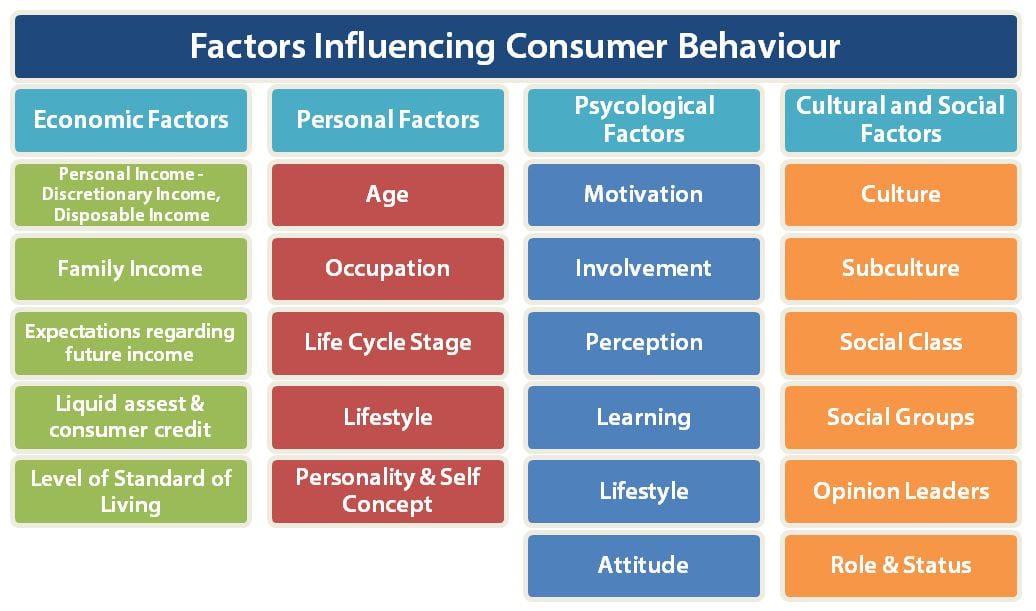
    (1) Personal Factor: personal factor को प्रभावित करने के चार प्रमुख कारक है |

    (A)Age aur lifecycle factor: age consumer के buying behavior को बहुत प्रभावित करती है | जैसे -जैसे लोगो की उम्र बढ़ती जाती है उनकी जरूरते बढ़ती जाती है कुछ product आगे के आधार पर होते है जैसे की baby bottle बच्चों के लिए बनते है क्यों कि कोई भी adult इसका उपयोग नहीं सकता है | कुछ companies particular age group को ध्यान में रखकर प्रोडक्ट बनती है | हर उम्र के लोगो की अलग -अलग जरूरते होती है | उम्र के साथ -साथ आदमी का रहन -सहन भी बदलती जाती हैं | जहाँ एक जवान आदमी entertainment के लिए पैसे खर्च करता है वही एक बूढ़ा आदमी health के लिए पैसे खर्च करेगा |

    (B)Gender:consumer का buying behavior भी gender के साथ-साथ बदलता जाता हैं | एक male और एक female दोनों की अलग -अलग पसंद होती है | साथ ही दोनों की अलग -अलग जरूरते है कुछ चीजों में उनकी जरूरते सामान हो सकती है जैसे कि movies ,webseries ,food ,fun ,technological gadgets और travel | पर कुछ प्रोडक्ट दोनों में से किसी एक के लिए ही बने होते है | जैसे makeup products केवल female ही उपयोग क्र सकती है और shaving razer जैसे प्रोडक्ट्स केवल पुरुष ही उपयोग कर सकते है |

    (C)Income:income भी consumer को एक प्रोडक्ट से दूसरे product या फिर एक ब्रांड से दूसरे ब्रांड में shift कर सकता है एक पढ़ा -लिखा आदमी बाजार जाने से पहले research करेगा जो कि एक अनपढ़ आदमी नहीं कर सकता है | जैसे-जैसे लोग शिक्षित हो रहे है वे उन्हें मिलने वाले प्रोडक्ट के बारे में अधिक जानना चाहते हैं | अब वो केवल advertisements पर निर्भर नहीं रहते | अब यदि कोई शिक्षित आदमी बाजार जा रहा है तो वो केवल वही प्रोडक्ट को खरीदता है जो उन्हें संतुस्ट करता है |

    (D)Education: पढाई आदमी का दुनिया को देखने का नजरिया बदल देता है एक पढ़ा -लिखा आदमी बाजार जाने से पहले research करेगा जो कि एक अनपढ़ आदमी नहीं कर सकता है | जैसे-जैसे लोग शिक्षित हो रहे है वे उन्हें मिलने वाले प्रोडक्ट के बारे में अधिक जानना चाहते हैं | अब वो केवल advertisements पर निर्भर नहीं रहते | अब यदि कोई शिक्षित आदमी बाजार जा रहा है तो वो केवल वही प्रोडक्ट को खरीदता है जो उन्हें संतुस्ट करता है |

    (2) Psychological factors:psychological factors वो होते है जो customer को physically और mentally रूप से प्रभावित करती है | उनमे से कुछ है –

    (A)Perception:

    धारना यह है कि consumer आपके प्रोडक्ट को कैसे देखता है और उसे कैसे define करता है ये कई कारक पर depend करता है जैसे किconsumer आपके ब्रांड क बारे में क्या सोचता है ,क्या सुनता है और क्या समझता है किसी product बारे में consumer की सोच उसकी decisions को बदल सकता है |
    जैसे कि हम जानते है कि first impression, last impression होता है | इसलिए यदि कोई ब्रांड अपने product का अच्छे से प्रचार करती है तो वो कस्टमर के दिमाग एक लम्बा और effective छाप छोड़ सकती है |

     (B)Learning:

    learning एक process है जिससे पता चलता है कि कस्टमर किसी प्रोडक्ट का उपयोग कर उसके बारे में क्या याद रखता है |और ये positive और negative भी हो सकता है | वे उस प्रोडक्ट को future में खरीदेगा कि नहीं इससे ये भी पता चलता है यदि प्रोडक्ट की गुणवत्ता,कीमत और सेवा ने
    consumer को ठीक से संतुस्ट किया है और उसके expectations को पूरा किया है तभी वो उसे future में लेने की सोचेगा |

    (C)Motivation: 

    motivation एक आतंरिक शक्ति है जो consumer को एक विशेष प्रोडक्ट खरीदने के लिए encourage करती है जब कोई consumer यह निर्णय लेता है कि मुझे यह प्रोडक्ट खरीदना चाहिए | और मुझे ये प्रोडक्ट किसी भी तरह चाहिए तो ये चीजे प्रोडक्ट के फेवर में काम करती है |

     (D)Attitude and beliefs:

    कभी -कभी customer किसी विशेष product के साथ अपने belief को attach कर लेती है | जब कोई consumer का किसी विशेष प्रोडक्ट के साथ एक mindset बन जाता है और वो उसे सच मनती है | एक belief positive भी हो सकता है और negative भी | attitude से पता चलता है कि कोई कस्टमर किसी प्रोडक्ट के बारे में क्या respond करता है जो कि उसके belief पर depend करता है |

    (3) Cultural Factors: consumer behavior को प्रभावित करने वाले cultural factors:

    culture एक समूह है उन belifs और perception का जिसमे एक एक आदमी अपने परिवार और समाज से बहुत अर्ली स्टेज में सीखता है | और उसको follow करता है | culture को food ,tradition और behavior के रूप में भी बाँटा जा सकता है |

    उदहारण के लिए अमेरिका का culture इंडिया से अलग है अमेरिका में female western कपड़े पसंद करती है जब कि इंडिया में फीमेल साड़ी पसंद करती है |

     (B)Sub-culture:

    हर culture को sab-culture में बाँटा जा सकता है जैसे की gender ,class और caste | और सभी कि अपनी -अपनी belief होती है जैसे कि हिन्दू शादी में लाल लेहेंगा पहने जाते है जबकि क्रिस्टन marriages में वाइट गाउन पसंद किया जाता है | एक upper class का आदमी luxurious item पर खर्च करेगा जबकि एक lower class का आदमी cheap प्रोडक्ट्स पर खर्च करेगा | और एक जेंडर में ये माना जाता है कि केवल फीमेल ही fareness cream का use कर सकती है |

    (C)Social class:

    जब किसी society को उसके social standing ,economic के aadhar और उसके wealth पर बाँटा जाता है तो उसे social class कहा जाता है |
    social class को income ,education और occupation के आधार पर बनाया जाता है | social class consumer के behavior को प्रभावित करता है क्योकि लोग अपनी purchase ,consumption और यहाँ तक की intract भी social standing के आधार पर करते है |

    (4) Social Factors: social factors society से सम्बन्धित है और mainly  consumer behavior को social फैक्टर्स प्रभावित करती हैं |

     (A)Family: 

    जब लोग एक दूसरे से related होते है चाहे वो blood से हो या adoption से या फिर एक साथ रहने से तो उसे family कहते है | consumer behavior को influence करने में परिवार एक बड़ी भूमिका निभाती है क्योकि एक आदमी अपने परिवार के अनुसार ही अपने personality ,faith ,धारणा और स्वाद को बनता है |

    जैसे कि एक बच्चा अपनी decisions अपनी family के अनुसार ही बनता है क्योकि वो उनपर depend होता है जिसके परिवार में सारे decisions पुरुष मुखिया द्वारा ही लिए जाते है |

      (B)Reference group: 

    reference group ऐसे लोगो का समूह है जिनकी सलाह indivisual खरीदारी करते समय लिए जाते है | reference group consumer के behavior को influence कर सकती है क्योंकि किसी आदमी का beliefs ,perception ,values aur behavior आम तौर पर reference groupसे प्रभावित होती है |

     (C)Social Role and status:

    किसी आदमी का role किसी ग्रुप में उसके position के आधार पर decide होता है | लोग समाज में अपने role और status के आधार पर खरीददारी करते है वो ऐसे product की खरीददारी करते है जिन्हें वो अपने group में status के रूप में दिखा सके | इसलिए marketers को अपने target customer के status के आधार पर product बनाना चाहिए |
    जैसे की -mobile और cars आज के टाइम में एक status सिंबल हैं |

    5. Consumer behavior (in hindi) को प्रभावित करने के पाँच कारक |

     1. Purchasing power:

    consumer behavior को प्रभावित करने में purchasing power बहोत महत्वपूर्ण भूमिका निभाती  हैं | आम तौर पर consumer किसी भी उत्पाद या सेवा को खरीदने से पहले consumer की purchasing power के साथ-साथ अपने बचत के बारे में सोचती है | इससे कोई फर्क नहीं पड़ता कि आपका प्रोडक्ट कैसा है | यदि वो consumer की जरूरतों को पूरा करती है तो consumer उसे ख़रीदेगा | consumer behavior और purchasing power consumer को बेहतर product खरीदने में मदद करता है |

    2. Group effect:

    consumer behavior को प्रभावित करने में group effect बहोत महत्वपूर्ण भूमिका निभाती है | mainly,group effect में परिवार के member ,करीबी दोस्त और तत्काल रिस्तेदार शामिल होते है |

    उदहारण के लिए phone में iphone group effect का उदहारण है |

    3. Personal priority :

    personally, consumer का behavior पसंद ,नापसंद और भरोसा विभिन्न रूप से प्रभावित होती है |व्यक्तिगत देखभाल consumer का व्यक्तिगत सोच ,जैसे fashion और खादी उद्योग व्यक्तिगत सोच पर आधारित है |
    विज्ञापन सोच को कुछ हद तक प्रभावित कर सकती है | | consumer का पसंद और नापसंद उपभोक्ता के खरीददारी पर प्रभाव डालती है |

    4. Internal power:

    consumer के सोच को प्रभावित करने में internal power महत्वपूर्ण भूमिका निभाती है | consumer का निर्णय बाजार की खरीददारी को प्रभावित करती है | जब भी बाजार की economy बढ़ रही होती है तो कस्टमर की खरीददारी भी बढ़ जाती है | जब भी economy नीचे जाती है तो कस्टमर के खरीददारी पर प्रभाव पड़ता है | positive internal वातावरण consumer को आत्मविश्वास के साथ खरीददारी करने में मदद करती है |

    5. Marketing campaigns:

    marketing campaigns consumer की खरीददारी पर काफी असर डालती है | marketing campaigns consumer के क्रय निर्णयऔर बाजार शेयरों में एक महान परिवर्तन लाने के लिए भी जानी जाती है | marketing campaigns उपभोक्ता को इस हद तक प्रभावित कर सकती है कि consumer एक ब्रांड के बदले दूसरे ब्रांड के बदले चुन सकती है या बड़ी खरीददारी कर सकती है | नियमित रूप से की जनि वाली मार्केटिंग अभियान कंस्यूमर को अच्छा प्रोडक्ट ,बीमा पालिसी और रोमांचक उत्पादों की खरीददारी करने की याद दिलाने में मदद करती है |

    FAQs

    Consumer behavior किसी संगठन को कैसे प्रभावित करता है?

    Consumer behavior संगठनों को यह तय करने में मदद करता है कि उत्पादों और सेवाओं का निर्माण या प्रस्ताव क्या है। 
    जब उन्हें पता चलता है कि ग्राहक क्या खरीदते हैं और उन उत्पादों को खरीदने के बारे में क्या सोचते हैं, तो संगठन आसानी से एक ऐसी आवश्यकता को पूरा कर सकते हैं जो अभी तक संतुष्ट नहीं हुई है।

    कैसे Consumer behavior बदल गया है?

    Consumer सिर्फ उत्पादों की उपलब्धता नहीं चाहते हैं; वे बेहतर अनुभव, सेवाएं और माहौल भी चाहते हैं। इससे शॉपिंग मॉल का विकास हुआ है, जहां एक छत के नीचे खरीदारी, मनोरंजन और बेहतर सुविधा उपलब्ध है।

    क्यों Consumer behavior महत्वपूर्ण है?

    Consumer behavior के अध्ययन से उपभोक्ताओं की खरीद व्यवहार को पहचानने में मदद मिलती है। Consumer behavior का अध्ययन बाज़ारियों को न केवल यह समझने में मदद करता है कि उपभोक्ता क्या खरीदता है, बल्कि यह भी समझने में मदद करता है कि वे इसे क्यों खरीदते हैं

    क्यों Consumer behavior dynamic है?

    Consumer behavior एक गतिशील घटना है। दुनिया हमारे चारों ओर विकसित होती है, और हमारी आदतें लगातार गतिशील संस्कृतियों और रुझानों को बदल रही हैं।

    Consumer behavior concepts क्या हैं?

    Consumer behavio में विशेष रूप से तीन बुनियादी गतिविधियां शामिल हैं acquiring, consuming और disposing।

  • Consumer Behavior Process | A Complete Guide

    Consumer Behavior Process | A Complete Guide

    What is the meaning of the term ” Consumer Behavior”

    Consumer Behavior Process is a term that is affected by various factors like cultural, social, personal, psychological, marketing campaigns, economic conditions, personal preferences, etc.

    But before discussing “What influences” we must know “What consumer behavior” is.

    So in this blog, we will learn What is the consumer behavior process or consumer decision making process.

    1) What is Consumer Behavior Process Process?

    Consumer Behavior Process is a study of individuals’, groups’ and organizations’ decisions by observing their selections, purchasing, use and rejections of goods, ideas or experiences to fulfill their wants and needs.

    It defines the actions of the consumers in the marketplace and what are their motives behind those actions.

    In simple words we can say that Consumer Behavior Process or consumer buying process is how consumers decide what they need, want and what they desire and how they buy, use and get rid of goods that they don’t need or they don’t want.

    2) Importance of Consumer Behavior

    Consumer Behavior Process or consumer buying process is quite important and it contributes a lot to the marketplace.

    By studying its market understands and can figure out which products are needed in the marketplace, which products are outdated and how to present the product to the consumer.

    Understanding Consumer Behavior, we can assume that the consumer is an actor in the marketplace and he is playing a role.

    They play various roles. They play roles like information providers from users to the payer and the disposer. These roles are generally played while making decisions.

    These roles might be different in different consumption situations.

    For example- A mother plays the role of an influencer when her child is in the purchasing process and at the same time she plays the role of a disposer for the products used by her family.

    Types of consumer behavior

    3) Types of Consumer Behavior

    1. Complex Buying Behavior –

    This type of Consumer Behavior Process is experienced when a consumer is buying an expensive, occasionally bought products.

    They have already done a lot of consumer research and are highly involved in the purchase process before investing. For example – Buying a car, buying a house, etc.

    1. Dissonance-reducing buying behaviour –

    In this type of Consumer Behavior, the consumer is highly confused between the brands and the differences between the brands but they are highly involved in the purchase process.

    This type of situation generally occurs when a consumer has second thoughts or might think that h/she might regret his/her decision or choice later.

    1. Habitual buying Behaviour –

    This type of behaviour is characterized by the fact that the consumer has very little involvement in the category of the product or brand.

    For example – You go to buy bread. There you buy your preferred type of bread irrespective of which brand it belongs to.

    In short, you are following a habitual pattern and not having brand loyalty.

    1. Variety seeking behaviour

    In this type of Consumer Behavior, the consumer seeks variety. They try different products at different times.

    This necessarily does not mean that they weren’t satisfied with the previous product. It is just they want to try different varieties.

    factors-influencing-consumer-behaviour

    4) What factors influence Consumer Behavior?

    The influence on Consumer Behavior Process changes by 5 factors. These two factors are:

    1. Personal factors: There are three major personal factors.
    2. Age and lifecycle factor: Age brings a lot of changes in Consumer Behavior’ buying. As people grow their need changes. Some products are age-based like baby bottle and diapers are made for children as an adult is not going to use the same.
    3. Cultural Factor
    4. Psychological Factor
    5. Social Factor

     Some companies make products only for a specific age group. Every age group has different needs and wants. With Age lifestyle of a person also changes.

    Where a youngster spends money mostly for entertainment purposes, an older person spends money for health purpose.

    Personal Factors includes

    1. Gender
    2. Income
    3. Education

    Now we explain all these factors in detail which affect Consumer Behavior.

    1. Gender:
      Consumer’s buying behavior also changes with gender. A man and a woman can have different preferences.

      The reason for the different choices is different needs. In some areas, they can have some choices too like in movies, web series, food, fun, technological gadgets, and travel but some products are made for either of them.
      Like makeup products are used by women and a product like shaving razor are used by men only.
    2. Income:
      Income also plays an important role in shifting consumer preference from one product to another product or from one brand to another brand.
      i) A person with a high income will always prefer luxurious products as he can buy. but a person with low income will prefer cheaper products.
      ii) People with high incomes will spend more on their lifestyle and entertainment as compared to a person with low income.
      iii) Consumers with less income will focus on their basic needs like food, clothes, and shelter but a high-income person will complete these basic needs with luxury. Based on income, a person prepares his budget so any increase or decrease in the income can cause a shift in the people’s choice of brands and products.
    3. Education:
      Education causes a big change in how a person looks at the world. An educated person will do big research before going to the market which an uneducated person will not do.

     As people are getting educated, they want to know more about the products offered to them. They do not keep themselves depend on ads only. Now, if an educated person is going to the market, he will choose only that product that satisfies him properly.

    Example: if an educated person is going to buy a mobile phone, he will research its features and he will compare the prices with its substitutes and after that, he will come to a decision.

    (2) Psychological Factors: Psychological Factors is also another factor that drives Consumer Behavior Processvery much. This factor affects the consumer emotionally and mentally. Some of them are:

    Perception:
    Perception is how a consumer understands your product and interprets it.

    It depends on many factors like how he sees, hear and understands about the brand. What a consumer think of a product can change its decision making in the same way.

    As we know, the first impression is the last. So if a brand has advertised its product effectively then it can leave a long-lasting image in the mind of the customer.

     A belief may be positive as well as negative. Attitude is how a consumer responds to a product that depends on his belief.

    (3) Cultural Factors: Cultural factors that affect Consumer Behavior Process are:

    Culture: Culture is the set of beliefs and perceptions that a person learns from its family and society at a very early stage and follows it.

     Culture can be divided into food, tradition, clothes and also behavior. Culture is varied from country to country and group to group.

    Example: The tradition of America is different from India. Females in America will prefer western clothes whereas, in India, Saree is our tradition.

    Subculture: Each culture is then divided into sub-cultures like caste, class, and gender. Every caste has its own belief like in Hindu marriages red lehengas are preferred while in Christian white gowns are preferred.

     An Upper-class person will spend on luxurious items whereas a lower-class person will spend on cheaper items. And in a gender, males are generally not considered to buy fairness cream.

    It is a belief that only females can use fairness creams.

    Social class: When a society is divided based on its social standing, economic success and wealth then it is known as social class.

     Social classes are also made based on Education and Occupation. Social class affects the behavior of the consumer as people made their Choices, purchases, consumption and also interact based on their social standing.

    Social Factors: Social Factors are related to society and mainly with a group. Social factors that affect Consumer Behavior Process are:

    Family: Family can be defined as when people or groups of people are related to each other by blood, marriage, adoption or are living together.

     Family plays a big role in influencing Consumer Behavior Process as an individual will shape their personality, beliefs, perception, tastes according to their family.

    Ex: Decisions taken by a male head in a family.

    1. Reference group: Reference group is people or groups of people whose advice an individual seek while making any purchase. A reference group can influence Consumer Behavior Process as An individual’s beliefs, perceptions, values, and behavior are generally influenced by its reference group. Example: neighbors, teachers.
    2. Role and Status: A person’s role is defined by its position in that particular group. People make their purchases based on their role and status in society.

     They purchase products that can be showed as a status symbol in their group so marketers should make their product based on the status of their targeted audience.

    Other Factors include

    1. Learning: Learning is what consumer remembers about the product after use of that product. It can be positive or negative.
      He will buy that product in the future or not depends on a consumer’s experience with that product.
      He will make that decision if the product’s quality, price, service has satisfied him properly and meet his expectations.
    2. Motivation: Motivation is an internal force that encourages the customer to buy a particular product. When a consumer decides that I want to buy this particular product and I will get it anyhow then it works in favor of that product.
    3. Attitude and beliefs: Sometimes consumer attaches beliefs to a particular product. Beliefs are when a consumer has a particular mindset about a particular product and he believes it to be true.

    To know more about this topic read the blog customer’s demand.

    Types of Consumer Behavior

    5) The 5  Factors that Influence Our Decisions:

    There are 5 factors are:

    1. Purchasing Power: Purchasing Power is a very important role play to influence consumer behaviour.
      Generally, Consumer analyses their Purchasing capacity, as well as a consumer, think about his budget before the purchase any product or services. It doesn’t matter how your product is Excellent if it fails to meet the potential of buyers’ ability. It will highly impact on its sales. The Consumer Behavior Process and their purchasing capacity would help in determining eligible consumers to get achieve better results
      . Greater impact on the end purchase made by a consumer.
    2. Economic Conditions: Economic Conditions is the very important role play to influence Consumer Behavior. Consumer decisions strongly influence the current financial position of the market. Whenever the Economy is growing then buyer purchasing also increases. Or whenever the economy is going down then it also affects buyer purchasing power hence its effect on the total market. The positive economic environment is known to make consumers more confident and ready to purchase despite their financial liabilities.
    3. Marketing Campaigns: Marketing Campaigns or advertisements is an important role in influence the purchasing decision made by the consumer.
      They are also known to bring a great change in the market shares of competing industries by influencing the purchasing decisions of consumers. Regularly conducted marketing campaigns can influence a consumer’s purchase decision to the extent that they can choose one brand for another or make unsightly or unsightly purchases. Marketing campaigns if undertaken at regular intervals even help to remind consumers to shop for not so exciting products such as health products or insurance policies.
    4. Group Influence: Group Influence also plays an important role in influencing consumer behaviour. The Primary influential groups include Family Members, close friends, Immediate Relatives and Classmates, and the Secondary influential groups includes co-workers, neighbours, clubs, and organizations, as well as acquaintances, are seen greater influence on consumer purchasing decisions. Say for example Craze for the iPhone in the luxury phone are an example.  
    5. Personal Preferences: In the Personal level, Consumer Behavior Processes influenced by various colours of Morals, Values, likes, dislikes, preferences, beliefs. Some certain dynamic industries such as personal care, consumer personal outlook, fashion, and food industries, personal views and opinions related to style and fun can become major influencing factors. Although adverting can help to influence these factors to some extent, The individual consumer likes and Dislikes having a greater impact on the end purchase made by a consumer.

    FAQs

    Why is consumer behavior a dynamic process?

    Consumer behavior is a dynamic process because consumer behavior is associated with a variety of influences such as personal, economical, social, and psychological,  all these processes are divided into this.

    What are the 5 stages of the consumer buying decision process?

    The search process, comparison, product service selection, and decision evaluation are all 5 stages of a consumer decision. Most consumers begin to make decisions through this process.

    What is consumer behavior and why is it important?

    It is necessary for the businessman to know about consumer buying behavior because by understanding the expectation of the consumers, he can take his business forward and it makes it easier to understand which product the consumer can buy.

    Analyze Your Website With Our FREE  SEO Tool 
    Fix your website’s SEO like HTML Headings, Alt txt, Robot txt, Sitemap, Schema, Mobile Friendly check, Pagespeed, PageStatistics, Internal links, External links, SEO Friendly links, Alexa rank, etc.

    GET Audit Report

  • SWOT Analysis क्या है? SWOT Analysis कैसे करते है? Complete Guide

    SWOT Analysis क्या है? SWOT Analysis कैसे करते है? Complete Guide

    क्या आपने SWOT Anyalsis के बारे सुना है?

    स्वॉट विश्लेषण 1960 के दशक में अल्बर्ट हम्फ्री द्वारा गढ़ा गया एक शब्द है। इसमें ताकत, कमजोरी, अवसर और धमकियां शामिल हैं। किसी कंपनी की Strenght, Weakness, Opportunities & Threats  जानने के लिए और उनके अनुसार कार्य करने के लिए स्वॉट विश्लेषण किया जाता है। यह संभव नहीं है कि सभी कंपनियों के पास केवल ताकत और या केवल कमजोरियां होंगी। ताकत के साथ-साथ कमजोरियां भी हैं।

    स्वॉट विश्लेषण किसी कंपनी के लिए नहीं बल्कि एक व्यक्ति के लिए भी लागू होता है। जब आप एक साक्षात्कार के लिए आते हैं, तो आप इस प्रश्न का सामना करेंगे “आपकी ताकत और कमजोरियां क्या हैं? क्या आपने किसी खतरे का सामना किया है? “

    इसी तरह, एक maketer को कंपनी के लिए स्वॉट विश्लेषण करना पड़ता है क्योंकि उसे अपने प्रतिद्वंद्वियों से लगातार खतरों का सामना करना पड़ता है और अपनी कमज़ोरियों को दूर करना और अपनी ताकत पर ध्यान देना कंपनी का प्राथमिक उद्देश्य होता है।

    इस ब्लॉग में, हम SWOT Anyalsis कैसे करें, SWOT Anyalsis के फायदे और SWOT Anyalsis के कुछ उदाहरणों पर अधिक चर्चा करेंगे।

    1. SWOT Analysis क्या है?

    2. SWOT का क्या उपयोग है?

    3. SWOT  कौन कौन कर सकता है?

    4. SWOT Analysis कैसे करते है?

    5. Strength और Weakness क्या हैं?

    6. Opportunities और Threats  क्या है?

    7. SWOT Anyalsis का उद्देश्य

    8. SWOT Anyalsis कैसे लागू किया जाए?

    9. SWOT Analysis के उदाहरण 

    1. SWOT Analysis क्या है?

    SWOT Analysis एक तकनीक है जिसकी सहायता से हम किसी ग्रुप,आर्गेनाईजेशन और किसी पर्सन का खूबियो , कमजोरियां अवसरों और चुनौतियों का पता लगा सकते हैं। यह स्टार्टअप और बिज़नेस के लिए काफी उपयोगी हैं. मुख्य रूप से स्वॉट एनालिसिस किसी आर्गेनाईजेशन या ग्रुप को इफेक्टिव बनाने में मदद करता हैं।

    SWOT चार अलग अलगअक्षर को जोड़ कर बनाया गया एक शब्दहै जो कि

    ⦁      S = Strength(ताकत )

    ⦁     W = Weaknesses(कमजोरी )

    ⦁      O = Opportunities(अवसर)

    ⦁     T = Threats(खतरा )

    मुख्य रूप से SWOT विश्लेसन हमारे अंदर के ताकत ,कमजोरी ,अवसरों और चुनातियों को पहचानने में मदद करता है i हम कह सकते है कि यह एक शब्द नहीं बल्कि एक तकनीक है जो कि हमारे अन्दर के चार स्तंभ का विश्लेसन करने में मदद करता है SWOT की सहायता से हम किसी भी व्यक्ति या organisation के भविस्य का विश्लेसन कर सकते है|

    swot-analysis-

    2. SWOT का क्या उपयोग है?

    यह स्टार्टअप और बिज़नेस के लिए काफी उपयोगी है | कोई भी organisation के अंदर क्या चल रहा है | इसके लिए हमे ताकत और कमजोरी पर फोकस करना होगा | और organisation के बाहर क्या चल रहा है इसके लिए हमे अवसरों और चुनौतियों पर फोकस करना होगा | यह आपके competitor के कमजोरियों को समझने में काफी मदद करता है ताकि आप अपने organisation को और बेहतर बना सके |

    3. SWOT कौन कौन कर सकता है ?

    एक आदमी जिन्हें अपनेorganisation के बारे में पूरी जानकारी है | पर मुख़्य रूप से यह काम आर्गेनाईजेशन के leader और founder का होता है | बहुत सारे organisation यह काम organisation के अलग अलग sectors के लीडर को दे देते है | पर यह एक गलत तरीका है क्योकि कोई भी organisation को उसके फाउंडर से अच्छा कोई नहीं समझ सकता |

    4. SWOT Analysis कैसे करते है ?(kaise karte hain)

    • organisation के हर एक सेक्टर से एक एक लीडर के साथ कम से कम एक-दो घंटे का मीटिंग सेट करे |
    • ताकत, कमजोरी, अवसर और चुनौतियों का चार भाग में बाँट दे |
    • organisation के बारे में सबका नज़रिया जाने |
    • सभी की सहमति से अंतिम निर्णय ले |

    आज के दौर में चीजें बहुत जल्दी बदल रही है | इस बदलते दौर में बने रहने के लिए हर 6 -12 महीने में हमे SWOT analysis करते रहना चहिए | ताकि हमारा बिज़नेस और स्टार्टअप आगे बढ़ता रहे |

    आज के दौर में चीजें बहुत जल्दी बदल रही है | इस बदलते दौर में बने रहने के लिए हर 6 -12 महीने में हमे SWOT analysis करते रहना चहिए | ताकि हमारा बिज़नेस और स्टार्टअप आगे बढ़ता रहे |

    SWOT मुख्य रूप से ताकत ,कमजोरियों ,अवसरों और चुनौतियों की पहचान करता है | SWOT एनालिसिस एक रणनितिक योजना है जो बिज़नेस और आर्गेनाईजेशन के मार्केटिंग और मैनेजमेंट के लिए काफी उपयोगी है | SWOT को हम दो हिस्सों में बाँट सकते है | SW और OT यानि ताकत ,कमजोरी और अवसर और खतरे |swot analysis सबसे पहले हम ताकत और कमजोरी को जानते है फिर अवसरों और खतरों को जानेंगे |
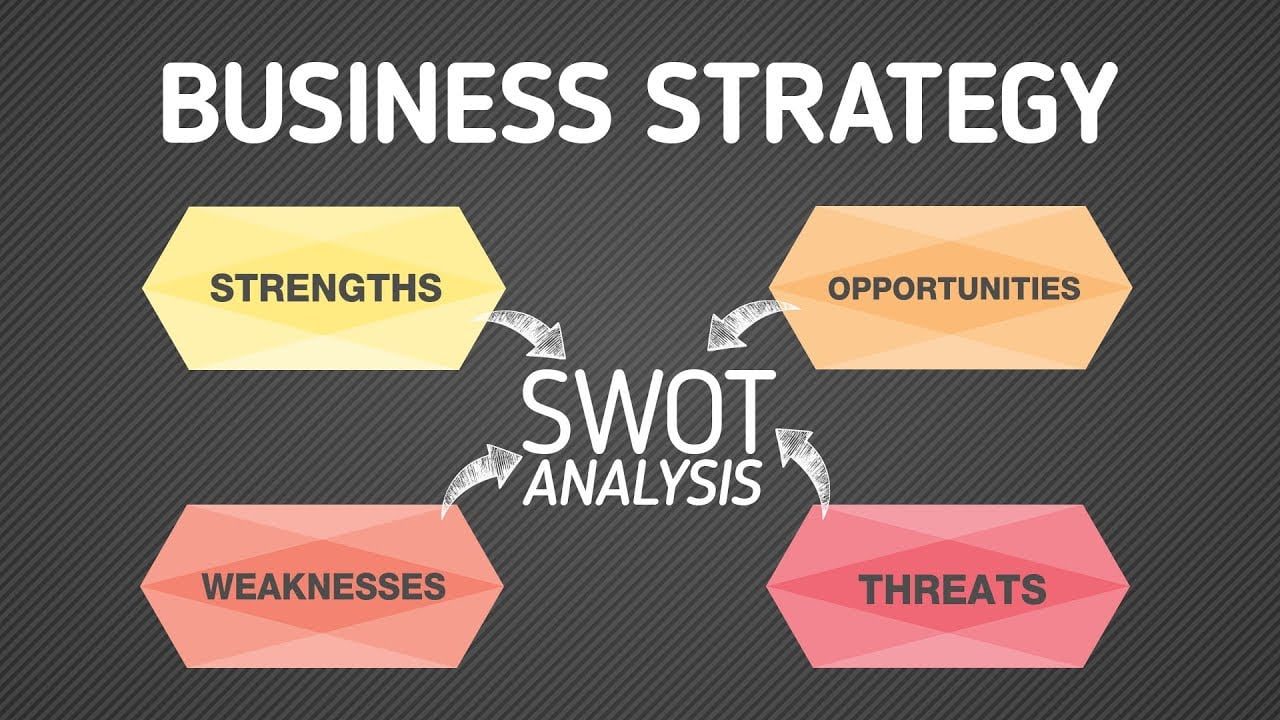
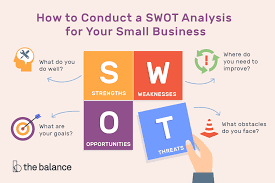
    5. Strength और Weakness क्या हैं?

    ताकत और कमजोरी internal environment है | internal environment अनुकूल और प्रतिकूल भी हो सकती है |
    यह किसी भी आर्गेनाईजेशन का एक रणनीतिक योजना होती है | ताकत का मतलब कॉम्पिटिटर के कमजोरियों से आपका क्या फायदा है | और कमजोरियों का मतलब आप अपने उत्पाद या सेवा में क्या सुधर कर सकते है | ताकत का मतलब शक्ति यह एक पॉजिटिव फैक्टर है | SWOT अनलिसिस कोई भी कंपनी के लिए काफी फायदेमंद है |

    उदारण के लिए -एप्पल PHONE यदि मार्किट में नया प्रोडक्ट लांच करती है तो apple का नाम सुनते ही दिमाग में एक अच्छा ब्रांड का नाम आता है | क्योकि apple कम्पनी का रेपुटेशन काफी अच्छा है और यह एक अच्छा ब्रांड है | जिसके वजह से एप्पल कंपनी को प्रोडक्ट बेचने के लिए जादा मेहनत नहीं करनी पड़ती है | प्रोडक्ट का बाजार में अच्छा कॉम्पिटशन बनाये रखने का मुख्य कारण लगत ,डिस्ट्रीब्यूशन चैनल और ब्रांड equity होता है |

    इंटरनल इनविरोन्मेंट के कुछ मुख्य कारक |

    • वित्तीय संसाधन क्या हैं?
    • प्रबंधकीय संसाधन क्या हैं?
    • आधारभूत संरचना क्या है?
    • आपूर्तिकर्ता कौन है?
    • निर्माण संसाधन क्या है?
    • मार्केटिंग फंक्शन क्या है?
    • वितरण चैनल क्या है?
    • ब्रांड निष्ठा क्या है?

    SWOT Analysis

    6. Oppturnities और Threats  क्या है ?

    अवसर और खतरे बाहरी वातावरण का विश्लेषण करते हैं।

    अवसर और खतरा बाहरी करक है | ये आर्गेनाईजेशन को अपने लक्ष्य को पाने में मदद करता है | संभावना का मतलब ज्यादा profit करने की कितनी संभावना है | खतरा का मतलब कोई भी चुनौतियों को ताकत में बदलने का अवसर |
    उदहारण के लिए -कोई भी कंपनी मार्किट में अपना प्रोडक्ट लांच करती है तो कंपनी को ये पता होना चाहिए कि प्रोडक्ट लांच करने का सही टाइम क्या है | और उसका competitor मार्किट में कौन सा नया टेक्नोलॉजी लेकर आ रही है | इसे चुनौतियोँ कहा जाता है |

    बाहरी वातावरण के कुछ महत्वपूर्ण कारक |

    • प्रतियोगी कौन है?
    • उद्योग का वातावरण क्या है?
    • राजनीतिक माहौल क्या है?
    • तकनीकी वातावरण क्या है?
    • नैतिक वातावरण क्या है?
    • सरकार की नीतियां क्या हैं?
    • सामाजिक वातावरण क्या है?
    • जनसांख्यिकीय पर्यावरण क्या है?

    7. SWOT Anyalsis का उद्देश्य

    • निर्णय लेने में सहायता करना
    • व्यवसाय में सफलता और विफलता से जुड़े महत्वपूर्ण कारक को व्यवस्थित करना
    • एक स्पष्ट सामान्य उद्देश्य और सफलता के कारक को समझना
    • बिक्री और लाभप्रदता का विश्लेषण करें

    SWOT Analysis

    8. SWOT Anyalsis कैसे लागू किया जाए?

    • आंतरिक और बाहरी वातावरण का विश्लेषण करें
    • ताकत और कमजोरी को पहचानें
    • अवसरों और कमजोरी को पहचानें
    • कार्ययोजना बनाएं
    • निष्कर्ष

    SWOT Anyalsis के लाभ

    • रणनीतिक योजना में मदद
    • संगठन की ताकतवर बनता है |
    • व्यवसाय की कमजोरी का पतालगता है |
    • समस्या का समाधान
    • प्रतियोगी की पहचान करने में मदद करना
    • बिक्री बढ़ना
    • अधिकतम लाभ  होना

    Consumer Behavior Process | A Complete Guide

    SWOT Analysis Example

    9. SWOT Anyalsis के उदाहरण :

    स्वॉट एनालिसिस समझने के बाद अब हम स्वॉट एनालिसिस के कुछ उदहारण को समझेंगे |जैसा कि हम सभी जानते हैं, ताकत और कमजोरी आंतरिक कारक हैं। (आंतरिक कारक – जिसे हम आंतरिक रूप से मामले को नियंत्रित और बदल सकते हैं)।और, अवसर और खतरे बाहरी कारक हैं। (बाहरी कारक – जिसे हम नियंत्रित नहीं कर सकते हैं लेकिन स्थितियों के अनुरूप कार्य या परिवर्तन करते हैं)।

    भारत में, हम सभी पतंजलि को जानते हैं। हर कोई दैनिक आधार पर पतंजलि के उत्पाद का उपयोग करता है और पतंजलि का ब्रांड सबसे तेजी से बढ़ने वाली एफएमसीजी (फास्ट-मूविंग कंज्यूमर गुड्स) कंपनी है। जनवरी / 2006 के बाद, पतंजलि ने भारत में पूरे बाजार को बदल दिया।तो, हम पतंजलि की सहायता से SWOT विश्लेषण के उदाहरण को समझ सकते हैं।

    पतंजलि की Strength|

    • प्राकृतिक उत्पाद – यह एक प्राकृतिक उत्पाद की कंपनी है|
      पतंजलि प्राकृतिक, जैविक या हर्बल उत्पाद के रूप में अपने उत्पाद को बेचती है, जो हमारे लिए फायदेमंद है।
    • स्वदेशी अपनाओ – भारत के बाजार में, पतंजलि की छवि बाबा रामदेव के द्वारा बनाई गई है जो पतंजलि के ब्रांड एंबेसडर हैं, और एक टैगलाइन – स्वदेशीअपनाओ के साथ अपने उत्पाद बेचते हैं।
    • योग लाभ – इसके लाखों योग अनुयायी हैं, जो  पतंजलि का अनुसरण करते हैं।
    • मेड इन इंडिया – हम सभी भारतीय उत्पादों की खरीदारी करना चाहते हैं क्योंकि जब उत्पाद भारत में बनता है तो अन्य गैर-भारतीय ब्रांडों की तुलना में उत्पाद की लागत कम होगी, हम आसानी से भारतीय उत्पादों पर भरोसा कर सकते हैं।
    • कम लागत वाले उत्पाद – पतंजलि बेहतर गुणवत्ता के साथ कम कीमत पर उत्पाद प्रदान करती हैं |

    पतंजलि की Weakness :

    • प्रतियोगिता स्तर – भारतीय बाजार में, कई अन्य कंपनियां हैं जो अपने उत्पाद को आयुर्वेदिक उत्पाद के रूप में बाजार में उतारती हैं। इसलिए, पतंजलि के लिए अन्य कंपनियों के साथ प्रतिस्पर्धा करना आसान नहीं है।
    • कुछ ही देशों में निर्यात – पतंजलि केवल कुछ देशों में अपने उत्पाद का निर्यातकरती है जैसे – U.K, U.S, नेपाल, और दुबई |
    • ब्रांड एंबेसडर – जैसा कि हम सभी जानते हैं किबाबा रामदेव पतंजलि के ब्रांड एंबेसडर हैं। जब कभी कंपनी बाबा रामदेव का नाम और चित्र हटा लेती है, तो पतंजलि के लिए यह एक बड़ा नुकसान हो सकता है।

     पतंजलि के Oppturnities :

    • नया स्टोर खोलें – पतंजलि सभी जगहों पर अपना स्टोर बढ़ा सकती है ताकि कंपनी इससे और अधिक लाभ ले सके।
    • पतंजलि शहरी और ग्रामीण क्षेत्र को लक्षित कर सकती है।
    • एफएमसीजी फ्यूचर – पतंजलि भविष्य में प्राकृतिक एफएमसीजी के सभी बाजारों पर कब्जा कर सकती है।
    • वैश्विक स्तर – पतंजलि के पास एक बड़ा अवसर है, वे वैश्विक स्तर पर भारत का प्रतिनिधित्व कर सकते हैं।

    पतंजलि दूसरे देशों में अपना बाजार बना सकती है।

    पतंजलि के Danger:

    बाजार को अन्य कंपनियों द्वारा पहले से ही कब्जा कर लिया गया है, और पतंजलि के लिए उनके साथ प्रतिस्पर्धा करना आसान नहीं होगा |पतंजलि नकारात्मक नेगेटिव मार्केटिंग सामना कर सकती हैं क्योंकि कुछ दवा परीक्षणों में पतंजलि उत्पाद विफल रही है । यह कंपनी के लिए अच्छा संकेत नहीं है|

    तो, यह SWOT ANALYSIS को समझने के लिए  एक सरल और संक्षिप्त उदाहरण था |और मैं उम्मीद करता हुँ की यह लेख आपके लिए उपयोगी सिद्ध होगा |

    FAQs

    SWOT Analysis क्या हैं?

    SWOT Analysis एक technique हैं ।
    जिसकी सहायता से हम किसी ग्रुप, आर्गेनाईजेशन और किसी पर्सन का खूबियो, कमजोरियां अवसरों और चुनौतियों का पता लगा सकते हैं।

    SWOT Analysis कैसे  करते हैं?

    किसी की ताकत, कमज़ोरी, अवसर और चुनौतियों को पता करने के लिए ग्रुप लीडर और उसकी टीम जो detail analysis करते हैं ।

    SWOT Analysis क्यों करते हैं?

    कभी हमारे competitor के बारे में जानने के लिए किया जाता हैं । तो कभी हमारे खुद की कंपनी के बारे में उसके plus पॉइंट और minus पॉइंट जानने के लिए किया जाता हैं।

    SWOT Analysis की कोई Reference Book?

    Book का नाम : Managing Oneself
         
    Author का नाम : Peter F. Drucker

    SWOT analysis in hindi

    SWOT Analysis एक technique हैं ।
    जिसकी सहायता से हम किसी ग्रुप, आर्गेनाईजेशन और किसी पर्सन का खूबियो, कमजोरियां अवसरों और चुनौतियों का पता लगा सकते हैं।

  • How To Calculate Customer Value, Satisfaction & Loyalty | Complete Guide

    How To Calculate Customer Value, Satisfaction & Loyalty | Complete Guide

    Customer Value is a primary part of marketing. Customer value means the value which the customer gives after taking service or after purchasing a product from a vendor.

    Customer value is important as it helps in creating a brand image and also helps in promoting the brand for the better result. Customer loyalty helps in creating a trust of the brand towards its customers and there is little chance of shifting customer’s taste to another brand. The more customers are loyal towards a brand, the more positive views a brand gets.

    In this article, we will read about Customer Value, Satisfaction, and Loyalty. These three terms are interlinked with each other. And to retain the consumers for a long time, brands use these three things. Like the company gives value to its customers by providing Good Quality Products, Packaging And  After Sales Service. Due to all these services, a brand is successfully to satisfy its customers about its product, and the customer will buy the company’s product in a repeated manner.

    1) Customer Value

    What is Customer Value? How to calculate Customer Value?

    How can we understand the Customer Value?

    You can only understand the Customer Value by providing your product or service to the customer, by giving them a good quality product, offering them a discount, assisting your customers with good after-sales service.  And you can calculate the customer value by this basic equation.

              CV = B/C

    Here, CV – Customer Value,

                B  – Benefit, and             C – Cost 

    If you provide value to your customers then, this is the best promotion of your brand or company to gain new customers. Giving Value to your customers is the only key. To give value to customers, you can do these practices with your customers.

    • Quality Product/ Service
    • Good Packaging 
    • After Sales Service
    • Give Good Customer Support on Every Platform 
    • Give Return or Replacement Support 
    • Provide Assistance

    If you follow or take care above points then it’s the best thing ever done by a brand for the customers. In this modern world, people have become very intelligent, they seek every product alternative, according to their desires by comparing different products brands with different items. And thus purchases the best product from. This is why every big brand gives value to its customers like God.  The best example to understand Customer Value is by reading this blog on the Virgin group.

    An Example of Customer Value Supposes you are a customer who wants to buy a mobile phone. What type of things you consider most before purchasing? Ask yourself! There are 2 companies in front of you.  One with the name  “XYZ” and another is “DEF” who are selling the mobile phone. Both companies have the same specifications on it.  XYZ’s company mobile phones have pricing of RS.10,000 and Company DEF’s mobile price is RS. 12000, But the Quality and After Sales Service of the company “XYZ” mobile is a little cheap & slow. 

      And the Quality of the company “DEF” mobile phone is above average and it also provides good After Sales Service and Assistance. So which company mobile phone would you like to have in your hands?

    Customer Value, Loyalty & Satisfaction

    2) Customer Satisfaction

    If you are not able to satisfy your customers, then the chances of failure of your business/ company will become high.  In the language of marketing, Customer Satisfaction is called CSAT. How can we measure the Customer Satisfaction Level?  Does your product live up to the mark with customer expectations? 

    3) How can we calculate Customer Satisfaction?

    What is the total number of customers for your brand, and how many of those customers have given their ratings, or feedback to your product or service according to their satisfaction level? This calculation can give your Company’s Satisfaction Goal. To calculate Customer Satisfaction: (Total number of positive response/Total number of all responses) * 100

    4) Why Customer Satisfaction is Important?

    Customer Value

    If you do not calculate or pay attention to customer satisfaction for your company, then you will not be able to keep track of those customers who love your product and who don’t love your product.

    Whether your product is liked by your customers or they are not satisfied with your product. It also helps in keeping data of your customer behaviour which leads a product not to grow exponentially. And sooner or later it will be responsible for your business growth or company shut down. 

    5) Customer Loyalty/Retention

    Customer Value, Loyalty & Satisfaction

    It has been found in a survey that a company spends 7X times more for acquiring a new consumer as compared to the loyal consumer. Consumer loyalty describes the behavior of repeat customers as well as offers good rating reviews/feedbacks on that brand’s product.

    To understand this, let’s take a basic example of a buyer who owns a Harley Davidson bike. This buyer will never go to buy a Hero MotoCorp bike (exceptions are always there) because he/she knows the premium quality of parts that are assembled in Harley and most importantly the feel & experience that he/she gets while driving that bike.

    6) How to Build Customer Loyalty?

    To make a customer loyal to its brand, the company uses various types of tactics to attain this. Some of them are:-

    • Communicate

    It simply means being in contact with the customer or occasionally communicating with them. Personally, messaging the brand on your birthday, providing discount passes for an upcoming event. The brand has to do all these things with the customer for communication.

    • Customer Service

       It describes the way to go to extra distance and find customer needs and train the staff to do the same as these things’ customers remember for a long time. It helps in making customer retention also.

    • Discount Offering

       Customers who frequently purchase from you, offer them a discount, thus making them a feeling that they are important. This will affect customers neuronally to buy that product again from you.

    Customer Value, Loyalty & Satisfaction

    Conclusion

    If you have added gave value to your customer and they are also satisfied with your product and also they are loyal to product or brand, then it is possible that they do not take or use your product. Because there is a lot of competition in today’s modern world and the price-sensitive market. the customer will like to take the product of as maximum as cheap.

    So, if you want to make your marketing Campaign Successfully always remember about Customer Value, Satisfaction & Loyalty.  So, this about Customer Value, Satisfaction, and Loyalty. I hope, you have enjoyed reading our blog. Stay tuned for another blog on a very exciting topic.

    FAQs

    How can we understand the Customer Value?

    You can only understand the Customer Value by providing your product or service to the customer, by giving them a good quality product.

    How to Build Customer Loyalty?

    There are three steps to build a loyal customer
    Communicate 
    Customer Service 
    Discount Offering

    How can we measure the Customer Satisfaction Level?

    We can measure the satisfaction level by tracking and by asking for feedback.

    Customer Value and Satisfaction?

    You can only understand the Customer Value by providing your product or service to the customer, by giving them a good quality product. We can measure the satisfaction level by tracking and by asking for feedback.

  • What is Database Marketing? Complete Guide

    What is Database Marketing? Complete Guide

    What do you mean by Database Marketing? Do you ever wonder how Database Marketing works?

    Database Marketing is a term that is used for maintaining a database for marketing and selling products directly to the customers. Database Marketing is mainly applied to B2C type business.

    Database Marketing consists of a database that is maintained by a  company, consisting of names, phone numbers, email ids, etc… of a customer. It is applicable for B2B type of business also. So let’s start the most detailed guide on What is Database Marketing?

    What’s In It for me 

    1. What is Database Marketing
    2. Types of Database Marketing
    3. Database Marketing working process
    4. Database Marketing Examples
    5. Benefits of Database Marketing
    6. De-merit of Database Marketing

    1) What is Database Marketing?

    Database marketing is also known as direct marking or customer relationship management. In simple words, Database marketing refers to collect customer’s data like name, address, email, phone no, or other demographic information to understand customer needs and to generate the targeted list and used to offer a personalized experience.

    What is Database Marketing

    2) Types of Database Marketing

    We can divide database marketing into two types

    1. Consumer database marketing
    2. Business database marketing
    • Consumer Database Marketing

    This type of marketing is used by those companies which deal with business to consumer i.e B2C or which sell their product direct to the customer.

    Generally,  B2C companies apply some basic strategies like free giveaways, free shipping, discount offers to collect the consumer database. They mainly collect the first and last name, email address, phone number, gender, location data, transaction history.

    Once they built the consumer data they can send  personalized advertisement or promotions through the various source of marketing like Social media(Facebook, Instagram, Email, etc.) The main factor in Consumer database marketing is the security of the place where consumer data stored.

    • Business Database Marketing

    This type of marketing is mainly done for Business to Business i.e B2B companies. In the Business database, the information is more advance compare to consumer database focused on high-value targets that’s why this database is smaller than the consumer database, also subject to lower restrictions and privacy limitations. The Information gathered in this database is a company Email address, company profile, job titles, annual turn over.

    What is Database Marketing

    3) Database Marketing working Process

    To keep database marketing work smoothly, we follow some basic steps

    • Data collection

    If we want to sell our products in the market it is necessary to find out the targeted audience which is possible through data collection which includes name, address or other demographic information about the customer. This data will be collected from third party bodies or directly through the customer.

    • Gather Knowledge from the data

    After data collection, the next step would be analyzing the data and gather the information that can be used for the company for marketing. For making a model of customer behavior we can use Database management System or Statistical Techniques through which we can make a decision on which type of customer will be targeted.

    • Communicate with the customer

    Now we communicate with the identified customer by sending the promotions, updated to the customer by using digital media like through Email. In this process, it is important to schedule that when sending these promotions to customers because if companies flood their inbox with too many updates they are easily referred to these mail in the spam or junk folders.

    • Making Business strategies

    Database marketing is not just about sending the promotional emails or creating a list about the targeted audience but it is more than that. By deep analysis of this information, we can make future business strategies.

    Hubspot Example

    4) Database Marketing Example

    Here is some Database a Marketing Example that will enhance your knowledge regarding Database Marketing. Best E.g of database marketing is Facebook. Facebook easily collect user data like First Name, last name, Mobile no, Email, Date of Birth, Gender, location, interest, Education. etc. Using this data it can easily create personalized promotions for the users. Nowadays, like Facebook all social media platforms collect the user personalized data due to this they are creating a huge database.

    In starting, most of the companies provide free content to the customers by using newsletter subscriptions, free e-books, free course, free services, etc. for growing database account.

    With this data information, they can create email campaigns, they target their audience with Facebook ads or other social media ads. Here I added some common e.g that how can some big brand collect data of a customer.

    What is Database Management

    5) Benefits of Database Marketing

    1. C.R.M and Database Tools

    You may like data from your audience. This requires you to make sure you use the C.R.M Database System for up-to-date data. This is where we keep our data contacting you, which will save your data, so we can help your audience and their clients, so we can help our business more.

    The Database tool allows us to save our audience a chat, call, e-mail, and we sell it to you to keep our data. Please send us a report through the issuer. Your audience will also be judged for the bad information we receive from your audience. This is your latest news and latest offer, which is selling and selling a product.

    With C.R.M and database tools, we can provide monthly audience feedback to your audience, provide you with a date on which your audience will be available on a date that is available to us. Your audience must follow the platform on social media and you should encourage them to promote your product.

    Last I got a report on your customer and this is where we sell the kit and gain profit on the base of data.

    1. Customer Segmentation

    The customer segment is as vibrant as the audience, which is helpful for the company. We want to advertise for your target audience as a product that we have to pay for advertising with our advertising affiliate chain.

    For your customer segment, we target your audience through social media, TV advertising, Radio Advertising, e-mail marketing, newspaper advertising, and offline marketing. We want a customer relationship. We also want to make sure that our product or service is good, and we will be able to provide you with more information.

    To know more information you can read our blog on customer segmentation 

    How to segment a customer?

    We are also researching a specific customer segment for our audience. It also contains data that is rarely available to me like- work is a job for someone who is working, or who is a purchase. We are unacceptable for age and phone number of the talking.

    If you want to take our company for safekeeping, we will have a customer segment that will cover the customer’s habits, interest, age, education, place, income, and income.

    1. Relevant Customer Data

    If we want to be pure with our customers, we will be targeting the customer, and also engaging our target audience according to offer. We are happy to welcome you, such as your phone, e-mail or an email to your un-graded customer, which will help build the trust of the customer.

    6) De-merit of Database Marketing

    For any business database marketing have very effective but here are some de-merit also.

    1. Maintenance Cost – Database marketing maintenance is very expensive. For e.g Survey Monkey, Mail chimp pricing are too high, in these tool as your subscribers increase monthly bill also increase. So, if we collect data on a large scale without any maintenance and security it ends up at a high cost. (e.g Facebook data leak Case)
    2. Incorrect Data – This is a very serious problem in the Business database because employees change their job description from time to time, for this it is necessary to update all the data with the latest information.

    So, this was about Database Marketing. We hope, you have understood the concept pretty well. Stay tuned for our next blog.

    Analyze Your Website With Our FREE  SEO Tool 
    Fix your website’s SEO like HTML Headings, Alt txt, Robot txt, Sitemap, Schema, Mobile Friendly check, Pagespeed, PageStatistics, Internal links, External links, SEO Friendly links, Alexa rank etc.

    GET Audit Report

    FAQs

    What are the objectives of database marketing?

    The main objectives of database marketing are:
    1. Target your marketing more accurately
    2. Promote the benefits of the brand and its loyalty
    3. Increase sale effectiveness

    What are the challenges involved in database marketing?

    1. Lack of quality data – The data is not up to date
    2. Cost – usually database marketing needs capital to run, money and time both need to be invest
    3. Disparate information – Different sources of database management bring different data, and not every data collection system collects the same data points,

    What are the ways to collect customer databases?

    1. Ask for the information in person, to connect with your customers
    2. Request information over the phone to get reliable data
    3. Use pre-order forms to know more about customers
    4. Collect a small amount of information at a time
    5. Track customer behaviour on social media

    How do you collect customer databases online?

    Web forms
    Content Marketing
    Email blasts
    Social Media (Facebook, LinkedIn)
    Events
    Giveaways
    Webinars
    Surveys
    Coupon/Discounts

  • What is SWOT Analysis? How to do SWOT Analysis?

    What is SWOT Analysis? How to do SWOT Analysis?

    Have you ever wondered if the term “SWOT Analysis”? Or Ever had a chance to do SWOT Analysis for yourself? SWOT Analysis is a term coined by Albert Humphry in the 1960s. It consists of Strength, Weakness, Opportunity, and Threats. Swot Analysis is done to know a company’s strengths, weaknesses, opportunities, and weaknesses and act accordingly to overcome them. Not all companies may have only strengths and or only weaknesses. There are strengths as well as weaknesses.

    Swot Analysis does not apply to a company but even for an individual. When you appear for an interview, there you will face this question ” What are your Strengths and Weaknesses? Have you faced any Threats?”

    Similarly, a marketer has to SWOT Analysis for the company as it is constantly at threats from its competitors and it is the primary objective of a company to overcome its weaknesses and focus on its strength.

    In this blog, we shall discuss more on SWOT Analysis, How to do it, the advantages of SWOT Analysis and some examples of SWOT Analysis.

    What’s in it for me?

    1. What is SWOT Analysis?
    2. Who should use SWOT Analysis?
    3. How to do SWOT Analysis?
    4. What are the Strengths and Weaknesses?
    5. What are Opportunities and Threats?
    6. What is the AIM of doing SWOT Analysis?
    7. How to implement SWOT Analysis?
    8. What are the benefits of doing SWOT Analysis?
    9. Some examples of SWOT Analysis

    1. What is SWOT Analysis?

    SWOT consists of four different letters that come together to make a word that is SWOT. Here, SWOT stands for, 

    • S = Strength,  
    • W = Weaknesses, 
    • O = Opportunities,
      and 
    • T = Threats.

     SWOT helps us to analyze our strengths, weaknesses, opportunities, threats,   

    Or we can say this is not a word but a technique used for checking the performance of an organization or a person that prevents the chances of failure down the line.

    swot-analysis-

    2. Who should use SWOT Analysis?

      SWOT Analysis can be done either by Startups or any existing company. SWOT Analysis gives a company a clear picture to analyze what are the strengths, weaknesses, opportunities, and threats. For any startup, there will be strengths and weaknesses. But for an existing company, there can be an opportunity as well as threats.

    You can also do a SWOT analysis of your competitors to know their weaknesses which can be an added advantage to compete with them and by knowing their strength we can implement it in our organization to improve our strategy. You always have to be ahead of your opponent because you can protect yourself from the threats but cannot change them.

     A person who knows his/her organization completely can take responsibilities on his/her shoulder. This responsibility is commonly taken by the founder or leader of a company.  

    3. How to do a SWOT analysis?

    So let’s learn how to do SWOT Analysis

     SWOT analysis is done by this method -;

    •  Take a team of leaders in every department of the organization.  
    •  Set a meeting for at least 1-2 hours.
    •  Make four quadrants that are strength, weaknesses, opportunities, and threats
    •  Take everyone’s perspective on the organization
    •   A mutual conclusion should be put down in the analysis report

        But, always remember one thing that you have to constantly do this strategy in 6-12 months because of drastic changes in the market scenario. You may never know what’s gonna happen next to your business or startup.

    swot analysis

    SWOT ANALYSIS

    A swot analysis identifies the strengths, weaknesses, opportunities, and weaknesses. Swot analysis is a strategic planning tool that helps in business or organization and marketing management. We are dividing into two parts SW and OT i.e. mean strengths, weakness and opportunities and threats. First of all, we will know the strengths and weakness then opportunities and threats.   


    4. What are STRENGTH AND WEAKNESS?

     Strengths and weaknesses are part of internal environments. Internal strengths can be tangible or intangible. It is the strategic planning of any company/organization. Strengths are those areas where your company or organization can make a good profit compared to its competitors in this competitive market. Whereas, weakness is that area where you need to overcome the lagging part, in which the competitors have the advantage of generating profit.

    Strengths mean power. It is a positive factor if we talk from a company’s point of view. Even for an individual, swot analysis is very helpful. A company should have a good brand name, good reputation in the market. If we start any business we set goals and objectives, we work for what we have to achieve, and then it helps us to achieve whatever we want. It creates a positive image in the customer’s mind.

    For example- Apple phones. If apple phones launch a new product we will purchase the new phone without knowing it is good or not. Because Apple has a good reputation, good brand name, Apple does not work very hard to sell the product. Many products maintain a good reputation in the market. Other factors include cost, distribution channel brand equity. 

    Weakness is that area where goals which have been set, could not be achieved. It could be due to less manpower, inexperienced employees, higher costs of the products, lack of infrastructure, etc…

     There are some internal environment factors-

    • Financial resources
    • Managerial resources
    • Infrastructure
    • Supplier
    • Manufacturing Resources
    • Marketing Function
    • Distribution Channel
      and
    • Brand Loyalty

    SWOT Analysis

    5. What are OPPORTUNITIES and THREATS?

    Opportunities and threats analyze the external environment. 

     It helps the organization to achieve the goals and objectives. Opportunities create chances to make more profit for an organization, whereas, threats are the areas which act as an obstacle for a company. Threats mean danger and we can say opportunities could be a strength.

    For example, we have launched a smartphone in the market. We need to observe that the technologies that we have introduced in the smartphone are superior to our competitors or not. This way we can analyze our strengths and weakness.

     Another example – if Government policy changes it can be either opportunities or threats or vice versa for our competitors. 

    Other important external environment includes

    • What is the industry environment?
    • What is the political environment?
    • What is the technological environment?
    • What is the ethical environment?
    • What are government policies?
    • What is the social environment?
    • What is the demographic environment?

    What is STP in Marketing? Segmentation, Targeting & Positioning Guide

    6. What is the aim of doing SWOT Analysis?

    • To help in decision making 
    • To organize the important factor linked to success and failure in the business
    • To bring a clear common purpose and understating of the factor of success
    • Prepare your industry for the problem
    • Analyze the sales and profitability

    7. How to implement the swot analysis?

    • Analyze the internal & external environment 
    • Identify strengths and weaknesses.
    • Identify the opportunities and weakness
    • Make the action plan
    • Conclusion

    8. What are the benefits of doing SWOT Analysis?

    • Help in strategic planning
    • Make organization strengths
    • Find out the weakness of the business
    • Maximize the opportunities
    • Solve the problem 
    • Help in identifying the competitor
    • Sales increase
    • Maximize the profit
    • Unique selling proposition

    SWOT Analysis Example

    9. Some example of SWOT Analysis

    After understanding what is SWOT Analysis, now we will see some examples of SWOT Analysis.

    As we all know, Strength and Weakness are Internal Factors. (Internal Factors – Which we can control and alter the matter Internally).  And, Opportunities and Threats are External Factors. (External Factors – Which we cannot control and but act or change in line with the situations).

    In India, we all know the Brand Patanjali. Everyone uses the product of Patanjali daily and this brand is the fastest growing FMCG (Fast-moving consumer goods) company. After January/2006, Patanjali changed the whole market in India.

    So, we can Understand the example of SWOT Analysis with the assistance of Patanjali.

    Strenth of Patanjali:

    • Natural Products – It has a Natural Product. Patanjali market their product as a natural, organic or herbal product, which is beneficial for us.
    • Swadeshi Apnao – In the market of India, the image of Patanjali is created by Ram Dev Baba Ji which is the brand ambassador of Patanjali, and sell their product with the use of a tagline – SWADESHI APNAO.
    • Yoga benefit – It has millions of yoga Followers, which blindly follow the Patanjali.
    • Made in India – We all want to shop for Indian products because when the product is made in India the cost of product will-less as compared to other Non-Indian brands, we can easily trust Indian products and other benefits.
    • Low-Cost Products – They provide products at low cost with better quality ( not all products but few products are at low cost and better quality).

        The weakness of the Patanjali:

    • Competition Level – In the Indian market, there are lots of other companies that market their product as an Ayurvedic product. So, it’s not easy for Patanjali to Compete with other companies.
    • Export in Few Country  – Patanjali only Export their Product in few countries such as – the U.K, U.S, Nepal, and Dubai only (Nowadays). And other companies can take some share in the Foreign industry.
    •  Brand Ambassador – As we all know, that Ram Dev Babaji is a brand ambassador of Patanjali. When a company can remove the name and image of Ram Dev Babaji, then it’s a big loss for Patanjali.

         The opportunity of the Patanjali:

    • Open New Store – Patanjali can increase its store in all places so that the company can take more benefits from this.
    • Patanjali can target the Urban & Rural areas.
    • FMCG Future – Patanjali can capture all markets of natural FMCG in the future
    • Global Level – Patanjali has a big opportunity, they can represent India at a global level.
    • Patanjali can create their market in other countries.

    Threats of the Patanjali:

    • The market was captured by other companies already, and this is not easy for Patanjali to compete with them.
    • Politically interference – Patajanli can face political interference in some phases.
    • Patanjali Can face negative marketing because in some drug tests Patanjali product failed. This can be not good for the Company.

    So, This is a simple & short example to understand the concept of SWOT ANALYSIS clearly.

    FAQs

    When SWOT analysis is performed?

    SWOT analysis should be performed according to the need and type of business. But as a general rule of thumb, it should be performed every 6 months at least.

    What SWOT analysis do?

    SWOT analysis also known as SWOT matrix helps you identify your strength, weaknesses, opportunities, and threats which can help you identify and evaluate companies’ positions and helps to form a better strategy for future growth.

    What SWOT stands for?

    The term SWOT stands for Strength, Weakness, Opportunities, and Threats.

    Is SWOT analysis important?

    SWOT analysis is important as it helps in identifying the actual position of the organization, where it should get better, and what opportunities it can avail.

    SWOT analysis is external or internal?

    SWOT analysis is internal as well as external.SW or the strength and weakness deals with the internal environment whereas OT or opportunities and threats deal with the external environment.