Author: lapaasindia

  • Vertical Integration and Horizontal Integration – Ultimate guide for you

    Vertical Integration and Horizontal Integration – Ultimate guide for you

    Vertical integration and horizontal integration both are equally important and very interesting topics to understand for business. Especially, if you want to start a business then you need to realize the concept of these two methods. 

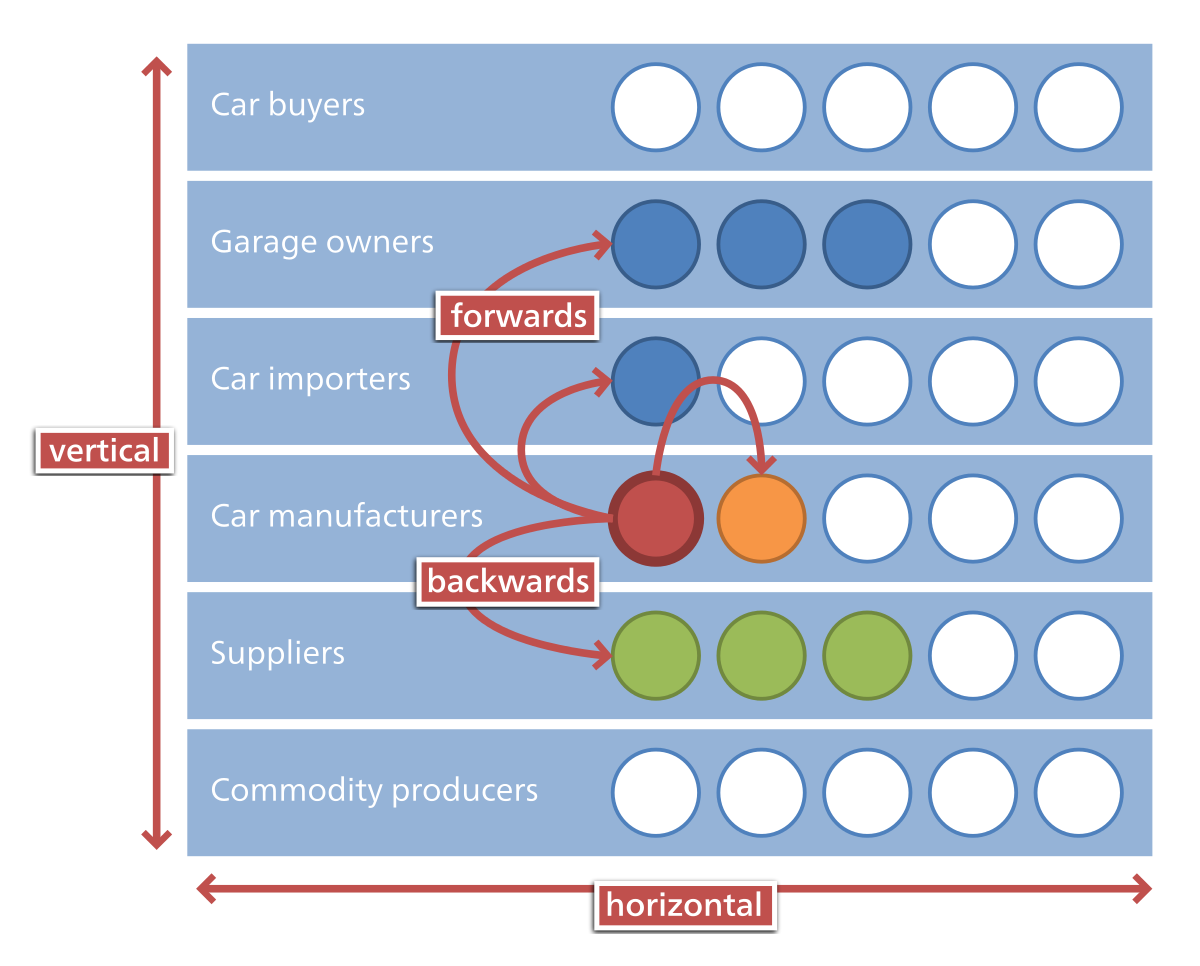
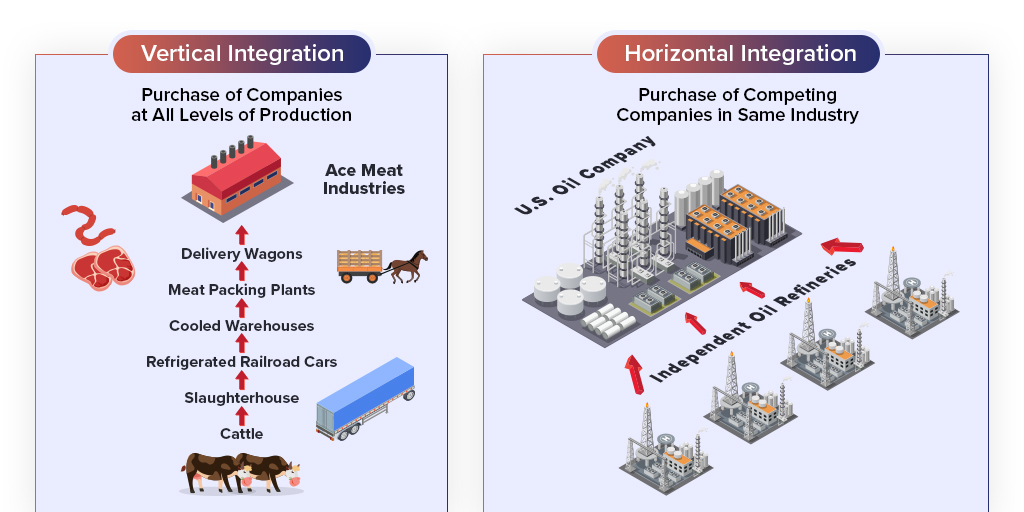
    Vertical integration means two companies in the different levels of the value chain starting working together. And 

    Horizontal integration means one company acquiring another company in the same level of the value chain for capturing the market. For example, one restaurant buys another restaurant. 

    Undoubtedly, both have some differences. But the question is why do you need to know those concepts? And what is the value chain? For your satisfaction yes I will go to discuss everything. So keep continuing reading.

    So you will know

    What is Vertical Integration?

    Now let’s start with the vertical integration. As you know that when two different levels of value chain companies started working together than this method is called vertical integration. In this strategy, one company acquired the other company in the same industry but in the different value chain to improve the supply chain process. 

    Firstly, you understand the vertical process and integration then I will tell you the overall value chain concept.

    Shortly, the corporation or company get advantage from this method such as reducing overall operational cost, they have more control of the power of suppliers, the overall supply chain systems and also they build a control system over the industry.

    After sometime later you will know every vertical strategy in this blog for sure.

    Now secondly, understand the value chain.

    Vertical Integration and Horizontal Integration

    Michael Eugene Porter’s Value Chain

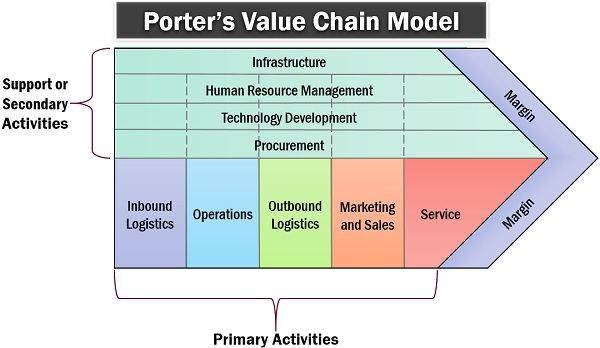
    Porter introduced the best ever business model which is called the porter’s value chain. In this model, he discussed about 9 activities. Those 9 actions also divided into 5 primary activities and 4 support activities. 

    Let’s talk about one and one. Firstly, look at the 5 stages of the value chain 

    By Inbound Logistics 

    Whenever a company acquires a new thing or bringing inside to the company it is known as inbound logistics. Although, the company also managed their warehouse or inventory and storage system so that a business can maintain their work.

    For example – a computer company brings microchips from other companies. So now you can realise why a company acquires a new company? For the demand of production.

    By Operations 

    It means the overall manufacturing processes. Such as from collecting raw materials to finished goods. These whole processes are called the operations. A company maintains its operation for better productivity.  
    Vertical Integration and Horizontal Integration

    Outbound Logistics 

    After that, the finished goods go to the customer. But before reaching the consumer some processes still is going on. Which is called outbound logistics. Such as the packaging and after that the shipment processes. Now let’s move to the next one.

    Marketing and Sales

    Undoubtedly, marketing and sales are the most important parts of a company. In this activity, a company manages its overall distribution channels and the pricing of products, also they create promotions so that they can aware customers. You might see all new product ads on tv or on your mobile. These are the part of the marketing. 

    By giving Services 

    At last, giving the best services to the customer after shipment. If you don’t value your customers they will move back for sure. Mostly all companies value their consumers. 

    For example, if you buy a mobile and after that, you might want to be replaced or want to repair your mobile. So where do you go? In this case, the mobile company provides customer service. They repair and make maintenance of overall products so that all rest of the consumers will be satisfied.

    Procurement 

    Now, this is something new to you, I can understand. So this is a support system so that the company arranged the best materials. This department instructs the company to buy the right materials for the production.

    Technology Development 

    This department makes an overview report of all products, their delivery time, inhouse resources and also helps the product development.

    Next is 

    Human Resources 

    You might be familiar with this department. It supports the overall company requirement. In other words, this department of a company trained new employees and also hiring-related people for companies. 

    At last 

    Infrastructure 

    Lastly, but most important thing in the company is the infrastructure of a company. It comprises all account or financial services, overall administration, planning and quality control. So the company managed everything. Also, know Porter’s Five Forces.

    I hope now you have a clear picture of why businesses move to vertical integration.

    Because of,

    No.1. The supply chain process – if companies want to expand their business then they need to control the supply system.

    As well they also want to reduce the production cost, when a company starts working with another company they have a balance between cost and transportation cost. It provides the company profitable and the value obviously.

    For all this reason, the company furthermore gains control of the industry.

    Now you understand the different vertical integration.

    Types of Vertical Integration

    Afterwards now you need to know the types of integration.

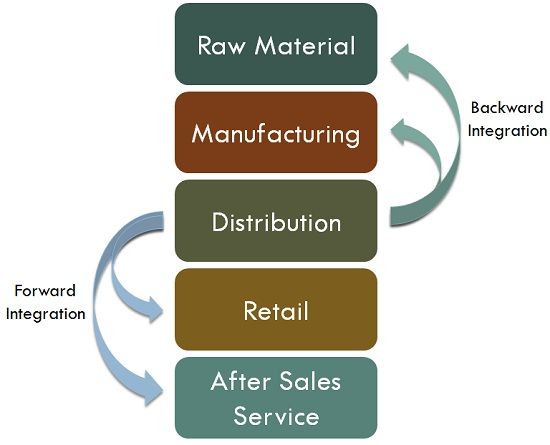
    There are two types of integration. Which are backward and forward integration.

    Backward Integration

    On the one hand, it is a method of acquiring different value chain companies who provide the raw materials. Sounds complicated? Ok, I will give you an example,

    Suppose you have a juice company and you want to make your juice making process faster so you have an option to buy or acquire fruit suppliers. So that the overall progress will be faster than your competitors. 

    Basically, a company acquires the raw material company so they can make a faster manufacturing process.
    Vertical Integration and Horizontal Integration

    Forward Integration 

    On the other hand, forward means companies buy or acquire and start working with the marketing or distribution company so the whole distribution system takes control of the company.

    For example, one laptop company can start their own distribution channel where they sell all products directly to the customer. In this case, the overall distribution can be taken control. Know in-depth of those two integrations.

    Good and bad sides of Vertical Integration Strategy

    This is important to realise the overall strategy used by companies. As I mentioned above, companies chose this method to reduce cost, better supply chain and better distribution and capture the market. But now you might be asking, so all companies become profitable after using this technique?

    The answer is, it has both advantages and disadvantages. Then look for all.

    1. Advantages of good sides of this integration is definitely cost deduction.  
    2. Improve the market share
    3. More control of supply process
    4. More product efficiency 
    5. Provides value edition
    6. Provides more consumer services 
    7. Build up more support system 
    8. New abilities to enhance 
    9. Opportunities to increase sales
    10. Opportunities to create more products 
    Vertical Integration and Horizontal Integration

    Similarly, there are some disadvantages or bad sides of this strategy. 

    1. Disadvantages are such as cost-efficiency. Obviously, new places have an overall expense.
    2. Also, new contracts sometimes have a maintenance problem. Because managing the new place, although their inhouse operational management system is sometimes difficult. 
    3. This strategy leads to making low-quality products as well because of expanding the quantity.
    4. The political environment also impacts a lot.
    5. The human resources problem. 
    6. Technological environment impacts as well. If the company needs technical devices. 
    7. Lastly, the legal system of that new place impacts the overall operations.

    However, some small companies don’t use this vertical integration but mostly well-known companies use this method for better productivity. 

    For example, you can check Apple, Amazon, who use this vertical integration strategy.  

    What is Horizontal Integration?

    Additionally, you also need to understand the horizontal integration. It is very similar in sounds but there is a difference between both the two methods. So without delay let’s get started.

    As I already mentioned above, when a company acquires the same level of the company to capture the overall markets then the method is called horizontal integration.
    Vertical Integration and Horizontal Integration

    Let’s take an example, if a restaurant wants to expand their business then they have several options. They can open a new restaurant or they can acquire previously organized restaurants for quick adaptation.  

    So in this case, when one restaurant acquired another organised restaurant they earned the all value in their own restaurant. 

    Reason of Horizontal Integration

    Most importantly, majorly all companies use this integration for expanding the business.

    Secondly, to build the power.

    Thirdly, capture the board customers.

    Fourthly, obviously for geographical expansion.

    Fifthly, finish the competition.

    Lastly, the overall market gain. 

    When a company makes an expansion strategy they often do for the same reasons.

    Horizontal Growth 

    Now you already understand the concept of horizontal integration. Now at this time you also need to know the growth of this method.

    Growth means overall growth rate. When the company captures the overall market, it creates a monopoly. Means when capturing the same label value chain company it provides the overall development of a company. 

    Market growth furthermore enhanced. 

    Supply and production growth is happening.

    More control gained by capturing the distribution channels.

    For example, Google, Microsoft used this technique for capturing the whole market.

    Benefits of Horizontal Integration 

    Undoubtedly, the most important benefit or advantage of this technique is cross-selling. 

    Cross-selling is obviously a fast choice of a company. For this, a company can increase sales and earn profit.

    Finish competition – as I already discussed above, so in this case, the company wants to create a monopoly which is based on acquiring the previous well-known company so that they can make sales by existing consumers. Also, one brand becomes famous by finishing their competitors.

    They have will power to make the whole market by their sides. 

    It creates the distribution and supply faster, better and also has more control power to lead the industry.

    Horizontal disadvantages 

    But creating a monopoly is always not good enough for a company as well. So horizontally integrated strategy also has some disadvantages.

    Firstly, bigger is not often good for a company. Expanding business means taking charge of extra responsibilities.

    Also, it creates the control of the resources problem and sometimes security problems. 
    Vertical Integration and Horizontal Integration

    Summary 

    At last, I hope you understand everything about vertical and horizontal integration. But take a quick look at overall. So if a company wants to expand their business they either can use the horizontal path or they can use the vertical process for better outcome. On one hand, the vertical method has more control over the distribution and supply. While on the other hand, the horizontal method has more control over the market. So with this purpose in mind go ahead and choose your own techniques.

    Frequently Asked Questions 

    What is Vertical Integrated Companies

    Many companies use this technique but Apple, Amazon, Google all are well known for their vertical strategy.

    Explain Vertical Integrated Monopoly

    As you already know that in this technique one company acquired a different level value chain company, so in here monopoly means a company acquired more supply and distribution channels to create a monopoly.

    Explain Horizontal Integration Monopoly

    In this technique when a company acquired many same level companies then a monopoly market is created. 

    What is the Difference between Horizontal vs Vertical 

    Both are different strategies used by different companies. Both have some advantages and some disadvantages. So both are equally important and valuable methods of business. 
  • Distribution Management – How it Change The Business

    Distribution Management – How it Change The Business

    Distribution is one of the most important parts of the business. Distribution is basically the process from suppliers to the manufacturers to the step of the sale. Only because of this, one company can control and manage the overall system. It has different parts of the channel and also has different types of methods and strategies.

    So without delay let’s talk about in detail.

    What is in for you

    Definition of Distribution 

    As I mentioned in the starting line that it is a process of chain. Which is started from suppliers to the manufacturers and then to the point of sale. Now, you should understand the step by step process.

    Firstly understand the meaning, what is coming in your mind about this word? 

    Something related to the delivery!

    Yes, your guess is right. But here I want to include some more with perfect definition.

    Distribution Management - How it Change The Business

    For example, At festival time, you definitely buy lots of gifts for your friends and relatives. In this case, if your friends stayed in another city then what will you do next? How do you send a gift to them?

    Obviously, either you can send them by courier or by online delivery. So a delivery company is a type of distribution process. After sometime later you also know about everything.

    Similarly, for businesses, they create a distribution system that enhances the business. Also, to reach the customer and consumer, all companies need strong distribution strategies. 

    With this purpose in mind, move to the next and understand the different types of process.

    Types of Distribution 

    Now you already understand the concept of this process. After that, you have to understand the overall systems. 

    Generally, there are two main types of distribution. On one hand, commercial or the sales distribution.

    On the other hand, physical or logistic distribution. Let’s talk about one and one.

    Commercial or Sales Distribution Management 

    One company can choose this process because of enhancing the sales.

    In this process, they can make a way to reach the target audience. In the sales distribution process, the company distributes through the sales channels. 

    Distribution Management - How it Change The Business

    Physical or Logistics Distribution Management 

    Another most important part is logistics. Here is something important to realise that if the internal logistics does not properly maintain then the company will be suffering. Logistics comprising the supplier, warehouse, inventory, sales and marketing. 

    Distribution does not mean, sales system only but also maintains the suppliers to inventory management so the overall distributed system becomes easier. Now, you can check out the different mediums used by companies. 

    Different Systems of Distribution

    Business is definitely going in a good way if the distribution system will be as good as competitors. So a system impacts a lot on business. 

    Generally, there are different methods of distribution involving the different industries. But mostly every industry has some similarities.

    One is from Producers to customers. In this case, a manufacturer directly sells to its customers. For example, Bata. Who directly sells to the customer.

    Distribution Management - How it Change The Business

    Next is from manufacturers to distributors. In this way, someone who does manufacture something but doesn’t want to sell directly, they can sell their products by hiring distributors. For example, medicine manufacturing. 

    Another distribution system is from manufacturers to wholesalers to the retailer and then the customer. This is basically supplied chain systems used by manufacturers. Example – clothing manufacturing. 

    In another case, from wholesalers to the retailers distribution system. If a wholesaler doesn’t want to sell directly to the customer then they distribute their products to multiple retailers. Example – bookseller or different electrical products.

    You will know more detailed strategies below this section. 

    Different Functions of Distribution

    If I talk about functions then the first thing coming in my mind is inventory.

    Inventory Management 

    It is definitely a huge part of the distribution system. Inventory means a company’s overall in-house management. What is coming and what is going out of the company? Maintains the stock is a part of the inventory. In this distribution system, every company managed their productions.

    Warehouse Maintain 

    Next is warehouse maintenance. It is similar to inventory management. But in this management system, the company maintains an overall inventory to packaging and to the sipping. They distributed works in different parts.

    Handling Materials 

    Another one is handling the materials. If you want to maintain the quality of your product then you need to maintain the materials. Because material is the most important thing in production. Your distributor should be strong so that materials also control.

    Receiving Maintenance 

    You might be confused now, what is receiving maintenance? So, this is again a type of distribution system used by industry. As I discussed above there are different distribution systems present in the industry. So, in this case, receiving goods from the suppliers and then maintenance the networks as much as possible.

    Customer Service 

    If all companies maintain its distribution system then they provide the best customer service as well. Because the distributor only reaches the target people. As fast as the distributor delivers to the customer then the customer will be happy. Every company maintains the best customer service before and after the supply. 

    Tracking Maintenance

    Now, this is a little interesting right? Because somehow distribution maintenance records the overall track also. For companies in-house maintenance you need to track the maintenance.  

    So these are some most important functions. Now you also need to know all strategies so you can enhance your distributors. 

    Distribution Strategies

    One of the best things about distribution is strategies. Here are all strategies used by different companies.

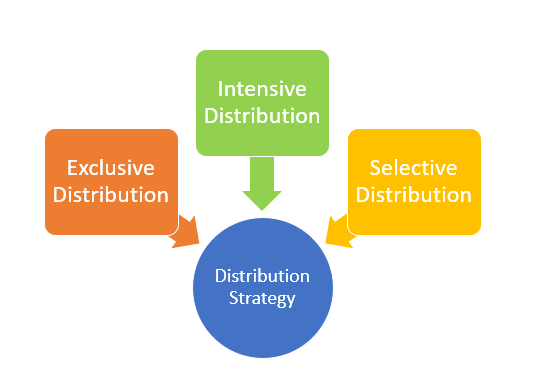
    Mostly all companies used this strategy either through the wholesaler, retailers, agents and jobber. 

    Above all are playing the role of middlemen. As I discussed the supply chain where everything is connected to another. Now you also know the technical terms of the distribution system.

    Intensive or Mass Distribution Strategies

    As the name suggests that mass means distribute in a bulk action. Bulk means wholesale. Where a company decided to sell its products in a massive amount. Also, mass distribution means the company does not provide specific retailers or shops where they sell the product. For example, different snacks and drinks outlets. You can see in different places and most of the places.

    Selective Strategies

    In this case, companies decided to sell their products in very limited stores. Where they can sell and track all records. For maintenance, some companies use this technique.

    Distribution Management - How it Change The Business

    Exclusive Strategies

    In this strategy, the company used to distribute their products in a specific geographical location. (Internal link to geographical expansion page)

    They give the rights to the distributors where they sell the products in the relevant area and sometimes own nearby areas.  

    Mix of Everything Strategy

    At last, the mix of everything means here a company chose to distribute in multiple ways. They either can use the exclusive strategy or can use the selective strategy. Or can use the mix of three strategies.

    Choice is yours. Now you can make a decision about your distribution process.

    Distribution Marketing Strategies

    Marketing is definitely the key point of a business. Similarly, in distributions also marketing is most important. Then let’s look at each strategy.

    Your Product

    You need to care about your products. It should be according to customers. The brand, quality, size, it looks, colour, packaging, check competitor strategies, product differentiation.

    You should have all the answers according to your products. Such as

    What is your product? What are its features? How will the customer use it? What are the various sizes and colours available in your products? What are the benefits they get? 

    When you will get your answer, it will be easier to distribute your product to the right person.

    The Price 

    Next is the price. Do you want to sell your products in a higher range or in a normal range? Before you do anything make sure about your price range.

    You must have this answer, such as

    What is the pricing of your products? How much discount are you giving to your consumer? What is your brand value? How is your packaging done? 

    Basically, there are two types of pricing used by different companies. One is 

    Skimming or Premium Price 

    In these processes, one can choose the premium price charged. 

    For example, Apple is using the premium prices. It only focuses on specific people, not everyone. 

    Penetration or General Price

    If you don’t want to set up a high rate then can make a normal price range. But in this strategy, you do not need to set a targeted audience. In the normal price range, anyone can buy your products. For example, Vivo, oppo. These are the most popular brands but those all are within a range so anyone can buy. 

    Distribution Channels in Marketing | Marketing MO

    You can choose either one of them. 

    Chose the Place

    After deciding the product and the price now you need to look for the right place to sell. Again, you can choose either one of them.

    By Direct 

    Direct means direct manufacturer to the customer. In this case, one manufacturing company sells products directly to the consumers or customers by e-commerce. In this situation, the cost will be on a higher side. Because manufacturing and then selling directly to the customer will gain the logistics costs and also the transportation cost.

    For example, Amazon. It is doing all things. Manufacturing to the selling. 

    By Indirect 

    Next is indirect selling means one company does not do the direct selling to the consumers. Previously I talked about the supply chain system. So here is also the same process going on. 

    First manufacturing then goes to the distributor ( either wholesalers or retailers) after that the customer. 

    So these are the two types of distribution according to place. Either you can choose to direct distribution or indirectly. 

    Do the Promotion 

    At last, is promotion. This is one of the most important things in business. If you do the previous 3 things but not doing the promotion thus you will not get any results.

    So, by promotion, you can reach your potential customers. You can advertise on tv, newspapers, online, by personal selling and building public relations. In this process, you will reach your target audience faster. Now, let’s understand the benefits you will get by using these strategies.

    Benefits of this Distribution Management

    Finally, you also need to understand the overall benefits of the process. If there is no benefit there is no business. After using the marketing strategies everyone wants to benefit from it. So let’s take a look at all benefits.

    Distribution Management - How it Change The Business

    Cost Calculation 

    Firstly, the business gets to benefit from it because the distribution process solves the cost calculation. If you understand your overall costs of distributions and where you should focus on the investment then your cost will be in control. 

    As you realise that this process provides the control of overall sales and productions. So when a company manages the best distribution networks then the cost will be reduced as well.

    Benefits the Business

    Secondly, this process has benefits to organise everything. Business depends on two factors. On the one hand, is a production and on the other hand, is marketing. And distribution is a part of marketing. So if it is built strong then eventually the business will improve.  

    Satisfy the Customer 

    Thirdly, the best benefit from this process is, it satisfies the customers. As you realise the overall costs. After that, you can target the specific people and when you provide the best service then you can satisfy the consumer or customer.

    (Internal link to capturing the non-consumer page)

    When the distribution system is strong then one company makes customers happy and satisfied.

    Reduced the Order Time

    Fourthly, If the distribution network is strong it will give fast delivery. Also, you can reduce the overall logistic costs. If you control your logistics and have a balanced supply chain system then you can reduce your order time as well. 

    Control Operational cost

    Distribution also managed the operating system. If a company chose the perfect distribution system for their company then definitely it will control the overall management of the company.

    So these are the most common and important benefits that enhance the overall business.

    Conclusion

    In conclusion, I must say that you have better information than yesterday. Take a quick look at overall. So, the distribution process does not only enhance the business. But also it maintains the overall business. Because of the distribution system, everything is going well. Above all strategies and functions help you to understand the overall system. 

    Frequently Asked Questions 

    What is Supply Chain Management?

    It is a chain of processes that comprises raw materials to manufacturers then the distributor to retailers and lasts the consumer.

    What is Logistics Management?

    It is a part of the supply chain process. In this system, one company plans, implements, controls the inventory, controls the goods coming in and the customer service, requirements, etc.

    Importance of Distribution Management

    As I discussed in the blog that it has many benefits. One is reduced extra cost, another is maintained the logistics and sales and marketing.

    How do I Find Distribution Management Jobs?

    You can find supply chain management jobs such as inventory work, distributor, sales, marketer jobs everywhere. The supply chain is a system that has different parts. So search on Google and find a suitable job for you.

  • Ways to Attract the Non-Consumer?

    Ways to Attract the Non-Consumer?

    The consumer is the key point to a business we all know. But if you want to start a business and you confuse how to attract consumers then this blog is for you. Consumer – sounds small and easy to understand but it is important to realize to attract non-consumers or capturing the overall consumers is not easy. 

    If you understand the customer or consumer behaviour then you can use those strategies in your business. 

    So today I’m going to discuss everything about consumers and non-consumer. So you can implement and be profitable in your business. Without a delay, let’s get started.

    In light of 

    Who are Consumers?

    Generally, most people always think that all customers are the consumer. But there is a difference.

    Customer vs Consumer 

    So the customer means the person who buys and uses the product. All customers are buyers and users. For example, you buy a mobile for yourself. In this case, you buy and use the mobile. Undoubtedly, you are the customer.

    But consumer means the person who uses the product only. They may not buy the product. For example, you buy a bar of chocolate and give a gift to your best friend. In this case, your friend did not buy the chocolate but uses it and you buy and use it with your friend (buy and eat).

    Ways to Attract the Non-Consumer?

    As you can see customers and consumers both are playing a very important role. That’s the reason why all businesses focus on both the consumer and the customer. Also, they focus on non-consumers. Because consumers may not purchase the products but they use it. If they receive a bad experience with a product, the buying systems will be down soon as well. 

    Little confused? Then look at the overall behavioural process of a consumer.

    Consumer Behaviour

    It is obviously very important to realise how their behaviour impacts on the buying process. So first let’s talk about the perception of the customer.

    Perception 

    Consumer perception is a view of specific products based on their own decisions. These decisions are also divided into a number of factors, such as price and overall experience. 

    So when it comes to influencing consumers to purchase a product their perception of the brand must be taken to the brand. 

    Here we can make a parameter of the perception where a company focus on 

    1. Reliability – get all things the first time
    2. Responsiveness – be helpful
    3. Competence – necessary skills and knowledge 
    4. Access – service should be easily provided and easy to contact 
    5. Kindness – empathy, and respect 
    6. Communication – listen to the consumer 
    7. Credibility – trust and care 
    8. Security – psychological and physical security 
    9. Understanding – understand the needs, wants and demand 
    10. Tangible – sustainable and real

    After that, you also need to know the basic needs of consumers so you can connect with your customers.

    Basic Needs 

    There are generally six types of needs of consumers that you need to know.

    Understanding the Empathy 

    Firstly, customers and consumers need to feel that the service person or the brand understands and realizes their feelings. 

    For this reason, companies started making products that fulfil their consumers emotions.

    Friendships

    Secondly, we all want someone, who simply is glad to see us. As consumers, you also want that. Although, companies need to develop a positive friendly relationship with their consumers. 

    Fairness 

    Thirdly, we also need to be treated fairly in any place. For this reason, the company needs to be very fair to all customers and consumers. 

    Control

    Next is control. Consumers don’t care about rules and regulations, they just want to deal with all-sufficient products.

    Options and Alternatives

    Every Customer wants as much as options and alternatives are available for them. So that they can choose according to their own perceptions.

    Information 

    Do you always say- show me everything? In the shops or wherever you buy something. Of course, consumers don’t want to waste their time, for this they always want clear information about products. 

    Now, I hope you understand everything about consumers. I always remember a quote, so you do too.

    ” A customer is the most important visitor on our premises. He is not dependent on us. We are dependent on him. He is not an interruption in our work. The customer is the purpose of it. He is not an outsider in our business, he is a part of it. We are not doing him a favor by serving him. He is doing us a favor by giving us an opportunity to do so.”

    ………… Mahatma Gandhi 

    Ways to Attract Consumer Attention?

    Here is the most important question definitely coming from your mind, which is how do I get the attention? However, I understand the consumer’s behavior but still, I can not get their attention. So here are all strategies that you can use to attract them.

    Ways to Attract the Non-Consumer?

    SWOT Analysis for Attention-Grabbing 

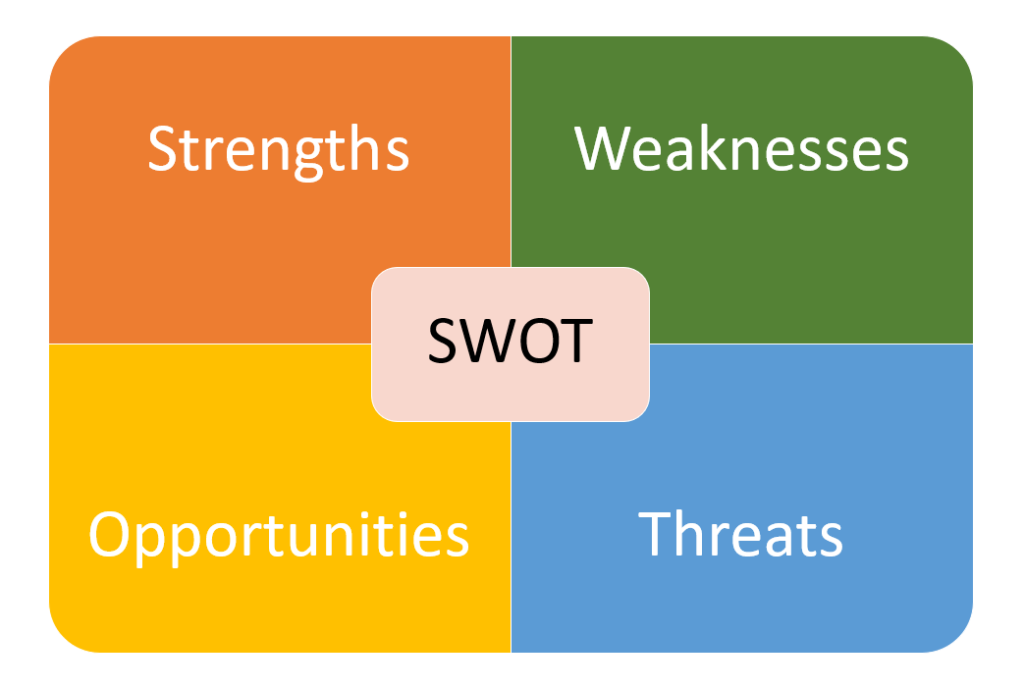
    Firstly, make a chart of your target market. Analysis of the SWOT. Which are Strength, weakness, opportunities, and threat. This time you have to do the customer based swot analysis. 

    Weakness 

    Basically, what is your product specialist about. Make reports and then show that in front of your customers and consumers.

    Strengths 

    Which is product difficulty? If your product has some functional and technical problems then recover it fast.

    Opportunities 

    Find out more right people for your products so that your products reach your consumers.

    Threats

    This is a little bit difficult to analyse. Because it is something beyond the hand. It depends on the market and the customer. If the above system goes a good way then it will be overcome as well.

    Secondly, is marketing. If this is not in the right direction, again businesses can not get the customer. So let’s talk about it.

    Marketing 

    Ways to Attract the Non-Consumer?

    This is another key point of business. If you don’t know how to do marketing and expand your business you can check out the geographical expansion.

    (Internal links to geographical expansion page)

    But right now, I will give you all strategies that can help you to reach your consumer.

    Firstly, 3 things remember all the time.

    1. Analyse the marketing opportunities 
    2. Developing the marketing strategy and
    3. Planning for the marketing program

    Secondly, do strategic marketing. You already do the swot analysis or analyse the market. Then next develop the marketing strategy.

    Chose the Value you should Provide

    As I discussed above, choose the segmentation. Where you should be focused on. Choose the right customer for your business. 

    Focus on Market 

    If you do not know what to do and how to do then you must need a plan. Focus on a specific market if your product is also specific. You have to think very strategically. Choose your market according to the consumer.

    Value Positioning

    Make valuable and sustainable products so the customer can be satisfied. Value of a product can also improve the brand value.

    Thirdly, do the planning. As I mentioned above. Do this in this strategy.

    Product Development 

    Undoubtedly, First, develop the products. If the product does not best no one cares about it. So focus on the design and features of the product that add more value in your creations.

    Develop the Service 

    While you develop your product but you do not improve your service then again your business will no longer be called best. So after the product development, you have to develop the service for the consumer too.

    Price Planning 

    Take a look at the overall operation cost, logistics and then decide the price. Price is another key point of a business.

    Marketing Sourcing

    Marketing is the most important part of the business. Is important to realise that strategic marketing is very much needed. Adopting the right type of marketing will definitely become profitable.

    Distribution

    In this case, the distribution channel must be very strong. Not only marketing but the overall distribution should be good.

    Now here is another thing to do also to enhance your business. 

    Fourthly, is Tactical Marketing.

    SalesForce 

    This is the best way to reach your customer as you already know. So the best way to do sales is actually not selling. You have to focus on the process of selling.

    Promotion

    Next is Promotion. This is definitely another key point. Promote your brand to your customer. Promotion means you expand your product by different mediums in front of everyone.

    Advertising 

    Advertising is a type of promotion. So make sure you advertise your products in the best way. Use different mediums to advertise. Such as tv, social media and newspapers (little costly).

    Also, you can advertise on search engine optimisation, for example, Google, bing etc. 

    So above all are the best way to get attention from your consumer or customer. Follow the instructions and gain your business. 
    How to Attract the Non-Consumer?

    Ways to Attract the Non-Consumer?

    As we already know how to get the attention of the customer. Similarly, it is also a big question of how to attract non-consumer?

    However, if you do not know the process of attracting new consumers or non-consumer then look here for useful information.

    High-Quality Products

    Firstly, make sure that your product has the best feature. To be sure in the technically and physically best. If you provide high-quality products with the maximum quantity then your non-consumer will start buying your products.

    Distribution 

    Again, I want to discuss it. Because it is very much important like others. Building a strong distribution network can be very helpful for a company. Everyone wants fast delivery and easily available products, with this purpose in mind non-consumer also want the same.

    Related Video 

    Do you like to see the video most rather than read something? Of course, you love to see the video most.

    If you promote your brand and your product by video formats. It impacts a lot. Undoubtedly, create more valuable content for your non-consumer so that they convert to your regular customers.

    Create Positive Emotion 

    Little confused? Now, what is creating positive emotion?

    So let me explain, if you create empathy, what I discussed above, then the non-consumer also converts. Promotion should be very related and hit directly to the customers emotional sides. 

    For example, you love to eat burgers and suddenly you see ads like one burger company discount 50% of your first buy. In this case, if you never buy from that brand, maybe you buy this time because of the discount. After that, if you like the test then you will start buying from their brand. Overall you become a customer from non-consumer. I hope you relate to this story, it’s not mandatory to only burger. But It can be any type of product.

    Commitment

    Next is commitment. Obviously, anyone wants a real problem solver brand. Who cares about their consumers. Commitment by their words, it’s most important to the business. If there is any problem, the company should engage with their consumers by their services. 

    At last, I can say these are the most common ways to get all non-consumer attention. Follow the above process so you can also convert non-consumer to consumers.

    Ways to Attract the Non-Consumer?

    Ways to Capture the Market?

    There are several ways to capture the market. One is the very famous strategy used by well-known companies which is a horizontal strategy.

    In this strategy, one company can acquire a similar level of value chain company for capturing the market. 

    For example, one famous hotel can acquire another hotel to finish the competition. In this case, the hotel also gets new customers and a new market. In this way, any brand or business captures the overall market.

    But not only the horizontal integration but one company also uses a vertical strategy for expansion. Check here for detailed information about the vertical and horizontal strategy.

    (Internal link to vertical and horizontal integration page)

    How to Satisfy Consumers?

    Satisfied the customer is definitely the big task for a well-known brand also. So what to do? If you don’t have any idea that is fine but I have several strategies also used by big business.

    Firstly, first thing fast.

    Confused? What I’m talking about. Wait I will explain.

    Do you sometimes need any personal products and you are looking for it in the urgent base? Sometimes you do.

    So here is the concept coming in here, which is doing the fast service to the customer. It is not only the products but after the product sale, the customer service is also important. So if the company provides the fast services obviously the consumers will be satisfied. 

    Secondly, as I discuss above if you provide the valuable services then they easily convert and satisfy.

    Thirdly, create more useful products so the non-consumer also convert.

    Fourthly, find more enjoyable products that help them and give them happiness.
    After that, you should take feedback from your customers. That will help you to develop your products. 

    When you get feedback, then you can build and develop your product as best as possible. Also, you can track everything.

    You also can control your product development and your overall services so that your consumers will be satisfied with your business.

    So these are some important strategies used by all companies.

    Conclusion 

    At last, I must say that you got your answer to what you are looking for. But before ending, I want to repeat some valuable information for your benefit. Customer and consumer both are the most important for any business. If you understand the overall behaviour, perception, need and wants of consumers then you will be able to operate your business. Everything I thoroughly discussed in this blog so you can understand everything still here. On that note, I would like to conclude. Just learn from this blog and apply in your business.

    Frequently Asked Questions 

    How to Capture Clients?

    Capturing customers and clients both are the same. When you promote ads on the Internet and target the specific people then the consumer will become your clients. If you follow the above processes and use all strategies then you will be able to get the clients attention.

    What do the Consumers Prefer?

    Consumers always prefer the best products and best service. The product should be easily available and easy to use. Also, brands should give us the best customer service as well.

    Definition of Consumers Attention

    In one word, get the attention of your consumers by giving the best services as much as possible.

    How do Adverts Attract the Attention of the Customer?

    When a company starts creating video ads then they attract more customers and consumers. If you make the subjective related videos which relate to everyone then adverts will convert the non-consumer also.

  • What is Product Wise Profitability? Simple Method to Calculate It

    What is Product Wise Profitability? Simple Method to Calculate It

    People need to understand the product wise profitability not only for which product is profitable, but which product as sold to which customer and delivered to which locations for those customers.

    Product-wise profitability affects the most out when you decide you are finding the best product out of your other product. 

    Anyone uses this to determine the profit of that particular product he/she was selling.

    What’s in it

    What is Product Wise Profitability?

    Product profitability helps to determine the profit of the product you sell in the market.

    You might be thinking why we should evaluate the profit while we already had our total revenue, right?

    Because the revenue we get is pointless if we get no profit on the products that we sell in the market.

    Just think for a minute that How do you know which product is profitable or which one isn’t?

    You can double down the hustle on that particular product to get the best possible money into your bank account.

    So we are going to walk through you to all about determining the product wise profitability.

    Before that, consider a few things whenever you are learning the product wise profitability not necessarily for the company, but for each individual.

    Now, although the examples that I am going to show you are only for products and you can very easily replace that with service as well, so this could be the leverage you know the product or services.

    First off a few things to consider: you are determining the product wise profitability.
    What is Product Wise Profitability? Simple Method to Calculate It

    Of course, you not only need something that the price and the cost, the unit cost, the number of sales.

    But all of this is to determine the characteristics like  your revenues, COGS, profit and loss.

    You’ll also need to consider other things like marketing cost and sales cost, so are you going to put substantial marketing costs and large sales cost into something you might have a low margin on?

    Yes, that would be a nice idea because you make them harmful.

    As a result, this allows you to compare all of the sides of your products by side by side!!!.

    Take into account marketing, account sales, account your margins, and all of that and again, you could do this with services as well.

    Product Profitability Templates

    As you have already seen above the graph the cost of good sold in your unit sales

    And you’ll see here along each axis of your product names, product one to product 12 in the COGS graph and on the unit sales.

    And you can see it correlates with products on the 12th product, but you are not limited to the 12 products or 12 services.

    You could come on the next line and add another product in the cogs or the in the sales graph.

    There in the data, you could have a number of things like price to unit cost, etc., 

    So now you can add up another product. Let’s say we have shoes as product 13, which you can use as an example.

    We are selling shoes and the price of those shoes are 50 bucks.

    The unit cost let’s say 25 bucks and the numbers that we sell let’s say 500 units.

    Here what we are going to do is just put the marketing cost.

    If this cost is associated with the promotions of that product, we put it inside of our data.

    Marketing Cost

    What is Product Wise Profitability? Simple Method to Calculate It

    Let’s assume we have the marketing cost of 4000 bucks.

    The additional cost for the employees who push the product to sell into the market or any sales cost. 

    For sales cost, we take 1000 bucks, and now what you need to make a list with this information.

    To understand the above things, we will use another example of product X and Product Z.

    So, these are the two goods that you sell each month, but that doesn’t mean that the best selling product is the one which is the most profitable.

    Suppose you sell 100 units of product X each month, and this is the best selling product.

    But, the cost of the product with shipment is 10 bucks each.

    You sell this on the shop for 15 bucks to the customers/

    The cost for 100 units * 10 bucks= 1000 bucks (total you pay for the product to the wholesaler)

    You sell this product for 15 bucks * 100 units = 1500 bucks

    This is the amount you get at the end of the month after selling that product

    But the profit on the product should be

    1500 bucks – 1000 bucks = 500 bucks of profit on that particular product.

    And if you sell 50 units of product Z each month,

    The cost of the product with shipment is 10 bucks each.

    And you sell this on the shop for 20 bucks to the customers.

    The cost for 50 units * 10 bucks = 500 bucks (total you pay for the product to the wholesaler)

    And you sell this product for 20 bucks * 50 units = 1000 bucks the amount you get at month-end after selling that product, but the profit on the product should like

    1000 bucks – 500 bucks = 500 bucks of profit on that particular product.

    What is Product Wise Profitability? Simple Method to Calculate It

    So this shows that you are getting the same amount of profit to the product by spending less on the inventory on the product Z, and if you increase to the level at the Product X units in your stock, then the profit will get double.

    I am telling you that the best selling product is the product that gives the most profit into your bank account.

    And to find the per-unit amount of product X then divide the total number of Units with product profitability you find:

    500 bucks of product wise profitability / 100 units = 5 bucks per unit.

    And to find the per-unit amount of product Z then divide the total number of Units with product profitability you find:

    500 bucks of product wise profitability / 50 units = 10 bucks per unit.

    Conclusion

    So it’s the unique intersection of a particular product delivered to a specific customer’s location. Try to understand as if like I am having to retail in the Delhi Connaught place.

    The personnel, the trucking, the rules on what hours I can get into the Delhi, all of which are quite different then if

    I am delivering to the warehouse in Noida or Gurugram, which is the view of profitability that the customers or the user of the product or the service need to understand. 

    “That’s the level where you need to make a decision of profit or loss by calculating product wise profitability to that product delivered to that location.  

    FAQs

    1. How do you calculate the profitability of a product?

    Subtract the Product cost from the revenue, for example: 
    If you sell the 100 units of product X each month and this is the best selling product, the price of the product with shipment is 10 bucks.
    You sell this on the shop like for 15 bucks to the customers the cost for 100 units * 10 bucks the costs that you pay to the wholesaler = 1000 bucks.
    And you sell this product for 15 bucks * 100 units = 1500 bucks
    The amount you get at the end of month after selling that product
    But, the profit on the product should like
    1500 bucks – 1000 bucks = 500 bucks of profit on that particular product

    2. How do you calculate profitability analysis?

    Gross Profit = Net Sales – Cost of Goods Sold
    Operating profit = Gross Profit – (Operating Costs, Including Selling and Administrative Expenses)
    Net Profit = (Operating Profit + Any Other Income) – (Additional Expenses) – (Taxes)

    3. What is the formula to calculate profit?

    The formula for calculating the profit is pretty easy, but it sometimes becomes complex to calculate the profit 
     Total revenue – Total expenses = profit. Profit is calculated by deducting direct costs, like labour, material, and indirect cost such as (overheads) from the sales.

  • What is Bootstrapping in Business? 4 Simple Ways to Get Started

    What is Bootstrapping in Business? 4 Simple Ways to Get Started

    Listening to startup ideas is mind-blowing undoubtedly. If we add motivation, it becomes exhilarating. According to me, bootstrapping in business is the best way to start.

    Implementing these into your actions can be life-changing for anyone who is working hard and also being persistent.

    May be you can build the next Amazon, YouTube or Instagram.

     A millionaire by 27 and billionaire by 33. Who don’t wanna think like this making up this stuff in our head is great at least I feel it. It excites me and gives me goosebumps.

    So you must have heard about pulling off once on bootstrap. Even if you haven’t about, it doesn’t matter.

     Bootstrapping has been originated from this phrase. Bootstrapping is all about pulling something unexpected.

    Basically, if I have to define bootstrapping in business, I would say setting up a company or raise a company with your own savings expenses with a bit of luck, hard work, or maybe a little extra help. 

    Bootstrapping in business is especially about growing companies by self or borrowing money others and managing profit and funds at the same time.

    Let’s pull up one’s own bootstrap.

    What’s in this-

    Understanding Bootstrapping in Business 

    If anyone is starting a business, he must have skills for bootstrapping.

    It’s not the easiest way to go, but it’s a relatively easy way to start rather than choosing other options.

    There is a possibility that you will lose the money or your savings on equipment and investments for being native. But it’s not all.

     It offers a lot much. It is a constructive as well as an economical way to keep the cash coming. Bootstrapping in business is all about leveraging resources while simultaneously maintaining the cash flow and managing profits and bills. 

    Bootstrapping is the river you have got to swim or sink. You paddle hard, or you fall. Although many successful businesses started with bootstrapping. 

    If I take an instance, see it as a housewife where the cash flow or savings is the husband’s part of the salary, and the wife manages all the resources like food staples essentials at the same time she is saving and an emergency fund in the almirah. Sometimes limited resources or equipment can be a pain in a butt.

    What is Bootstrapping in Business? 4 Simple Ways to Get Started

    How to Get Started with Bootstrapping? 

    If you are a beginner or new on the market, then you must speak it going with your post. I mean, let’s just be real.

     A 9 to 5 job gives us a lot, then we think. It helps us develop your behavior towards people and your limit to get going or concentration power. Moreover, you are getting paid for learning all this to gain experience. 

    I am going to say that when you bootstrap your business, there must be cash flow, and you must not just leave that.

    It is one of the resources that you can use in your side hustle. If you are not working or you are a student, then Hakuna Matata.

    You got to share the content with others. Let people know and also take their feedback about the content.

    Always chase the problems. I believe facing challenges is the best way to progress. For instance,

     Just watch Elon Musk. Solving the problem is the key passion and also the icing on the cake.

    So these were kind of motivational ways.

    Now let’s move onto the realistic ways and more practical ways that have already been tested by several other entrepreneurs.

    Credit Exchange

    By changing credit, you can make most of your resources available for you but not for long. Initially, suppliers might want the cash on delivery until you have gained trust over them by paying or showing them that you can pay bills punctually

    Letter of Credit (LC)

    If the buyer or customer can provide you a letter of credit, it would be a great help for financing. Let’s assume you open up a business manufacturing factory bottle. A large corporation is placing the order. Now, this supplier that will provide you the material is in another country.

    In this case, you will get an LC from the customer about when an order has to have arrived and about the material. It’s a security or receives the letter.

    With the help of Equity

    If you want a place where you can control your setup, you will need a lot of money, but bad down paint state for longer like 20 to 30 years you are good to go. 

    Stick with the apartment less will be your interest rate, and more will be equity. With the help of equity, you can refinance or amend your interest rates.

    Leasing

    It’s the best way to avoid the purchase of high ticket equipment our resources. Pleasing basically means paying for the particular part that you are using rather than paying for the whole.

    For example, if you need any tool from the inventory from rather than purchasing the whole inventory. You can get the tool and pay for that.

    Examples of Bootstrapping in Business 

    Constructing a solid base the business takes time. A lot of bootstrap companies have achieved the feat by introducing layer absolute gem products and services.

    There are some examples of bootstrapped companies.

    What is Bootstrapping in Business? 4 Simple Ways to Get Started

    GoPro

    Literally, if there were a number one on the list for bootstrapping in business, it would definitely be a GoPro.

    GoPro was known as woodman labs, which produce and manufacture high definition cameras. There design to film the user’s experience. 

    These cameras world most liked by sportsholic as these cameras were made to record handless and ultra high definition footage. Woodman got the inspiration from the surfing trip 2002 Australia trying to capture the shots while surfing. 

    But he wasn’t quite able to capture what he needed because of a lack of quality of camera and products. So he decided to design his product as a bootstrapper he bootstraps his company for 10 years until he accepted the investment from Foxconn of 200 million dollars. Change then company raised its tech and give the users high-quality cameras. 

    Digging in a little more woodman used to sell shells belt and beads to earn the bootstrap cash. He designed his product with his hand due to a lack of digital knowledge.

    What is Bootstrapping in Business? 4 Simple Ways to Get Started

    GitHub

    The interesting fact about this company is that it started as a side hustle turn on Saturdays and Sundays. Founder Tom Preston-Werner, Chris Wanstrath, and PJ Hyett bootstrap cash to get the domain. 

    It was a big stage set up for the developers who have access to the social network. 2013 was a breakthrough year for GitHub as the hit 3 million marks.

    After these, things changed pretty fast, as the founder gave complete focus to the project resigning to the day jobs and begin to invest time in their production customer feedback.

    Spanx

    Founder Sara Blakely came with the idea of brief slim sleek and comfortable undergarments for women.

    Define brands that she had saved was bootstrap in a project back in 2000. She also got her idea

    Patent

    Now her network is near to a billion still owns all of it. These people become successful, not just because of dumb luck.

    But, because of their product or sharp as a tack and they show patience to reach a milestone.

    Pros and Cons of Bootstrapping in Business

    Following are the pros and cons if you start and depend on bootstrapping in business-

    Pros

    Significant Focus

    Unlike other startups bootstrapping doesn’t require to invest their thinking ability on how to handle the investors. Bootstrappers spend most of their time in improving their products. 

    The only one they need to impress is the customers. You get to control how you make all the stuff you are going to sell or maintain. It could be anything. Pressure situations are ruled out, and you can better your progress without paying a hangman.

    If you just borrow money from some external source, then you might have to work for others to satisfy the other people leaving your idea of product behind only to fulfill their needs. Your idea could be a winner.

     Also, when the clock of the money starts ticking that is being borrowed, it’s getting harder.

    As you get closer to the deadline, the pressure keeps increasing, and you might lose control over things. To avoid this situation bootstrapping is the best way.

    What is Bootstrapping in Business? 4 Simple Ways to Get Started
    Expand your business:

    Building something like Reliance a generation to generation company, you are going to need to put scrap business. 

    The image will be hanging around you like a waiter for one asking for the bill at any moment to finish the meal. This can be avoided if you make your mean. My point is bootstrapping in business.

    Spend precisely

    Battery cost experience makes good habits in a good balance between the profit and expenses.in the wrong turn, you can get maximum results with minimum resources. It’s penny-pinch. If you slip away, you might get into trouble. Tu to avoid this bootstrap your business.

    Bootstrap page doesn’t have to chase perfection. Instead of that, they run for progression. Perfecting products can be a real pain in a**. Most of the time, you might fail. Instead of that, you can make your product, ask for reviews and feedback and change. It’s like progress-feedback- change- repeat.

    YouTube started as a dating website until the founder just posted a video and make it available for all kinds of uploads. You don’t know the destination, just trust the progress.

    Cons

    According to Forbes, 90% for startup fields and 75% of fields are due to running out of services cash and fulfilling the investor space.

    Survival risk

    Bootstrapping in business means you are on your own. For entire business responsibility. You make a profit you reinvest you are good.

    But somehow, if you fail to make the profit, the cash flow might become negative. That would not feel a good consequence. You might drain away all the cash through one wrong investment.

    You might have to spend from your pocket to the employees, maybe even from debt.

    Social, Physical, and Financial Networking the value, insiders’ knowledge, the whereabouts that can be assaulted by networking, you might miss out on these as a massive help to your bootstrap business.

    Being in my school, no was in front of a hardcore expert, is not a good scenario. Investors expert in a particular area has the upper hand.

    Growing but like it trees

    Bootstrapping means handling business with the limited promotion of limited network restricted cash, so there is a large probability to grow slow scale slow, which might sometimes take years.

    Conclusion

    So let’s wrap it UP fast.

    Bootstrapping is the game of patience hard work management organization and waiting for a chance.

    Bootstrapper versus others is like a race between the tortoise and the hare. Bootstrappers moving slowly but consistently with a lot of patience is finally paying off. Bootstrappers rise and grind all day.

    Showing hustle loyalty towards themselves and their products can definitely give a rewarding end result.

    Bootstrapping in business, one might need to play a lot of roles like program manager, cook organiser. It takes a lot of hard work has been hours and hours showing perseverance day to day.

    It’s not easy to start, but it would not give peasing rewards if it were easy. Bootstrapping in business tells you to maximize your productivity with minimum assets.

    FAQs

    1. What is an example of bootstrapping?

    Constructing a solid base the business takes time. A lot of bootstrap companies have achieved the feat by introducing layer absolute gem products and services.
    There are some examples of bootstrapped companies are GoPro, GitHub, and Spanx as well.

    2. What does bootstrapping mean?

    Bootstrapping in business is all about growing company with abettance from others and managing profit and funds at the same time.
    Let’s pull up one’s bootstrap.

    3. What are bootstrapping strategies?

    Credit exchange is one of the strategies that you can use to grow your business from scratch, by changing credit, you can make most of your resources available for you but not for long. Initially, suppliers might want the cash on delivery until you have gained trust over them by paying or showing them that you can pay bills punctually

  • What is Consumer Insight? 5 Real-World Examples – Lapaas

    What is Consumer Insight? 5 Real-World Examples – Lapaas

    Consumer insight is essential for the company to survive against its competitors. The less the company can understand its consumer, the more difficult it becomes for them to survive in the market. 

    In the end, consumers that generate demand, directly or indirectly, for all products and services.

    For examples: 

    • Food, shelter, and clothing
    • Cars, bikes, laptops, etc
    • Electricity, internet, and social media
    • Food, shelter, and clothing
    • Cars, bikes, laptops, etc
    • Electricity, internet, and social media

    And the farther you removed from the end consumer, the more important it is to understand the end-users.

    What’s in it?

    What is Consumer Insight?

    A foundational principle in the marketing and customer values is that the customer value.

    It is based on an in-depth and better understanding of customers.

    So, we can also say that better customer insight.

    Now the question arrives is, what is the customer insight, right? And how do we get it better at customer insight?

    So, I think our customer insight as a fresh way of understanding customer needs, behaviour, and customer frustrations.

    It can become the basis for a business opportunity. So the question is, What do I mean by not yet obvious to other people?

    Sometimes, the insight is a way of looking that other people have not only seen, but considered counterintuitive.

    You’d run in the opposite direction and that sometimes maybe insightful 

    Examples of Consumer Insight

    So let’s just understand it by the help of the examples:

    If you were to locate a retail store, where do you want to put it? Stand to reason that you put it where there’s a lot of customers in the area decided first. 

    Walmart | History & Facts | Britannica

    Walmart Consumer Insight Example

    At Walmart, Sam Walton says, what I’m going to do is put the vast stores in the middle of nowhere.

    Now, what was his customer insight? He had understood that as the highway system had improved in the united states as a result of the Eisenhower highway bill,.

    It is now more comfortable for the customer to travel long distances to go to a supermarket.

    Also, it is cheaper now to ship your products to the store. He realized that if you build a vast store where there were fewer people, but if they were coming over from a much larger radius.

    You had enough demand, and more importantly, they had no competition, so this was the foundation of Walmart.

    Apple Inc. turns 41: Crazy facts about the iPhone maker ...

    Apple Inc. Consumer Insight Example

    The one who used to work for the Apple Inc. told that when he was the product manager for the iMac they were first coming out with the iMac. They had everything locked and loaded.

    They were ready to go the market once Steve Jobs called a meeting and said we’re going to do Four Colors.

    All the left brain people in the audience were like “this is nuts.”

    Now we’re going to increase our inventory, and we are going to create problems with forecasting.

    We are going to delay the launch so what the big deal with colors is? And  Jobs said “Well, we are going to do four colors because colors are the way people express themselves.

    It makes the computer more of a personal asset. It also reflects their identical personalities.”

    And of course, I also think that the colors played a vital role in the success of the first iMac.

    And we also recall their advertising tagline, which was “SORRY No Baige Think Different.”

    It also became the cornerstone of their campaign again, but not obvious to people because it involves questioning conventional wisdom.

    So the customer insight a sort of ideas on customers are that they will never come from quantitative market research, so don’t look them in your surveys.

    Because customer insight involves going deep in building empathy with customers and trying to understand their point of view.

    The qualitative research is the exploratory research of the empathic design where you really seek closeness with customers, and understand their thinking.

    That will lead to better insight; it’s the notion of exploration as the notion of really using the eclectic method of trying to get closer to the customers.

    Also, customer insight often comes from anomalies( it is a great way to begin to think about the idea), so what is an anomaly?

    Kodak pharma deal held up over reported questions about stock move

    Kodak Consumer Insight Example

    For instance, Kodak was entering the market for digital cameras, and they found an anomaly. The anomaly was that although the analog film then cameras in the home, 75% of the pictures were taken by the women because of one of the family’s memories keepers.

    But in the digital camera, they found that there was less than a quarter what the pictures would be taken by women now why was that so?

    So this was an anomaly as they dig deeper into what they discovered: women had three problems with digital cameras at first whenever I want to use it the battery is always dead,

    And the second problem even if I can use it I don’t use it because it has a lot of buttons and too many features, it is too complicated.

    And the third one even after I take the picture I don’t know what to do with them it’s too complicated to get them into the computer onto the internet.

    So they simplified this entire process and came up with easy the natural concept of the easy share camera, the accessible share gallery, and that became the cornerstone of their success “The Ease of Use.”

    Hence, the anomaly is an excellent place to start looking for customer insight.

    Napster And Ipod Example

    And also the customer insight sometimes comes from the intersection of clients. When I meet someone who was doing good in this sector, their idea was that if we look at the one trend which is personal music you know the walkman, of course, had been very successful and the other direction was digital music like Napster.

    Now the conversion of these trends which is personal digital music should be the huge opportunity, but in fact, the market did not develop the way that it should have,

    So that became the basis for apple investigation why is this the case and what they found there was that people want to take all their music with them in an unobtrusive way and they also wanted a simple way 

    To actually download and use music legally, the three innovations they created were the size, and the storage which was 10 thousand songs. The third was an easy way for you to buy and make music legally, iTunes, and the rest is history.

    Unlocking Consumer Insights in a Disruptive World - MRMW

    Conclusion

    So that’s the customer insights. They are penetrating the prominent and looking things differently.

    They are really doing it by getting into the minds of the customers as well as head blenders.

    Because as someone says about customer insight: “It’s about walking in the customer shoes, but first you have to take off yours.”

    FAQs

    1. What does consumer insight mean?

    A foundational principle in the marketing and customer values is that the customer value is based on a more in-depth and better understanding of customers, or we can also say that better customer insight.

    2. How do I find consumer insights?

    The consumer insight is a way of looking that other people have not only not seen but considered to be counterintuitive if the herd (group) is moving in one direction 
    You’d run in the opposite direction, and that sometimes maybe insightful. I think this is one way to find consumer insights. 

    3. Which is an example of an insight?

    A few of the most famous examples of insight are Apple Inc., Walmart, Kodak, and the Napster vs. iPod as well. So go and check that out also to help you like a lot, which this topic to understand in the deep.

    4. Why is consumer insight important?

    Consumer insight is essential for the company to survive against its competitors because less the company can understand its consumer, the more difficult it becomes for them to survive in the market. The farther you removed you from the end consumer, the more important it is to understand the end-users.

    5. How do you explain insights?

    A foundational principle in the marketing and customer values is that the customer value is based on a more in-depth and better understanding of customers, or we can also say that better customer insight.

  • How to do COGS Calculation? 2 Simple Ways to Calculate

    How to do COGS Calculation? 2 Simple Ways to Calculate

    by Team Lapaas | Aug 21, 2020, | Strategy | 0 comments

    2 Minute Summary

    COGS stands for Cost Of Goods Sold. It is the cost that a company pays to produce its product or service. All companies incur/bears the cost in the creation of their products. The labour, material, and operating costs, such as building rentals and utility expenses, contribute to the COGS calculation and the final product’s final price. Calculating the COGS (Cost Of Goods Sold) or the cogs formula for the services or the products you sell or manufacture can be very hard or complicated some times, RIGHT?  Basically, it all depends on the number of products as well as the rigidity or complexness of the manufacturing process. It becomes easier as you practice it, so keep practising and keep visiting our website for many more amazing and informative blogs. Full Detail in Blog.

    Do you want to know what is cogs? and do you Want to know what is cogs mean? or do you Want to know how to do cogs calculation? Want to know why it is important for you? Want to know how it will help you grow your business?

    Well, you got yourself at the most right place to get information about COGS.

    If your business sells Services or product then, you need to know how to do COGS ( Cost of Good Sold) calculation. Basically, this calculation includes all the things involved in cost to make the sales. 

    What’s in it for me?

    1. What is COGS?
    2.  COGS And Gross Profit
    3.  Accounting Method of COGS
    4. Conclusion
    5. FAQs

    What is COGS Meaning?

    COGS stands for Cost Of Goods Sold. It is the cost that a company pays to produce its product or service. All companies incur/bears the cost in the creation of their products.

    The labour, material, and operating costs, such as building rentals and utility expenses, contribute to the COGS calculation and the final product’s final price.

    For example, Let’s say you are buying a smartphone, and the price of the smartphone is 1000 bucks. But, the part of the price consists of COGS which includes the following-

    • The cost of the items used to make the smartphone such as processor, ram, battery, machines need to assemble the phone. Also, the electricity to run the whole plant.
    • Labour’s salary to pack the cell phone all these costs associates with the actual creation of the product that includes in the COGS calculation.
    • Transportation, advertisements or sales are not part of the COGS calculation.

    To understand more clearly, let’s take a real-world example 

    Which of the following companies do not have the cost of goods sold in their income statement?

    1. Apple
    2. Facebook
    3. Patanjali
    4. Pantaloons

    If you say “Facebook” then yes!! You’re right because the COGS only applies to those enterprises that have something to sell like physical goods.

    COGS And Gross Profit

    Do you want to know how does Gross Profit related to the Cost Of Goods Sold? The big question right? So, to understand this, let me give you an example. 

    Let’s say you are full of ideas, you like to invent stuff, and suddenly you have come up with the breakthrough product and got a prototype working 

    However, your strength is really in designing, not manufacturing or selling.

    So you get somebody else to do the manufacturing of your product for you. They produce goods according to your specifications, ship them, and you pay them the cash on delivery.

    You also get somebody else to sell off the product to customers. You ship the goods to the retailer, but instead of retailer paying you instantly, you will receive the payment after 30 days.

    This month, You buy 100 units at 80 bucks each and sell 50 units at 100 bucks each. So how much profit do you make? What do you think? Well, let us help you with the calculation.

    See, you deliver and sell 50 units at 100 bucks each, so your revenue is 5000 bucks. The cost of sourcing(making) those 50 units that you have now sold is 50 units at 80 bucks each. So, your cost of goods sold is 4000 bucks. 

    In short, you sell 50 units at 20 bucks margin per unit, So, you generate a profit of 1000 bucks. But wait, didn’t you buy 100 units and only self 50?

    Yes! You haven’t sold those 50 units yet. So, it is still remaining at a value of 4000 bucks.

    Wow, That means you still have a long way to go in this business.

    Cost Of Goods Sold Formula [CoGS Formula]

    Look at this another way of finding the same numbers by using CoGS Formula

    It goes like this-

    Beginning inventory ( which is ZERO in this case)+Purchases (this is 8000 bucks)–Ending inventory ( of 4000 bucks)= 4000 bucks (Which is the Cost Of Goods Sold)

    The Important variables here are the value of the beginning of the inventory and the ending inventory Why?

    Because, In the end, just remember one thing, when you have the Net sales of your business than just Deduct the COGS (Cost Of Goods Sold) and then you’ll have the Gross Profit. NET SALES – COGS = Gross Profit. 

    Accounting Method of COGS

    This is another way to do the COGS calculation, and the first method is LIFO, and the second one is FIFO.

    LIFO stands for “Last In First Out”

    and 

    FIFO stands for “First In First Out”

    Both LIFO and FIFO are the cost accounting Frictions that can lead to very different numbers of Cost Of Goods Sold and Gross Profit.

    Let’s work through a visual example of FIFO and LIFO. Inventory Valuation — LIFO vs. FIFO

    We will do the inventory accounting for a hypothetical company, Toy Giraffe INC. As the name suggests, this company buying and selling Giraffe toys. While reading the example, don’t break the flow and order of reading or else you may find it a bit confusing. We don’t want you to get confused, we care for you, so we request you to read this information with total attention.

    First Quarter

    In the first quarter of the year, toy giraffe inc is building up its inventory. In January, they buy 1000 units (packed in 2 boxes 50 each) at 5 bucks per unit. 

    Suppose in February, 200 units (4 boxes of 50 each) at 6 bucks per unit.

    And in March, another 100 units ( 2 boxes of 50 each) at 7 bucks per unit. The quarter 1 ending inventory is 400 units at a total purchase price of 2400 bucks, so on average 6 bucks per unit. In the warehouse, the company does not explicitly identify the boxes. They just stack them up on a big pile(like a big big pile).

    For accounting and inventory valuation purposes, the company does keep track of the timing of the buys as well as the unit cost.(Irresponsible company, right?)

    Second Quarter

    Then we go to April, the ending inventory of Q1 is the beginning inventory of Q2. The visual presentation if the FIFO inventory flow is at the top, LIFO at the bottom.

    They sold the first box of toy Giraffes (50 units) in April with FIFO (First In First Out). We will assume that they sold the oldest inventory first: one of the boxes purchased in January. 

    But with LIFO (Last In First Out), We assume that they sold the newest inventory first: one of the boxes purchased in March.

    Two boxes of toy Giraffe are sold in May.

    With FIFO, we assume that they sold the oldest inventory first: the last of the boxes purchased in January and one of the boxes brought in February.

    But with LIFO, we assume that they sold the newest inventory first: the last of the boxes purchased in March and one of the boxes brought in February.

    Four boxes of Giraffe are sold in June.

    With FIFO, we assume that they sold the oldest inventory first: the remaining three boxes are brought in February, and one box is purchased in March.

    What stays in inventory at the quarter-end under FIFO is one box they purchased in March. But with LIFO, we assume that the newest inventory gets sold first: the remaining three boxes brought in February and the one box purchased in January.

    What stays in inventory at the quarter-end under LIFO is one box purchased in January. I’m hoping that you have understood it correctly, and if not, kindly just read it again with a little more attention. I’m pretty sure that you will get the point for sure.

    Conclusion

    Calculating the COGS (Cost Of Goods Sold) or the cogs formula for the services or the products you sell or manufacture can be very hard or complicated some times, RIGHT?  Basically, it all depends on the number of products as well as the rigidity or complexness of the manufacturing process.

    It becomes easier as you practice it, so keep practising and keep visiting our website for many more amazing and informative blogs.

    We hope that you now got the actual idea of what cogs is, what is cogs calculation, what is cogs meaning and all the accounting methods for cogs calculation. But if you still have any doubts left, don’t worry, we got your back!

    Go through the below FAQ section to clear each and every doubt of yours regarding cogs.

    FAQs

    COGS calculation
    1. What is the COGS formula?
    COGS calculation

    There are three steps to find out the COGS but there is another way also and that is the putting formula into the figures.
    The formula for the COGS Calculation ( Cost Of Goods Sold) is 
    Starting inventory + Purchases – Ending inventory = COGS ( Cost Of Goods Sold).

    • How do you calculate the Cost Of Goods Sold(cogs) per unit?
    COGS calculation

    Let’s say you have $20,000 in Cost Of Good Sold, which goes to the income statement. To calculate the COGS per unit, divide the total cost by the units sold. Let’s say you have a total cost of $20,000, and you have sold the 4000 units at $3 (hypothetically). What you need to do is $3 ($20,000 / 4000 units), so the answer will be the COST per unit. 

    3. How do you find the average COGS?

    To find the average COGS, you take the opening inventory balance as well as the purchases that you have done in a period of time to find the average cost. The average price per unit is used to find the COGS and the Closing Inventory Balance.

    • How to calculate COGS calculation from gross margin?
    COGS calculation

    If you want to find the gross margin, just remember Net sales – COGS = Gross profit. Now, what you need to do is ( Net sales – COGS ) / Total Revenue. And to find margin (Total Revenue – COGS) / Total Revenue x 100 

    • How to calculate the cost of goods sold(cogs) from the income statement?
    COGS calculation

    First, you need to know the COGS formula COGS = beginning inventory + purchases – ending inventory
    Gross income = gross revenue – cogs and then NET income = revenue – cogs – expenses.

    • Cost Of Goods Sold formula in excel? 
    COGS calculation

    The COGS formula COGS = beginning inventory + purchases – ending inventory
    Let’s say beginning inventory = 9000, purchases = 2000 and the ending inventory is 8000
    So COGS = 9000+2000-8000 = 3000
    The cost of goods sold will be 3000.

    • What is the difference between COGS and operating expenses?
    COGS calculation

    Operating expense is the expanse cost that is not included in the price of goods sold cogs and on the other hand cogs( Cost Of Goods Sold) labour, Material and the operating cost such as building rentals and utility expenses contribute to the COGS calculation.

  • Retail Management – Meaning, Strategies, Importance, and Career

    Retail Management – Meaning, Strategies, Importance, and Career

    If you are a businessman or working for a business, you have heard about the term supply chain management in manufacturing or wholesale business and retail management in retail business.

    So, You might be manufacturing a product, selling a ready-made product or providing any kind of service to the customers.

    If you are a seller and earn profit margin upon your sales, you are working for product industry and if you are offering services and charge money for that, then you belong to the service industry.

    Contents-

    1. Types of Business

    Generally, there are many types of businesses that belong to various industries, but if we talk about the target audience, there are of two types of businesses-

    • B2B Business
    • B2C Business

    B2B Business- If you are selling a product to someone who against sells that product forward, it means you are dealing with a business. This is called B2B business model i.e. business to business.

    So, Mostly, This type of businessman is a wholesaler that sells products in large quantity. Hence, The sales are done on high volume and the profit margin is low.

    But even if you are selling a less quantity of products to other business, then it is also B2B business.

    What are B2B, B2C, C2B and C2C? - Quora

    B2C Business- If the customer is purchasing a product for his own use, then he is actually a consumer. So, if you sell a product to someone who consumes it, then you are working on B2C business model i.e. business to consumer.

    “Always remember this, a customer is the one who purchases your product, and a consumer is a final customer that consumes or uses your product.”

    Generally, B2C businesses are retail stores that are present near your locations and the local markets of your city. Every store sells the products or service of a particular niche and fulfils different types of needs.

    What is Retail?

    The term ‘retail’ is comes from a French word ‘retaillier’ which means ‘to cut into pieces’ or ‘to break bulk’.

    “Retailing includes all the activities involved in selling goods or services to the final customers for personal, non-business use”. – Philip Kotler

    Retail management

    When a person either manufacturer or a reseller, sells goods in bulk, then it is wholesale. Whereas a person who sells goods to the customer who doesn’t purchase it to sell, but for personal use, then it is a retail business. 

    The seller is called a retailer and sells in a limited quantity demanded by the customer. The consumer purchases a product from the retailer highest possible price of that product i.e. MRP (Maximum Retail Price).

    Generally, a retailer can be a normal shopkeeper or an owner of a big retail store chain. A small retailer offers the goods on MRP whereas the large retail chain players can provide discounts due to overall high sales.

    Types of Retailing

    Ownership Based Retailing

    1. Independent Retailer

    An independent retailer is generally a local shop owner or a street-side vendor that operates his business with a single outlet. He captures the customers of nearby locations.

    2. Chain Stores

    When a business has two or more branches under single ownership, then it is called a chain store. These stores can be present in different locations or even different cities and offer the same line-up of products in every outlet.

    Example- Raymonds, Bata, Westside

    3. Franchise Stores

    Franchise business is an agreement between an established brand that is the franchisor and the other person is a franchisee.

    In this business model the franchisor demands a royalty fee for his brand name from the franchisee and charges effect percentage of amount from the monthly sales.

    Example- Dominos, KFC, Subway

    4. Leased Department Store

    This type of business can also be called shop-in-shop or store-in-store. The owner is a lessor that provides the space to a lessee. The companies adopted this process to spread the awareness of their brand.

    5. Consumer Co-operatives Stores

    These are the stores that are owned by consumers themselves. A group of consumers can identify a gap in the fulfilment of their needs and start a store mutually with profit-sharing.

    Example- ‘Apna Bazaar’ in Mumbai, ‘Super Bazaar’ in Delhi

    Merchandise Based Retailing

    1. Departmental Store

    A departmental store is a large retail store that provides a wide line-up of products to the customers under one roof. Generally, they have separate sections for different categories of products.

    The products they sell are usually Electronic Appliances, Apparels, Jewellery & Accessories, Footwears etc. Since the products are properly arranged, the customer shopping experience also becomes good.

    Example- Pantaloons, Max, Shoppers Stop

    2. Convenience Store

    These are the small retail shops that are located near a residential area to fulfil the demands of people. The retailers of a convenience store purchase selected goods in a very limited quantity depending on the basic needs of the customers of that locality.

    3. Speciality Store

    Basically, These types of stores don’t have a wide range of products. They focus on a particular niche such as sports products, fitness products, electronic products. They have a very selective and refined customer base and provide a variety in model, size, colours etc.

    Example- Nike, Levi’s

    4. Super Market

    Supermarkets are basically self-service stores that provide groceries and other household items that are necessary for the customers. The products are properly organised into different sections

    The customer can pick the products of their choice in their cart and purchase them by paying the amount at the billing counter.

    Example- Reliance Fresh, V Mart

    5. Discount Store

    A discount store sells the standard merchandise at very low prices. Let me tell you that the quality of the product is not compromised. In fact, they operate on a high volume of sales with a low-profit margin.

    Example- Walmart

    6. Hypermarket or Superstore

    If we combine a supermarket with a departmental store, it becomes a hypermarket. The term “hypermarket “was originated in France. At many places, people call it a superstore.

    A hypermarket is one of the best options for the people to complete their shopping in one go at a single place.

    Example- Big Bazaar, D Mart, Hypercity

    7. Catalogue Store

    You have visited many retail stores where the seller shows you catalogues offer a wide range of products. You can select any of the product of your choice.

    The retailer orders it to the manufacturer or supplier and finally delivers it to you. This type of stores are catalogue stores.

    Non-Store Based Retailing

    The retail business that does not operate in any physical store comes under non-store retailing. You can also call it online retailing or ecommerce.

    Here the retailer can be in direct contact with the consumer at the workplace as well as at home.

    Example- Postal Orders, Telemarketing, Automated Vending Machines

    Service Based Retailing

    When a person does not sell any product to the customer but provides service and charges and amount for that, then this process comes under service-based retailing.

    Example- Car Rentals, Appliance Repairing, Salon

    Retail Management - the most sort after course. - CATKing

    2. What is Retail Management?

    If we talk about the retail industry, it has two portions i.e. Unorganised sector and Organised sector.

    Unorganised Sector- Basically, the unorganised retail sector contains small general stores, street-side vendors, and local retailers such as fruits and vegetable sellers.

    These people don’t have much technical and financial knowledge about the retail industry. Most of the sellers are not even registered taxpayers.

    Organised Sector- The organised retail sector contains a group or chain of stores with the proper distribution network.

    It helps in increasing the work efficiency, minimising the cost and also generates more employment.

    Retail Store Operations

    All the activities that are necessary to create a well-structured business process as well as help to run a retail store with high efficiency, come under retail store operations.

    Store Environment

    Following are the points you should take care about your store environment-

    1. Select a location that is easy to discover and reach for the customers.
    2. The look and design of the store and also the signboard should be attractive enough to grab the attention of the customers.
    3. Display merchandise and products outside your outlet so that the customer can easily make a decision to enter your store.
    4. You should maintain the floor, interior, ambience, temperature and other physical conditions of your store.

    Inventory Management

    Following are the points you should take care of for stock management in your business-

    1. Always keep a rough calculation of demand for different products that you sell. It helps you to maintain a wide range and predict your sales.
    2. You should always balance the inventory and prevent understocking and overstocking. Because less stock cannot fulfil the demand and your running capital might get stuck due to overstock.
    3. There should be enough space for the procurement of the stock.
    4. It is very important to stay updated with the launch of new products from different brands.
    5. Quality of the product you sell or the service you provide should never be compromised.
    6. Always deal with the trusted suppliers that deliver your orders on time so that you don’t it have to face any shortage.

    Staff Management

    It is the employee of a company who can make it or break it. Following are the points you should take care about your workforce-

    1. Whether more or less experienced, always hire skilled staff and never tolerate under-performing members.
    2. Provide uniform to every staff member so that they can look more professional.
    3. If an employee directly interacts with the customer, then make sure he is always well-groomed and have good communication skills.
    4. The sales pitch of the employees should be convincing so that the customers agree to purchase the product they suggest.
    5. Provide them training to improve their level and necessary updates in a regular interval of time.

    Customer Experience

    It is the key to build a loyal customer base in any business. Following are the points you should take care of to provide the best customer experience-

    1. If you run a self-service store, keep the products in separate departments according to their category, size, colour, etc. so that the customers can easily find any product they need.
    2. If you have employees to attend the customers, then they should assist them as soon as they enter the store.
    3. Greet your customers while they enter or leave the store.
    4. If you belong to the service industry, then the customer must be satisfied with your services.
    5. Build up customer relationship with healthy conversations and give them a reason to become a repeat customer.

    Payment Handling

    It is one of the major important processes for any business to survive in the market. Following are the points you should take care of in cash handling-

    1. Use the cash register counter to arrange the counter cash properly.
    2. Provide the facility of cashless transactions with POS (Point of Sale) machines, UPI or any other digital payment method.
    3. Hand over the authority to control cash to the trusted person only.
    4. If you provide the credit facility to the customers, then make sure you can recover it on time.
    5. Make a habit to track the cash flow of your store on a daily and monthly basis.
    Retail Store Management System, Stock Tracking System, Stores ...

    Shoplifting

    Basically, shoplifting is a theft activity where the person pretends to be a customer and steals the goods from the store. Following are the points you should take care of to prevent these activities-

    1. Make sure that all the products are properly arranged at their place.
    2. Install mirrors and security camera in your store for the surveillance of all the activities.
    3. Don’t allow the customers to take any kind of carry bags inside while entering the store.
    4. Pay attention to everyone individually while attending more number of customers simultaneously.
    5. Put anti-theft tags on your products, if possible.

    Returns & Refunds

    You may have to face it many times that due to any reason, the customer wants to return the product he purchased. Following are the points you should take care in these situations-

    1. Use experiential marketing by letting the customers try the product before buying.
    2. Honestly tell them the pros and cons of the product and let them decide whether it is suitable for them to buy.
    3. Make your customer aware of your return policies before they purchase anything and always stick to it.
    4. Misbehaving with the customer if they return any product it is not a sign of a good retailer. Handle them gently and leave a good impact.
    5. If a customer returns a product, never Exchange with money. Ask them to select a replacement. It will balance your sale.

    Retail Management Softwares

    The best way to automate the operations of your store is the use of retail management software. There are many softwares available in the market.

    You can purchase any of them according to your requirements. Following are the advantages of retail management software-

    1. It helps to keep track of the inventory, sales, cash flow, staff attendance, etc.
    2. You can analyse your top-selling and least-selling products of your store.
    3. It becomes easy to save the contact details of the customers and target them for remarketing.
    4. The monthly reports can help you to analyse the buying behaviour & pattern of the customers.
    5. It saves your time of accounting and many calculations, so you can focus on other operations by utilising that time.

    3. Retail Management Strategies

    The retail industry is a very dynamic and competitive sector in the market. You have to apply various management strategies for the survival and growth of your retail business.

    “You love it when you visit a store that somehow exceeds your expectations, and you hate it when a store inconveniences you, or gives you a hard time, or pretends you are invisible.” − Sam Walton (Founder, Walmart)

    The retail management strategies include marketing, pricing of the product, discounts to attract the customers as well as other techniques that help to grow your business.

    Top Retail Marketing Ideas To Boost Sales of Your Supermarket ...

    Retail Marketing

    Whether you talk about the product selling or service providing, marketing is the crucial part to reach your target customers and make them aware about your business.

    If you really want to grow your business properly, you must include a marketing budget for the promotion of your products or services.

    You can reach your target audience advertisements by the means of newspaper, television, brochures, etc.

    And if you want promotions through digital channel, then you can go for Search Engine Optimization, Social Media Marketing, Google Ads, YouTube Ads etc.

    Effective Pricing

    Everybody knows very well that India is a very price-sensitive market. It is one of the major key factors to gain more customers.

    You should always keep in mind the price of your product based on your target audience.

    The purchasing power of the customers play a very important role to decide the price segment that you should go for.

    Medicare Supplement Household Discounts Explained

    Discounts & Sale

    The graph of sales never remains constant. It always keeps fluctuating as different months of the year are offseason for every business. But, discounts always attract a customer.

    The retailer can provide offers and discounts in the offseason or announce sales on special occasions.

    It often helps to balance the sales and sometimes gives you healthy profit where you play upon volume of sales instead of high margin per product.

    Coupons & Freebies

    There is an another marketing strategy to build a loyal customer base for long term. The retailer can provide coupons or freebies on large ticket size. It provokes the customers to purchase more products in one go.

    But, make sure that you have done the current calculation before taking this kind of actions or else you may have to bear a huge loss.

    Feedbacks Mechanism

    A retailer always tries to provide best products and services to his customer. But, it is very important to analyse the customer experience.

    So, If you are a retailer, you must have a feedback mechanism in your business to track the buying behaviour and response of the customers towards your products, brands, or services.

    You can ask them to fill a feedback form or put a suggestion box at your workplace. Also, Check those feedback on a regular basis and always work on the provided suggestions improve yourself.

    Digital Transformation

    If you are still running your business in the old traditional methods, I recommend you to upgrade from physical retail to digital retail.

    It is nothing so different. It brings you an online identity to showcase your business to the world. You just need a website according to your business requirements.

    So, If you want to promote your business and boost your sales, you can go for digital marketing to acquire the customers that you cannot reach in offline retail.

    For any Web Development or Digital Marketing Services, or Business Consultation, you can contact Lapaas to take your business to the next level.

    Retail Management

    4. Importance of Retail Management

    Also, If you ask me why is retail management important? The answer is that it is one of the most important factors to run a retail business flawlessly.

    You might know any person who started a business but, could not survive in the market for the long term. The reason behind this is lack of knowledge of business operations and their management.

    So, It helps you to serve your customers in a proper manner and boost the customer satisfaction.

    If you are sincerely following the retail management process, you will notice an increment in the productivity of your employees also..

    Retail Management

    5. How to Become an Effective Retail Manager?

    Meanwhile, The retail industry is rapidly expanding every day and it is the fastest growing business in the whole world.

    It generates employment for millions of people every year. Following are the qualities to become an effective retail manager-

    1. Should be well-dressed and well-groomed
    2. Strong communication skills
    3. Ability to convince people
    4. Expert in negotiation skills
    5. Motivate and train employees to develop them For the short-term and long-term business strategy
    6. Maintain the coordination inventory
    7. Should be updated about competitors and market trends

    6. Conclusion

    Whether you have a small shop for a big store, if you are running a retail business, then retail management is must to run it efficiently.

    Either you are a seller or a customer, everybody has 24 hours in a day and the time is very important for all. Suppose if a customer enters your store and you are unable to provide the products of his requirement in the desired time, you have wasted his time as well as yours this is not a good sign.

    Firstly, it ruins the customer experience and the probability of converting them into a recurring customer decreases. Hence this is kind of a loss for the future of your business.

    FAQs

    1. Is retail management a good career?

    Yes, retail management is a very good stream to choose as a career as the retail industry is growing with pace.
    Since the retail store chains such as Walmart, Big Bazaar, D Mart, etc. are expanding their networks, hence it is obvious that they will create many job opportunities in this sector.

    2. What are the different job roles in a retail business?

    Generally, a retail business comprises few broad categories such as food & grocery, fashion, jewellery and accessories, electronic consumer goods, pharmaceuticals, health care air and other FMCG sectors.
    So, The retail stores of these businesses have following kind of job roles-
    1. Cashier
    2. Sales Executive
    3. Inventory Manager
    4. Lobby Manager
    5. Floor Manager
    6. Visual Merchandiser
    7. Sales Manager
    8. Marketing Manager
    9. HR Manager
    10. Logistics Manager
    11. Also, Customer Service Representative etc.

    3. What is the initial salary in retail management?

    The salary in any business depends on the role and level of the employee. So, The retail sector as various job roles and if you are a fresher, then you can expect the initial amount of at least Rs. 10,000/- per month.

    4. What is the difference between a sales manager and a sales executive?

    People often think that these are the same job roles. But, there is a difference between essay manager and a sales executive.
    Basically, a sales manager uh is the one who manages the day-to-day operations and leads the sales staff. Hence, Whereas as a creative is responsible for creating the sales strategies and maintains customer relationships.

    Retail Management Definition

    Basically, the unorganized retail sector contains small general stores, street-side vendors, and local retailers such as fruits and vegetable sellers.
    These people don’t have much technical and financial knowledge about the retail industry. Most of the sellers are not even registered taxpayers

  • Logistics Management – Overview, Types, and Process

    Logistics Management – Overview, Types, and Process

    by Team Lapaas | Aug 21, 2020, | Strategy | 0 comments

    2 Minute Summary

    Logistics is basically a process of transporting goods (either raw material or finished products) from one point to another point. The two major functions of logistics are transportation and warehousing. now you should also know what are the types of logistics. Following are the major types of logistics Like Inbound Logistics, Outbound Logistics, Reverse Logistics, Third-Party Logistics (3PL). Also, there are steps of processing Logistics Cycle which is Serving Customers, Product Selection, Quantification, Inventory Management, Logistics Management Information System. The efficiency in any work a major role whether it is logistics or any other service. Some of the key logistics efficiency metrics are the following like Warehouse Capacity, Shipping Time, Order Accuracy, On-Time Delivery, Transportation Cost, Damaged Products, Inventory Turnover Ratio. Full Detail in Blog.

    Do you want to know what is logistics? So, Do you want to know what is logistics meaning? Do you want to know how to do logistics management? So, Do you want to learn how to do logistics tracking and how to make your business a successful logistics company? If yes, then you must read the whole blog written here.

    So, Let’s know everything about the supply chain of products and their management.

    Also, The person selling a product or offering a service is a seller or service provider, and the one who is purchasing the product or the service is the customer.

    The end person who finally consumes the product is called a consumer. Also, The supply chain of a product ends here.

    What is Logistics?

    Logistics is basically a process of transporting goods (either raw material or finished products) from one point to another point. So, The two major functions of logistics are transportation and warehousing.

    The operations include planning, implementing, and maintaining the transportation and storage of goods that include service as well as information of the initial point and the endpoint. (Easy to understand, right?)

    Basically, it is an activity that comes under the supply chain system. If a person works in the field of logistics management, then we can call him a logistician.

    Types of Logistics

    Since you have known the meaning and definition, now you should also know what are the types of logistics. Following are the major types of logistics-

    • Inbound Logistics
    • Outbound Logistics
    • Reverse Logistics
    • Third-Party Logistics (3PL)

    There are many more types apart from these also but the most used ones are these four.

    Inbound Logistics

    It is one of the primary types of Logistics. Basically, inbound logistics means transportation, storage, and the receiving of the incoming resources (such as raw material or other goods) that you require to manufacture a product.

    Moreover, it can be the delivery of goods that you will procure in your inventory.

    The below diagram shows the placement of inbound as well as outbound logistics in an organization. For example- If you are dealing in footwear, then the inbound logistics in your company will be the rubber for your shoes, the thread to be used for knitting the shoes, etc.

    Outbound Logistics

    Outbound logistics is a process of delivering the product to the customer on the committed time.

    Customer satisfaction is the main objective here and the logisticians take care that the product should reach the customer safely in minimum cost

    For example- If you are dealing in footwear, then the outbound logistics in your company will be the shipping of the final product which are shoes, sandals, slippers etc to your customers.

     Reverse Logistics

    Reverse logistics is a process of transporting product from the end customer to the seller. It includes the collection, inspection, sorting, refurbishing android distribution.

    You have undoubtedly faced it at least once that you have ordered a product online and it did not match your requirements. Then you raise a request for a replacement or refund regarding the product.

    The company picks up that product from your address. So, the process of reaching the product from your side to the company is reverse logistics.

    Third-Party Logistics (3PL)

    The third-party logistics are focused only on the transportation of products from one end to another end and nothing else.

    It doesn’t matter whether it’s a seller to consumer or consumer to the seller. They take the responsibility of delivering the products two right places at the right time.

    It helps the businesses to focus on their primary operations instead of engaging their time in monitoring the delivery services.


    Importance of Logistics

    Whether you are a manufacturer or a reseller, you can reach to your customers by marketing techniques or by word of mouth. But, your product can reach them by a proper distribution network.

    It depends on the seller whether they want to manage the delivery system by themselves or outsource the logistics to a reliable company to handle their supply chain management.

    Many distributors, dealers and retailers depend on logistics for the delivery of products they require. The major responsibility of any logistics is to deliver the right product in the right quantity to the right customer at the right time.

    Process of Logistics Cycle

    Now let’s talk about the logistic cycle. Following are the processes involved in a logistic cycle-

    • Serving Customers
    • Product Selection
    • Quantification
    • Inventory Management
    • Logistics Management Information System


    Serving Customers

    The main objective of the logistics is to serve the customers by providing them with the products they need. The logisticians continuously monitor the demand for the products in different locations.

    Product Selection

    Selection of the right products is very important in any logistics system. It directly impacts the supply chain system.

    If you are a logistician, then it depends on you that which category products you want to move from one point to another point. It is essential to define this so that you can plan your transportation methods, your warehouse and your place of establishment accordingly.

    Quantification

    Quantification means the procurement or sourcing of the material from the manufacturer or the supplier. It focuses on the calculation of the estimate of the quantities.

    You know that sometimes it happens that you get an unexpected demand for material or sometimes an order in large quantity. For this, either you have to import it or you have to procure it to get ready for fulfilling future demands.

    Inventory Management

    In the logistics management system, the role of inventory management is the storage and distribution of goods.

    When the goods are procured in sufficient quantity, they are stored until a customer places a purchase request.

    Logistics Management Information System

    The logistics management system of the supply chain system runs on the communication between the sender, the supplier and the receiver.

    It is very important to establish proper coordination among them to make the process smooth and free from errors.

    This process is defined as the Logistics Management Information System (LMIS) that plays a significant role in the delivery of right products, in the right quantity, at the right place, on the right time.

    Logistics Management

    Basically, Logistics management is a process in the supply chain system that majorly focuses on moving goods to different locations in order to meet the requirements of the customers.

    It is crucial to decide the amount of different products logistician needs to store. He can make a calculation on the basis of demands in the previous seasons.

    Logistics Efficiency Metrics

    Now you clearly know that logistics management is an essential activity that focuses on the efficiency and effectiveness of the daily operations.

    The efficiency in any work a major role whether it is logistics or any other service. Some of the key logistics efficiency metrics are the following-

    • Warehouse Capacity
    • Shipping Time
    • Order Accuracy
    • On-Time Delivery
    • Transportation Cost
    • Damaged Products
    • Inventory Turnover Ratio

    Warehouse Capacity

    The capacity of the warehouse is an important factor to monitor the inventory and calculate the logistics operations.


    Shipping Time

    When a customer places an order to you, then it is important that you ship the order as soon as possible and acknowledge the customer.

    The speed of your response create a good impact on the customer and shows the agility of your service.


    Order Accuracy

    It is easy to calculate and maintain stocks in the warehouse. But, it needs extra efforts and extra focus to maintain the accuracy of the products.

    The delivery of wrong products to any customer will lead to return them and please send the right ones. So, finally, it will cause a loss to the logistician.

    On-Time Delivery

    Whenever you accept an order from any customer, it is very important that you deliver it to them at the time that you committed.

    The delay in delivery of the order ruins the customer experience. To maintain customer relationships, the delivery should be completed on time.

    Transportation Cost

    Main logistics make a mistake in calculating the right transportation cost. In order to increase the efficiency in your logistic service, you must choose the shortest path possible that will reduce the cost of the fuel.

    Damaged Products

    Sometimes it happens that the products reach to the customer in the damaged condition due to various reasons. Hence you should always define your terms and conditions to the customers.

    Always define that if any product damages in the way and the customer receives it in that condition, then who will bear the loss regarding that damage.

    Inventory Turnover Ratio

    Inventory turnover ratio is the ratio that tells how many times the inventory sold in a particular time period.

    It is also called stock turnover. You can easily calculate it by using the following formula-

    Inventory Turnover = Cost of Goods Sold / Average Inventory

    where Average Inventory = (Opening Inventory + Closing Inventory) / 2


    Difference Between Logistics and Supply Chain

    You can say that logistic is basically is a subset or a portion of the supply chain. Let’s understand the basic difference between them with the help of the following comparison table-

    CriteriaLogisticsSupply Chain
    ObjectiveCustomer SatisfactionCompetitive Advantage
    ConceptEvolved EarlierModern Concept
    Number of OrganizationsSingle Organization InvolvedMultiple Organization Involved
    ProcessFlow and Storage of GoodsControl and Management

    Conclusion

    If you imagine that a manufacturer or distributor is the heart, then the logistics are the veins that flow the blood and reach it to all the different parts of the body according to the requirements.

    The efficiency of the delivery service depends on the vehicles and their drivers. Hence, if you are running or planning to start a logistics service, then you should remember the key metrics of logistics. 

    FAQs

    1. Which one is greater between the logistics system and supply chain system?

    Basically, the Logistics system is a part of the supply chain system. So, we can see that the supply chain system is bigger between both.

    2. How to start a logistics business?

    To start a logistics business, you need to have your own vehicles and also your complete the licensing formalities required to start that business.

    3. How to improve logistics management?

    Logistics system includes many activities such as product selection, inventory management, transportation etc. All these activities should be executed in a balanced manner for proper logistics management.

    FAQs

    1. Which one is greater between logistics system and supply chain system?

    Basically, the Logistics system is a part of the supply chain system. So, we can see that the supply chain system is bigger between both.

    2. How to start logistics business?

    To start a logistics business, you need to have your own vehicles and also your complete the licensing formalities required to start that business.

    3. How to improve logistice management?

    Logistics system includes many activities such as product selection, inventory management, transportation etc. All these activities should be executed in a balanced manner for proper logistics management.

  • Online Retail – Advantages, Growth and Future of Digital Retail

    Online Retail – Advantages, Growth and Future of Digital Retail

    What is an online retail business? So, If you are from a commerce background, You might have heard many definitions about business and aware of physical retail and digital retail.

    In brief, business is a process or activity of selling a product or providing a service to others and earn money in return. Also, The term business was derived from the word busy, which means doing something.

    For instance, You have seen many kinds of businesses from different sectors in the market. But on the basis of operations, businesses have four broad categories-

    • Manufacturing
    • Wholesale
    • Retail
    • Service

    1. What is Retail Business?

    So, If we talk about a wholesale business, the businessman procures the products in bulk from the manufacturer or purchases them in a large quantity. They are called wholesalers.

    The wholesalers sell those products to a distributor and the distributor resells them. Generally, the manufacturer, the wholesaler and distributor operate on a high volume of products with less profit margin

    In the retail business, the person purchases the products in either small batches or very little quantity and sells them to the customers. So, Here the seller is a retailer and mostly, the customers are end customers. Hence we can call them consumers.

    If there is no middle man in-between, then the wholesaler directly sells the products to the retailer and both of them get a bit more profit margin on every sale.

    online retail business

    2. Types of Retail Business

    Generally, there are two types of sectors in business on the basis of behavior that is Sales and Service. So, These sectors cover all the industries of various categories. Also, The retail business comes under the sales sector.

    A retailer is the owner of a store that sells a variety of general products or have a range of products from a particular niche. There are following types of stores according to the nature of selling-

    • Physical Retail Store
    • Digital Retail Store
    • Phygital Retail Store

    2.1 Physical Retail Store

    Physical retail stores are those retail outlets that have at least one physical location. Many people also address them as brick and mortar stores.

    You can visit these stores to purchase any goods for your requirements. There can be a single outlet or a chain of physical retail stores at different locations. Following are the types of physical retail stores-

    2.2 Digital Retail Store

    There are many retail stores in the market today that does not exist physically, but selling a large range of products every day and earning and enough amount of profit.

    These stores are digital retail stores, or you can say online retail stores. You don’t need to find them on any physical location. You can visit their website or an ecommerce platform to explore the range of products they have.

    The sellers provide the reference images and the description of the products for the services they provide. You can select any product that you like and order it directly.

    So, you don’t need to collect the product from anywhere. Online retailers are responsible for delivering the product to you. For this, they ask you to feel your contact and address details at the time of checkout.

    You can perform an online transaction at the time of purchasing, or if the seller allows, you can pay the amount at the time of delivery of the product.

    For Example – Amazon, Flipkart, Policybazaar

    Nike Digital Retail Experience

    2.3 Phygital Retail Store

    The term ‘Phygital’ is a combination of Physical + Digital. It means the phygital retail store are those that operate their retail business through both mediums, offline as well as an online retail store.

    With the help of digital technology, the one who is already running a physical retail store can expand his business. Digital retail helps to reach more customers and boost sales to generate more revenue.

    For  Example- Walmart

    3. How Big is Retail Industry?

    The retail industry is undoubtedly the largest employer in the whole world, whether a product-based or service-based business. The global retail market size is approx $21 trillion in 2020.

    It represents 31% of the world’s GDP and has a growth rate of 3.8%. The marketers and economists have predicted a decline of 1% in the global market due to the economic slowdown caused by COVID-19.

    It may fall from $21.8 trillion to $21.6 trillion by the end of the year 2020. But, it is supposed to recover with a growth of 5% from 2021 and reach $25 trillion in 2023.

    Source: Businesswire

    retail business

    Top 10 Global Retailers of the World by Revenue

    CompanyCountryAnnual Revenue
    1.WalmartUSA$517.7 billion
    2.AmazonUSA$213.8 billion
    3.CostcoUSA$144.4 billion
    4.SchwarzGermany$130.4 billion
    5.KrogerUSA$124.3 billion
    6.WalgreensUSA$114.0 billion
    7.AldiGermany$109.5 billion
    8.Home DepotUSA$108.9 billion
    9.CarrefourFrance$101.1 billion
    10.JD.comChina$94.4 billion

    Source: Oberlo

    Indian retail industry is actually one of the most dynamic industries in the world. These are few stats about the Indian retail industry-

    • India ranked on 73rd position in the United Nations Conference on Trade and Development’s B2C ecommerce Index 2019.
    • Indian retail industry is the world’s 5th largest retail market in the world and ranked 63 in World Bank’s Doing Business 2019.
    • In FDI Confidence Index, India has a rank on 16th position.

    4. Digital Transformation Trend

    The simple definition of digital transformation is the integration of digital technology in any offline sector and bring it an online presence. Maximum businesses are ready to adopt the online business ecosystem.

    This is the era of globalisation where the emerging technology has brought a drastic change in the offline retail business as well as the wholesale business, and also the service industry.

    Artificial Intelligence, Machine learning, Data Science and Cloud Computing are the major technologies we are integrating into our businesses and obtaining great results.

    4.1 Digital Transformation in Wholesale Business

    When a wholesaler sells his products to other businesses, then it is called B2B Business (Business to Business). There are many companies that provided an online marketplace to bulk sellers and buyers.

    The popular wholesale traders that operate through the online stores are following-

    Alibaba has been launched in Germany - MyBusinessFuture

    Alibaba

    The largest B2B ecommerce marketplaces of the world is Alibaba Group, founded by Jack Ma in 1999 in China.

    It was the biggest revolution in the industry that introduced took the online wholesale business to the next level.

    In January 2018, Alibaba became the second Asian company to achieve the $500 billion valuation. Presently, it holds 6th position in the most valuable global brands.

    online retail business

    eWorldTrade

    It is a US-based online platform for B2B trading. The company was launched in 2006 and one of the fastest-growing B2B platform. It is currently serving more than 220 countries.

    IndiaMART - Indian Manufacturers Suppliers Exporters Directory ...

    IndiaMart

    If we talk about Indian marketplace, IndiaMart is the biggest online B2B platform. Dinesh Agarwal and Brijesh Agrawal, two cousins founded the IndiaMart in 1996.

    It is an online directory that connects the manufacturers or suppliers to the wholesalers through the digital medium. It has more than 1.5 million trusted sellers on its platform.

    Currently, IndiaMart is planning to generate Rs. 2,000 crore in revenue by the year 2020. The target is to generate 50% revenue from the SME businesses and the remaining 50% from its new initiative ‘Big Buyer-Big Supplier’.

    Here's Why Udaan, The Fastest Growing Unicorn Startup Has No CEO ...

    Udaan

    Amod Malviya, Vaibhav Gupta, and Sujeet Kumar are the former Flipkart employees that started Udaan in 2016. It is a Bangalore based B2B ecommerce company.

    It connects manufacturers to the sellers and handles logistics and payments. Also, it offers credit lines to the small buyers and sellers to operate their business.

    Udaan is one of the fastest unicorn (crossed $1 billion valuation) in the Indian startup ecosystem. At present, its market value is $2.7 billion.

    Touch screens that allows potential customer to create a visual ...

    4.2 Digital Transformation in Retail Business

    The offline retail sector is the primary target of most of the businesses for physical to digital transformation. The reason is the annual growth of the global retail industry.

    Food & grocery materials, FMCG products, apparel & fashion products, healthcare and pharmaceutical products, consumer electronics etc. are the forever in-demand products and have great potential for growth.

    Today everyone has the ease to access the internet from anywhere. Hence, many people are adopting online shopping for their convenience instead of visiting the physical retail stores.

    Lets talk about some some popular ecommerce companies that are growing their online business every day-

    Amazon down? Current status and problems | Downdetector

    Amazon

    Amazon was the first popular company that introduced the concept of ecommerce in the market.

    Jeff Bezos started selling books on amazon.com and then expanded to sell electronics, apparel, fashion accessories, toys, personal care, etc.

    Due to the continuous innovation in digital technology and the best customer service, Amazon became the second company with $1 trillion market cap and Jeff Bezos became the richest man in the world.

    eBay

    eBay was founded by Pierre Omidyar in 1995 with the name AuctionWeb. Basically, it is an online auction and shopping platform that allows B2C and C2C trading to be possible.

    It is the second most popular global online marketplace for online shopping that is operating in more than 33 countries.

    Flipkart takes cue from Reliance to push offline strategy | The ...

    Flipkart

    Flipkart is an Indian ecommerce company which was the initiative of Sachin Bansal and Binny Bansal, formerly worked at Amazon.

    It became the most trusted Indian ecommerce startup and in 2014, the company acquired the online fashion retailer Myntra.

    In 2019, the company launched a video streaming feature in its app. It was also a new step to enter into the field of digital content.

    Flipkart also owns PhonePe which is a digital payment service. It made online transaction much safer, easier and flexible through UPI (Unified Payment Interface).

    Walmart

    Walmart is the world’s most valuable company in revenue that operates a chain of hypermarkets globally. It provides the products to its customers at the lowest price in the market.

    The company operates on wholesale also but majorly focuses on retail business. In 2017, Walmart launched its online retail platform to compete with Amazon and eBay.

    In 2018, Walmart acquired Flipkart for $16 billion which was the world’s largest ecommerce deal. Later in 2020, Flipkart acquired Walmart India’s wholesale business ‘Best Price’ to fight against the rivals Amazon and JioMart.

    What is digital transformation? | The Enterprisers Project

    4.3 Digital Transformation in Service Industry

    Talking about the offline market, all the service providers were running their business in the old tradition. Basically, the service industry was very unorganized.

    The digital startups of India have organized this sector. Also, it provided a lot of convenience to the people as well as boosted the economy.

    Following are the Indian startups that played a great role in the digital transformation of service business-

    Byju’s

    This is a Bangalore based Indian edtech company . Byju Raveendran launched it in 2011.

    It provides online educational content for primary to higher secondary school students and many competitive exams.

    Basically, the platform works on a freemium model. The registered users get free access to content for limited days and then they need a subscription to continue. 

    Byju’s is a platform that introduced digital transformation in the education industry. It became the world’s most valuable edtech startup in 2019 and presently it has the valuation of $10.5 billion.

    Ola Cabs

    Ola is an online cab aggregator that made taxi rides seamless. Bhavish Aggarwal launched the app in 2010 offering online taxi rides in Mumbai. Presently, Ola is operating in over 250 cities.

    It is one of the most innovative startup of India that made digital transformation possible in public transport. The company has created its brand image in such a way that taxi means Ola for us.

    It also expanded in global markets such as Australia, New Zealand, UK and European countries. Presently, the valuation of the company is above $6.5 billion.

    OYO Rooms

    OYO Rooms is India’s largest hospitality chain that provides budget accommodation. Ritesh Agarwal, the founder of OYO firstly started Oravel Stays Pvt. Ltd. in 2012. Later, he transformed it into OYO Rooms in 2013.

    The USP (Unique Selling Proposition) of this hospitality company that is allows you to book standard budget hotel rooms even if you are looking for urgent accomodations.

    OYO has also expanded in US, UK, Japan, Indonesia, Brazil, Vietnam and many other countries. Presently, the company has a valuation of $10 billion and Ritesh Agarwal is the second youngest billionaire of the world.

    Paytm

    In India, the majority of people used to perform cash transactions for their business and their shopping. Paytm introduced fast and secure cashless transactions in the market.

    The full name of Paytm is ‘Pay through mobile’ and it is the first popular digital payment platform of India. Its digital wallet provided the facility to send and receive money through mobile number only.

    After demonetisation in 2016, it achieved rapid growth and made people comfortable for online transactions. It was India’s first payment app to cross 100 million app downloads.

    Later, we got many new services with time such as mobile recharges, bill payments, movie tickets, train reservations, payments bank, UPI etc.

    The current valuation of Paytm is $16 billion and it is planning to launch its IPO (Initial Public Offer) in 2022.

    Zomato

    Zomato was the favourite startup of every food lover. The IIT Delhi graduates, Deepinder Goyal and Pankaj Chaddah ‘Foodiebay’ in 2008. It was renamed to Zomato in 2010.

    Firstly, it offers you to search for nearby restaurants with all necessary details to dine in. Secondly, it also allows you to order the food on their platform from the restaurant of your choice and deliver it to your doorstep.

    Zomato has transformed the food delivery sector and raised a trend to order food online. Apart from India, Zomato is also serving 24 other countries.

    Top 5 Global E-Commerce Markets by Revenue

    1. China – $636.09 billion
    2. USA – $504.58 billion
    3. Japan – $104.04 billion
    4. UK – $86.45 billion
    5. Germany – $70.35 billion

    Source: Statista

    Top 5 Countries by CAGR Growth in E-Commerce 2018-2022

    1. India – 19.8% CAGR
    2. Malaysia 17.6% CAGR
    3. Indonesia 16.6% CAGR
    4. Philippines 15.2% CAGR
    5. Vietnam 13.5% CAGR

    CAGR basically stands for Compound Annual Growth Rate which is a geometric progression ratio of revenue of the initial and final year. It allows to calculate the rate of return for a particular time period.

    Mathematical Formula to Calculate CAGR-

    CAGR = (RL/RF) 1/n – 1

    where RL = Revenue of Last Year

    RF = Revenue of First Year

    5. Physical vs Digital Retail

    CriteriaPhysical StoreDigital Store
    1.LocationPhysically PresentCan Be Accessed Online
    2.AudienceCan Capture Limited CustomersCan Reach Global Customers
    3.OperationsTo Manage at WorkplaceCan be Operated Remotely
    4.Product InteractionIn-hand ExperienceImages & Videos Only
    5.TransactionMostly Cash PaymentCash and Online Payments
    6.Data AnalysisComplexAutomated
    7.RemarketingDifficultEasy

    6. Future of Online Retailing

    Online retailing or we can say eCommerce is one of the fastest-growing businesses in the world. After the State of Retailing Online Survey 2020, National Retail Federation stated that physical retail and digital retail business are merging with a rapid rate for a seamless shopping experience of the customers.

    So, it is happening because the customers are using both offline and online mediums to purchase any product they need. Offline sales grew by 1.4% in 2019, while ecommerce grew by 8.1%.

    Grocery is the largest sector in the retail industry that reported for 77% of the total sales of the industry.

    The Indian online grocery market could exceed sales of $3 billion in 2020, a substantial growth 76% as compared to the previous year“. -Sanjiv Goenka (Spencer’s Retail Chairman).

    Reliance Industries launched JioMart in December 2019 for online grocery delivery services. It will connect the local vendors with the customers and provide them an online platform to provide convenience and growth in their sales.

    It is expected that JioMart will capture the largest market share of Indian online grocery as well as ecommerce market in future.

    Beginner's Guide to Starting an online retail business

    The total revenue of global online retail in 2019 was about $3.45 trillion. At the end of 2020,  it may cross $4 trillion and by 2021, it is expected to reach up to $4.88 trillion.

    The ecommerce market revenue of India was around $33.3 billion in 2019. The expected ecommerce revenue of 2020 is $43.5 billion and can reach $66 billion in 2023.

    future-of-online-retail

    Source: Statista

    7. How to Start Online Retail Store – 7 Easy Steps

    Whether you are already running an offline business, doing a job or you are planning to start a business with high growth and low investment, you can start an online business by the following steps-

    1. Firstly, you have to decide whether it will be a general store that contains mixed products of all categories or you will target a particular niche. Research and select a profitable one.
    2. Become a seller on Amazon, Flipkart, Snapdeal, IndiaMart, Udaan or any other trusted ecommerce platform or start Dropshipping with Shopify.
    3. If you want a customized website according to the specific requirements of your business, then you can approach a freelancer on Fiverr, Upwork etc. or hire an agency.
    4. The online stores don’t need high setup costs but, you have to to spend the amount in digital marketing to boost sales.
    5. If you ship the products on your own, then you have to take care of packaging, logistics and other minor costs. Calculate the cost of every product by considering all the factors.
    6. Since you will accept online payments, you need a GST registration number with the name of your business.
    7. Make a strategy how you will manage the returns and refunds of the products with the customers.

    You can also contact Lapaas to build your online presence and digital marketing services for your business.

    What Is Digital Transformation and Its Relationship to the Future ...

    7. Conclusion

    Today we have a lot of digital facilities such as internet banking, online shopping, online bookings etc. that provide us convenience, save our time and help us to maintain our data efficiently.

    BigBasket, CarDekho, CureFit, Delhivery, Hotstar, Lenskart, Meesho, PharmEasy, Quikr, Swiggy,

    Due to COVID-19 pandemic, there is a global economic slowdown. Almost every business has faced a decline in the curve of their growth.

    But, it could not affect those businesses that operate online. This is a lesson that if possible, we should move from physical to digital business trend as soon as possible.

    India is the fastest growing country in the filed of online shopping, with a growth rate of 19.8% every year. Hence the future of ecommerce business id bright in India.

    One more advantage is that if you market your online store and brand properly, you can even export your products internationally.

    FAQs

    1. What is brick and mortar retailer?

    Brick and mortar store is a term referred to the offline retail business that is selling a product or providing a service. The businessman operates on a physical location in their own or a rented store.
    Example- Grocery Shop, Medical Store, Electrical Repairing Shop

    2. What is experiential retail?

    Experiential retail or experiential marketing is the process in a business that offers the customers a trial of the product before they purchase it. These stores are called experiential stores.
    For example, if you want to buy a television or a mobile phone, some electronic stores display those models to you. If you enter a store to buy clothes or footwear, you can try them if they look nice on you and you are comfortable wearing them.

    3. Does Amazon have physical stores?

    Amazon has an ecommerce platform that allows you to purchase the products online. Since you don’t have to pick up your product from anywhere, you can say that Amazon does not have any physical store.
    But technically, it has many warehouses and a large number of registered sellers. The orders you place on Amazon are sometimes dispatched from the store of a seller. So Amazon does have many physical stores but it does not own any of them.

    4. Which is the best niche to start an online store?

    To start a profitable through an online store, it is very important to select a niche whose products are highly demanded. You can choose beauty & grooming, health & fitness, fashion & accessories or electronics & gadgets for a successful ecommerce business.