Who do you trust the most? The recommendation on google or proposal on YouTube or any other social media advertisement VS your family, your friends, or even in some cases strangers(reviews about specific products).
It’s pretty easy to choose from the above options.
I know it’s your family and friends, we get convinced by references, reviews.
With the help of referral marketing, you can reach a broader base of audience.
You can withstand the industry competition with the use of referral marketing techniques.
In this blog, we are going to learn about referral marketing and specific techniques.
These techniques help you to apply referral marketing and get results.
WHAT’S IN IT
What is Referral Marketing
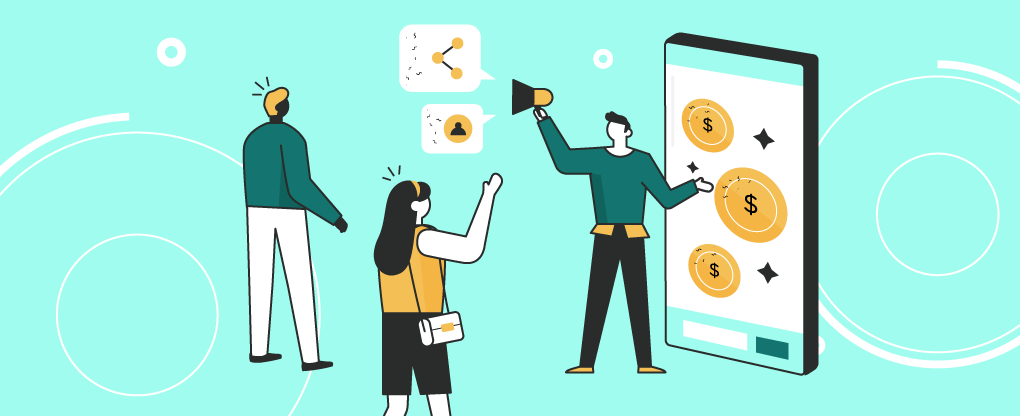
Referral marketing is a technique to increase the customer base through word-of-mouth. And also through recommendations with the help of existing customers. Referral marketing techniques can be in many ways. According to a study, people are 4x times more likely to buy a product. If it is referred to by a friend or family. The referer and the referred usually get some incentive on each referral. This is the actual driving force for the referral marketing technique.
Referral Marketing For Competitive Advantage
Recommendation and referrals are of great importance. These are useful to stand out from the crowd. Referrals turn your satisfied customers into your brand advocates. Moreover, they are satisfied with your product. So they find it to be an opportunity to get some return on their investment. Thereby, they refer your product to their friends and family.
They persuade them to buy the product for their benefit. However, they are working as a salesman for the company. These are working for the company for free. Besides, the conversion rate of this marketing technique is way high. As we have seen above, a common man relies on friends and family more than promotions.
How to Build a Referral Program?
1 EITHER PROVIDE AN EXCEPTIONAL PRODUCT OR EXCEPTIONAL PRICE
Firstly, we need to provide either an exceptional product. Otherwise, an excellent price for the product that you offer. As if you are not going to do anything different from what your competitors do. Therefore, there is no reason why people need to take your service. Hence they are going to go to the same old vendor and no matter how strong your referral program is. It’s going to flop.
2 PUT YOUR CUSTOMERS FIRST
Unless you have a satisfied customer base, there is no fun of having a referral program plan. It’s ultimately your customers who are going to make sure that their friends are well aware of your brand or not. For this, you need to have good relations with your customers. This is possible through communication. Try to interact with customers as much as possible. At online platforms, try to reply to the comments on your posts and try to fetch feedback from customers. Further, it provides them with solutions to their queries.
3 CLEAR MARKETING GOAL
The first two points discussed above were the right business strategies. The actual step to set up a referral program is to have a clear marketing goal. It’s essential to spot these goals. Finally, these goals allow you to measure how well the program is doing, and see if you’re acquiring your targets.
Designing a Referral Program
It is not enough to just think about making a referral program. It is necessary to work on the design of this referral program.
1 USE CATCHY HEADLINES
Before you start to get a referral, you need to get the customer’s attention. Headlines are of utmost importance to attract customers.
A good headline gives a brief go through about the program in one line.
Here are a few examples of attractive headlines
Give ₹100, Get ₹100
Refer a friend and earn ₹15
2 CREATE REFERRAL MESSAGING
You should try to cater to your customers with a well-written referral message. As to your customers, their time is more important than writing a referral message. So, it means that pre-filled messages get better results. Along with this, you should provide them with an option to edit the existing message to add a few more lines.
3 MAKE IT EASY FOR PEOPLE TO REFER
The referral program should be easy to share. If it would be a long, complicated process to refer to, then customers might give up halfway.
4 WHO TO REWARD
It should be a prior decision to give rewards to the new customer’s existing customer or both of them. It gives incentive to the existing customer as he is the only one who will refer to your brand. If there is no motivation to share, the referral program will not even start and will already be a flop.
5 DECIDE WHAT REWARD TO OFFER
Different business firms need to give different rewards. E.g., if you have a restaurant, you might give a discount coupon or a free shake with each referred friend. If you have a software company, you can give free premium tools as a reward for the referral. So you can decide the type of reward according to the niche you are working in.
Who Employs Referral Marketing?
A wide variety of businesses practice referral marketing programs. Businesses are ranging from individually-owned businesses to entrepreneurial companies. So, some businesses where referral marketing strategy is applied include
1 Retail store
2 Specialty stores
3 Restaurants
4 Automotive service companies
5 Airports, hotels, and travel agencies
6 Banks
7 Health clubs or gyms
8 Doctors
9 dentists, and health professionals
Many online companies also use referral marketing programs. As it is highly effective, due to the popularity of social media sites. Moreover, it is more affordable to promote our products online.
Conclusion
Referral marketing is a technique to increase the customer base through word-of-mouth. And also through, recommendations with the help of existing customers. Recommendation and referrals are of great importance and are useful to stand out from the crowd. The conversion rate of this marketing technique is way high. Referral marketing is practiced by a wide variety of businesses. Businesses ranging from individually-owned businesses to large companies as large as industries.
FAQ’s
How does the refer and earn model works?
The promoter gives some kind of reward in the form of discount or coupon to the referrer or, in some cases, to both the referrer and referred. For this reward, the existing customers try to refer to the site as much as possible.
Do the referrals share in referral marketing work?
Proximity marketing refers to tools that are in need to find the nearness of the customer to a specific location.
Also, designing customized advertisements to make the customer buy that product shortly.
Likewise, another term for defining this is hyperlocal marketing.
This is because of its active approach to target the audience lying in a tiny, local area.
WHAT’S IN IT
How Does Proximity Marketing Works?
As per definition, its base is the customer’s location. So, there is the usage of mobile phones for tapping the customer. In this case, the technologies in use for this are GPS technology. For further help, companies also make use of WIFI and Bluetooth technology.
Which Area From The Part of Local Area or Location?
The companies can make use of any small area ranging from a neighbourhood to a store.
Moreover, we can also see a block of a city or a section of the store to be a location.
Users of Hyper Local Market
RETAILERS:
Retail stores use hyperlocal marketing to a large extent.
Further, They offer exclusive discount coupons to any customer.
Moreover, not all are measures of hyperlocal marketing.
REAL ESTATE:
In real estate, the hyperlocal marketing advertisements target the people. Here, People who need to buy new homes, new offices, or modern rental accommodations, get benefits through this marketing.
Further, there are many examples of this that we can find around our daily lives.
CHARITABLE ORGANIZATION:
The charitable organizations are the most significant users of hyperlocal marketing technique.
So, They use it to collect funds for their charitable events in specific locations.
RESTAURANTS:
Similarly, restaurants are the most active users of hyperlocal marketing techniques. Generally, They do so by showing advertisement coupons and tokens.
Moreover, also let people come to their restaurant. Thereby, they also use some other discount coupons and special vouchers. Finally, this makes the customers visit them next time.
TRAVEL INDUSTRY:
In this, the hyperlocal marketing technique relates to deals.
These deals range from a specific location or hotel deals for engaging people in travel.
HyperLocal Marketing Device
WIFI HYPERLOCAL MARKETING:
The customer of today wants nothing more than free WiFi. So, any small shop in any big store can have the most customers. However, This would be through providing customers with free WiFi.
At the time, when any consumer enters the store due to free WiFi, the store can start its promotion. Besides, another way to device hyperlocal marketing here’s to collect email id.
Email id of first 20 or 30 customers in exchange for free WiFi. Therefore, the companies can also reach out to their customers by their email-ids.
GPS- BASED HYPERLOCAL MARKETING:
In this marketing, there is the use of location-based marketing. For a particular type of product, the companies discover the target audience. Further, Audiences are lying within a small local area.
For example, with the start of the rainy season, the sale of umbrellas and raincoats boosts.
BLUETOOTH HYPERLOCAL MARKETING:
The other name for this is beacon marketing. Here, battery-operated beacons come to use for small locations.
Whereas, for delivering the short-range signals, there is the usage of Bluetooth. Generally, When any customer enters the store and has the app. Then he/she will find relevant promotional advertisements.
RFID/NFC HYPERLOCAL MARKETING:
RFID stands for radio-frequency identification, and NFC means near field communication. This includes the usage of a small transmitter in the product for sale. Therefore, there is no need for any WiFi for this.
Who Can be Targeted Using Hyper-Local Market
1 Anyone within the store or mall or near a retail store and possesses a smartphone can be the target. Therefore, as soon as the customers enter the target location. There is the disclosure of offers to them. Thereby, some of the customers are sure to enter your premises.
2 The next set of people for the target area in hyperlocal marketing is mobile phone users. As that forms the base of this type of marketing. Likewise, Almost every individual is carrying a phone in his/her hands today.
Benefits of Proximity Marketing
COMPETITIVE EDGE:
One of the benefits of proximity marketing is to have an upper edge over its competitors. If the competitors are not practicing this type of marketing or are not very active with it. Hence, there are more chances of having a higher number of visitors.
MORE PERSONALISED EXPERIENCE:
It is the key to proximity marketing strategy. Therefore, The retail stores that engage in proximity marketing do conversations with the customers. Not only this, but there is also an option of pop-out messages. In this case, the staff gets an alert when a regular customer visits. This is beneficial because the customer gets a better-personalized experience.
COMFORTABLE GEOTARGETING:
That is where the essence of proximity marketing lies. There is a need to capture the customers within the targeted geography. Moreover, the advent of beacons makes it even more straightforward to do the same.
BETTER APP RETENTION:
A well-developed app with well-placed analytics can help to fetch more customers. Moreover, This is because of the campaigns that are through proximity marketing strategies that induce customers. This induces the customers to click on the app again and again and keep it.
IMMEDIATE CONVERSATIONS WITH CUSTOMERS AND POTENTIAL CUSTOMERS:
Retail owners have extra opportunities to communicate with their customers. These customers are almost on the verge of buying and entering the shop. Though, This can happen only by adopting a perfect timing. And further also, instigating the customer to buy with a simple push notification. Further, This can be a promotional voucher or discount coupon.
Career Option With Hyperlocal Market
There are many proximity marketing career options that hyperlocal marketing can provide.
Some of the proximity marketing career given below:
1 SENIOR MARKETING MANAGER:
This includes working on the creative hyperlocal marketing campaign. Further, His/her key skills help him to gain consensus from all the areas of this organization.
EDUCATION:
For this kind of position, a least bachelor’s degree in marketing or communication is in need. Apart from this, some other positions may need a master’s degree too.
EXPERIENCE:
No fresher can be given over such a crucial and critical work profile. Thus, it calls for a very well-experienced and conditioned individual.
2 MARKET RESEARCH ANALYST:
These people are responsible for doing research and reporting data about customers. Moreover, They are experts in distinguishing between useful and unsuitable data.
EDUCATION:
Basically, Research analysts need a bachelor’s degree in statistics or business.
EXPERIENCE:
Again, for this type of post also, specific prior work experience of 1 to 3 years.
3 INTERACTIVE MARKETING DESIGNER:
This is the primary job in this field of marketing. Therefore, they inform appropriate and brief as well as catchy messages for the customers.
EDUCATION:
Meanwhile, These posts need people with human-computer interaction or any design-related field.
EXPERIENCE:
So, A candidate with previous experience of at least 1 year is in consideration for this field.
Cost of Proximity Marketing
The cost of hyperlocal marketing, like every other, is dependent on not one but many factors. These factors are:
Availability of app
Willingness to retarget the customers
Whether the organization wants to collect data about its customers
Conclusion
All in all, So, hyperlocal marketing is here to stay. It has an importance on the success of retail stores if they succeed in deploying completely, and As mentioned in the definition, it is based on the customer’s location. Thereby, the site of the customer is identified with the help of their mobile phones.
FAQ’s
Is proximity marketing a costly affair?
Well, nothing in this contemporary era is cheap. Proximity marketing has its clear costs.
Do all organizations engage in proximity marketing?
No. Proximity marketing is not for all types of organizations. It is mainly restricted to retail stores which are bound to have more personal contact with the customer.
In the first place, real-time marketing definition means understanding the nature and the situation of the short term market as per the collected data and making use of that information in the best possible way. With this, the marketers try to get into conversations with the consumers. They generally make use of these conversations to find out potential customers.
WHAT’S IN IT
The Need For Real-Time Marketing
1 THE ADVENT OF SOCIAL MEDIA
The presence of social media platforms such as Whatsapp, Facebook, Instagram, Twitter, etc. Moreover, These have made it easier for corporations to reach out to the customers and know their real needs. Therefore, ignoring this can only be foolish for companies and marketers.
2. CHANGING CUSTOMER
The consumer of today highly influenced by appeal. In the first place, Appeal means anything that could attract his eyes or preferences. It can be something simple that is catchy in any form. As a result, it becomes essential for the companies to be available for the customers every time. This is possible only and only through real-time marketing techniques.
Some Noteworthy Examples of Real Time Marketing
1. OREO
Undoubtedly, Oreo is one of the most loved biscuit brands. But the best one is the use of real-time marketing techniques by Oreo in 2013. There was a massive power failure in New Orleans in 2013. Thus, Oreo used this as an opportunity and made a twitter handle with a picture facing Oreo in the dark. The handle read, “You can still dunk in the dark” It was an instant hit among the audience as they captioned it “Power out? No problem”.
2. RADIO BAYERN
In the year 2014, the football world cup took place. In the semi-finals, the German team bet the Brazilian team in a nail-biting match of 7-1 victory. Thereby, A local German channel with the name Radio Bayern 3. They used this as their marketing campaign. In the campaign, the German beer crushes the Brazilian Cocktail. Likewise, That again happens to be a great example of a real-time marketing strategy.
3. NASA
NASA needs no introduction. It is the world’s biggest aerospace centre. The most significant example of the real-time marketing strategy of NASA. In the year 2014 Oscars, the movie Gravity fetched most of the Awards. To acknowledge this movie, the NASA team took over twitter. They congratulated them by posting a picture of real gravity on earth. They captioned it, “Congrats on another win at #Oscars2014 #Gravity for cinematography. Here’s the #RealGravity – Earth from ISS”
4. ARBY’S
Similarly, another organization to have used real-time marketing tips wisely. It is a restaurant named Arby. It happened during the Grammy awards of 2014. Singer Pharrell Williams donned a hat to this event. The hat had a resemblance to the logo of this restaurant. In this case, The restaurant immediately took advantage of this opportunity. They posted on twitter with a grammy hashtag posting, “hey @ Pharrell, can we have our hat back? # Grammys” Later, This became very popular. This is a classic example of RTM.
5. LOWE’S 4TH JULY CELEBRATION:
Lowe is the most famous American home appliance company. Even that did not stop it from using RTM. They used a vine for 4th July celebrations, which fetched customer’s audiences.
6. ASOS
Likewise, ASOS happened to have wrong printed packages. They misspelt the word online. They were quick enough to highlight their mistake and tweet, “we ‘may’ have printed 17,000 bags with a typo. We’re calling it a limited edition. Even, They made sure to add a picture of the bag with their tweet. They were Being honest in accepting their mistakes. In this transparent world, they earned them publicity worth a thousand dollars.
Strategies for Real Time Marketing in B2B
1. BE A LISTENER
This is a golden rule for every business. If eyes and ears are kept open, business marketers can turn any situation to a fruitful opportunity. This is the essence of RTM. Now, the question is- how can that be done? The answer lies in the below paragraphs:
i. Google Alerts:
Google will help to know the latest trends in the market.
ii. Observe all the real-time events:
Interestingly, it is vital to look into all the real-time events happening around. The best way to get into that is by keeping a keen check on the competitors. Therefore, It is important to know whether the competitors are making use of real-time marketing tips and tricks.
iii. Keeping intact with influencers:
Influencers play a significant role in RTM. The influencers can be anybody from your customers to the advocates of your product. Being close to them as well as maintaining their loyalty is the utmost priority.
iv. Industry newsletters and publications:
Last but not least, it is advisable to follow all the industry newsletters. As the actual trends and capacities of the markets are in them. There is no better alternative than these to know the correct time for RTM.
2. ACTIVE RESOURCES
RTM in B2B is dependent on the activeness level of its resources. This means when all the resources placed in the industry to examine the trends are active then only. RTM can happen as it happened with Oreo. If the resources are lazy and unresponsive, the B2B marketing falls flat.
3. ACTIVE SOCIAL NETWORK
RTM is a process that has a short life. The changes in trends are known. You are reacting immediately to a particular trend, whether upward or downward. Importance, Conversely, an active resource and inactive media coverage will make RTM null and void. As a result, we have an active social media network. This can equip the customers and audiences with all the activities. Policies of the company and reminding the customers, again and again, will help in RTM of B2B.
4. FINDING OUT THE REAL SOURCES OF USEFUL INFORMATION
It is simple and straightforward to find out useful information in B2C marketing. Whereas, B2B marketing suffers in this. This is because it is not possible to locate where the real information and conversation lies. Also, it is difficult to guess which information is of use for the B2B marketer.
5. DO NOT RELY ON ONE
Of course, the contemporary era does not tell you to settle with just one. The marketers have to know where their B2B customer falls. They can be on LinkedIn or twitter or both of them. Marketers should engage in conversations, questionnaires, and exciting activities with them. And this has not to be a one-time activity. With this, you are always on their mind, and that is what the idea is- to be on the buyer’s account.
6. DO NOT STICK TO YOUR COMFORT ZONE
RTM is all about experimenting. Not all your experiments will fall in place. But some will give you experiences, and some will lend you earnings. But, failure should not stop you from experimenting. The customers are always drawn towards Transparent companies. This stands out for the strategy of the corporation not to act as a corporation. Whereas, reaching out to its customers but as a person.
Conclusion
All in all, it can be summarized that RTM is the need of the hour. The trends in the market are very short-lived. The times have changed, and the organizations cannot rely only on old marketing techniques. The marketing plans are focussed on achieving long term marketing goals of the firms. But the truth is, long term goals are mainly unrealistic in this ever-changing era.
FAQ’s
Is real-time marketing the same as a marketing plan?
No, while RTM is for a short-time period, marketing plans are for a long time. RTM is analyzing the current trends and working on them in no time. Whereas, marketing plans are based on studying marketing trends over the previous years. And later taking them as the basis for ideas.
Why are organizations doing real-time marketing more now?
The customer and his demands and preferences are changing with each passing day. To survive in the market and to make the best possible organizations use RTM.
In the first place, Push marketing is a technique to push the customer towards the product. It is done through big ads and attention-grabbing claims. The main aim is that the customer is well aware of the product. On the other hand, pull marketing is a strategy that aims to increase the demand for the product. Thereby, This is done by pulling the customers towards the product. Pull marketing strategy consists of marketing the product on the internet. Whereas, Push marketing strategy is more about a traditional approach. In the first place, It aims at pushing the customer towards the product. Further, It is not easy to decide as companies spend millions on advertising. If the advertising strategy went wrong, it would result in high losses for the company.
WHAT’S IN IT
EXAMPLES OF PUSH-OUT MARKETING STRATEGY
This marketing strategy pushes the product to the customer following ways
DIRECT SALES
We can see the salesman convincing the customer to buy a specific product.
This is a kind of push marketing.
Consequently, here the seller approaches the buyer and makes sales.
TRADE SHOW PROMOTION
Another way to approach the customer is through trade show promotion.
As many customers visit trade show promotions for finding sellers.
Hence, it results in higher profits.
PACKAGING FOR HIGHER SALES
Many big companies focus on packaging.
In brief, the packaging is the face of your brand.
Generally, Based on packaging, the maximum people compare your product with your competitors.
ADVANTAGES OF PUSH-OUT MARKETING
There are a lot of advantages of push marketing, some of which are as follows.
1 BENEFICIAL FOR MANUFACTURERS
It is beneficial for manufacturers.
As they are trying to create a sales channel.
This also helps distributors for product promotion.
2 AWARENESS OF THE PRODUCT
It creates product awareness.
Hence, product demand in the market.
3 ECONOMIES OF SCALE
It is always found to be cost-effective to carry out production at a larger scale.
Moreover, If we apply push marketing techniques, then automatically, production will rise.
Therefore, The production cost will reduce, which will help in most profits.
DISADVANTAGES OF PUSH-OUT MARKETING
There are a lot of problems with push-out marketing, some of which are as follows
1 ACTIVE TEAM REQUIRED
There is a need for a dynamic sales team that would attend the retailer and distributors.
2 POOR NEGOTIATING POWER
As the manufacturers are the ones convincing the retailers and distributors.
They convince them to stock a particular product.
Hence, they cannot negotiate on the price with any of them.
3 UNPREDICTABLE DEMAND
Generally, the product promoted is new, and there is no record of market reaction.
Hence, it is difficult to forecast product demand.
4 EXPENSIVE
The promoter aims to create a long and loyal relation between the company and the customer.
Furthermore, it is not sure that the customer would again come and buy your product.
Therefore, this could be a possible reason for the loss.
DESIGNING PUSH MARKETING PLAN
A push-out marketing plan can implement by following these underwritten steps
1 RESEARCH Firstly, we need to research the location, sex, age, race, socioeconomic status, and other details about the customer.
It is generally seen that push marketing tips target to form a relationship. Subsequently, These relations form with either the youngsters or the elders.
As these people are more likely to form relationships with the firm.
2 DETERMINING MARKETING MIX Secondly, it is important to decide which medium to use for advertisement.
generally, companies advertise there a product at a larger scale.
Hence they go for mediums like
1 Advertisement
2 T.V
3 Online
4 Print ADs
3 DESIGNING ADVERTISEMENT→ After the decision about where to launch the AD, the design is decided.
It is suggested that the message should be easy to understand.
The message should give call-to-action to the viewer.
Advertising is one of the most important keys to any type of promotion.
For Example, If you launch a new cloth brand in the market.
Now, since you have a new brand, you are not well identified in the market.
These platforms have a wider reach.
You would notice that after the promotions, there will be some increase in the customers.
Moreover, your brand would become more recognized.
CAREERS IN PUSH MARKETING
Then you should check out various career options in the field of push marketing, which are
1 SALES MANAGER As the name suggests, a sales manager manages sales.
Moreover, He is concerned about working with clients, managing the accounts of the firm, etc.
He is not only responsible for sales of products.
But also has visible input in the application of any type of push marketing tips.
EDUCATION/EXPERIENCE The marketing degree is not necessary for a sales manager.
But this degree would surely benefit a sales manager.
You can even have a degree in Business Administration in communication.
2 MOBILE MARKETING MANAGER is concerned about efforts that utilize mobile phone technology.
This is one of the fastest-growing new types of marketing.
It requires a new strategy to convince customers towards mobile phones.
EDUCATION/EXPERIENCE A degree in marketing needs a mobile marketing manager.
You can also know public relations or database management.
3 GRAPHIC DESIGNER A graphic designer makes images, logos, and any other visual media included in making advertisements.
A graphic designer uses tools like Adobe Photoshop and Illustrator.
They have to find out the best ways to attain customer’s attention.
This aims to convert them to buy the product by just looking at the advertisement.
EDUCATION/EXPERIENCE A marketing degree is not necessary.
Here as most of the work to be performed is of persuasive intent.
Additionally, Simple knowledge about digital marketing can be helpful.
Interest in design and hold in designing skills is a must.
CONCLUSION
Push marketing definition says that it is a technique to push the customer.
It is done through big ads and attention-grabbing claims.
The main aim is that the customer is well aware of the product.
On the other hand, pull marketing is a strategy that aims to increase the demand for the product by removing the customers towards the product.
DESIGNING PUSH MARKETING PLAN
Firstly, it is essential to research the location, sex, age, race, socioeconomic status, and other details about the customer. Secondly, it is essential to decide which medium should be used for advertisement.
After deciding where to launch the AD, the design is decided. Teams of graphic designers determine the look and the message shared by the advertisement.
Various careers in this field include sales manager and graphic designer.
FREQUENTLY ASKED QUESTIONS
What does push marketing mean?
Push marketing is a strategy that aims to “push” products to the targeted audience for quicker sales.
Is social media a pull marketing or a push marketing tool?
It is a pull marketing tool to attract an audience towards your product through social media Ads and campaigns.
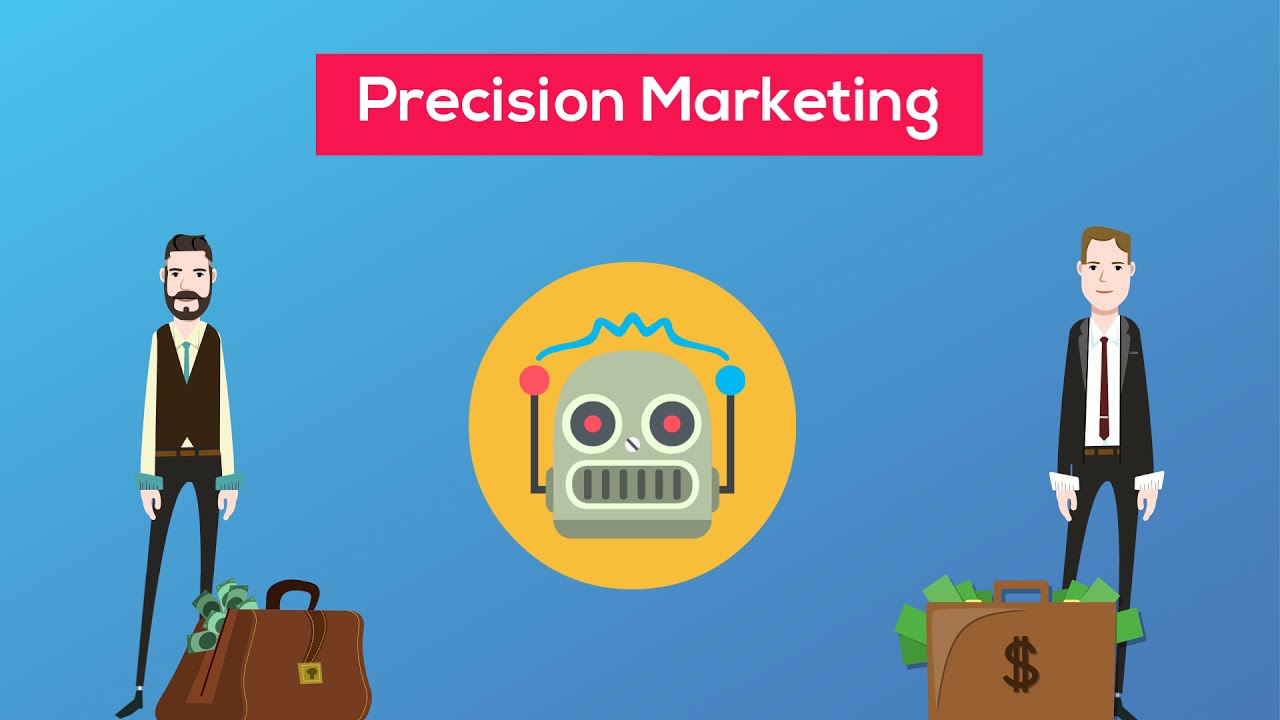
Hello Marketers, Today you will learn about the Best Guide of Precision Marketing Step by Step.
In this, you will learn that what is precision marketing,
And you will also learn how precision marketing works online to generate sales of your products,
So you can increase your income fast.
So Let’s follow the following steps which are described below, which will provide you with a better understanding of Precision Marketing.
Let’s Find out
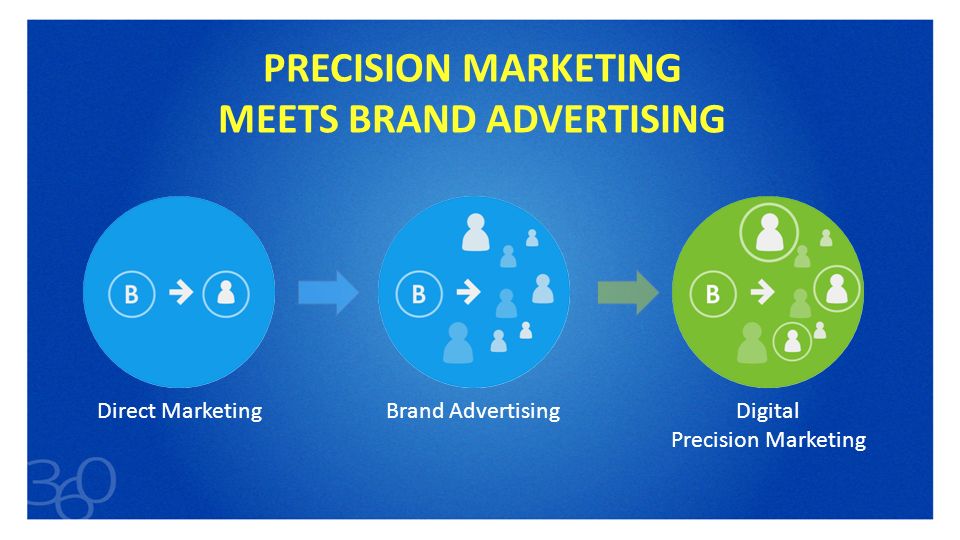
What is Precision Marketing?
Precision marketing is the idea that allows companies to deliver the right or accurate marketing messages, It’s as simple as that to listen but of course is not that much simple and, Right customer, Right channel, Right action, which could offer Right message and on Right time,
So, We think about right customers you know you can ask questions like you know this customer likely to respond favourably to this content to the message,
What is their decision-making process what key criteria are at the forefront of the purchase decision,
And you know when you’re thinking about things like right channel,
What channel is most effective or efficient and directing the desired action you know you need to look at historic campaign results to answer that question,
you know what would our typical customer response behaviours in that channel with optimal channel mix,
Right action you need to understand to what extent is the action tailored to the perceived wants, needs, interests situation etc.
And what actions should follow based on them what I would call purchase sequence context and,
Then, When you get to this question of the right time it’s a question of you know when will the target individual have the greatest receptivity to the message,
Or they’ll offer the recommendation when will they be most likely to respond in the paper but a favorable way,
So you know timing is everything and focusing on customer receptivity is key to success in my mind and,
The point, of course, is that when you think about what’s happening today concerning recent precision marketing you know what our company is doing that they’re putting advanced technologies and enabling technologies,
In place to replicate the intimacy the personalization of these interactions that go back to time immemorial,
And this is a this is sort of a conceptual framework that I like to use,
So Capture customer data integrate customer data and enhance customer data and this applies equally,
Whether you’re talking about individual customers are you talking about companies right,
So you need to identify capture information marry it with other information integrated to create a centralised data repository,
That transcends all of your data silos and creates a unified view of who that company is and,
Then you need to enhance it over time and by the way, this is not a linear process right,
People are dynamic companies are dynamic the data must be refreshed on an ongoing basis,
It’s a closed-loop process or the person is the learning cycle,
If you will and then and then finally, of course, this is uh you know if that’s the minimum ante you have to put on the table analyze,
And act upon the data is how you’re going to realize that vision and,
I think another key point that’s worth mentioning before I dive into some of our research findings is this notion of optimization,
So in it’s funny I hear people talking about marketing optimization all the time and they use the term very loosely,
And Then very often they use it synonymously with improvement or marketing automation,
But optimization, as I’m sure many know, is very specific,
In mathematics, it refers to choosing the best element from the set of available alternative,
So you’re out there solving a problem and what you’re trying to do is minimize or maximize a function by systematically choosing the values of variables from within,
And allowed set so it’s really finding the best available value and here we have what is called as a parable Lloyd and,
Then that that I think that is a good job of illustrating the concept and in marketing when we’re talking about optimization it’s again it’s the same idea right,
It’s trying to maximize or minimize your business objectives based on whatever constraints you’re wrestling with,
So those constraints may be budgetary they may be time constraints, cost per lead constraints,
What’s amazing today is that we’re seeing you know this advent of all these new ways to interact and transact with customers,
That does take that notion of optimization to heart,
So Email personalization I mean we’re just seeing some amazing things
now in terms of being able to create you know just thousands of permutations that are based on you know a very granular level and,
Landing page optimization able to understand you know what people want what they’re looking for,
And taking them from you know your Google search – you know page on your website that is well-aligned with their objectives,
Website versioning that’s an emerging area and we’re going to talk about that momentarily.
Lead scoring and qualification understand which one should go directly into your pipeline which is going to require some additional nurturing.
Search engine optimization (SEO) of course.
Retargeting
Which is pretty amazing after people have been on your website the ability to sort of track their browsing behaviour,
And even marry that with other data and then after they leave to continue to serve up relevant content and then offer optimization is sort of a term,
That I’ve been popularizing and it encapsulates a lot of what we’re talking about.
What is the Meaning of Precision Marketing with Example
Well, let’s first have a look at the challenges of dialogue marketing.
The challenges can be described by one single word and that is irrelevance!
Anything that is for example not relevant for the recipient of a direct mail automatically leads to response rates and too low conversion rates.
So the most important challenge of today’s marketer is to pick the right service or the right product which will fit the target group,
And if this is done correctly it will drastically increase the likelihood that they will buy.
What is the problem with irrelevant messaging?
It is expensive. I have collected last week a few pieces of direct mail that my household has received and guess what:
Most of the content was non-relevant for me but it was created for the general public.
This automatically means high expense because we have to consider that two-third of the mailing costs are the postage costs.
So the most important point for our viewers is that we can combine Ricoh technology and data analytics skills to get a more interactive and personalised dialogue marketing campaign.
That’s right and all you need are three things: First of all you need the right software tools, then, of course, you need data analytics and you need a lot of experience.
That is a clear vision:
How dialogue marketing should be done in the future and we want to improve that.
One of the questions is why companies should turn to Ricoh to improve campaign results through Precision Marketing.
That’s a very good question, Why Ricoh, why us? I think what makes Ricoh special is that we understand the whole production cycle.
That starts with data analytics, document composition, it continues with the actual product and it ends with the campaign measurement.
Many other vendors on the market have specialised on single elements of the whole solution but from Ricoh, the customer can get a one-stop solution out of one hand.
Precision Marketing Solutions
Well, we have applied a practical two-step approach:
First of all, we start with a so-called Precision Marketing workshop where we investigate the current status quo of a customer’s campaign management program.
And this one results in a so-called Executive Summary document and one concrete proposal for a Precision Marketing pilot.
So the pilot program, however, is one implementation of a concrete campaign from A to Z for one fixed price. That’s proof of concept.
Benefits of Precision Marketing
Any industry which has a clear B2C business model – a business to consumer business model.
I wouldn’t say that it can’t be implemented for a B2B environment,
But it is much easier to be implemented in a B2C environment.
When we talk about the different industries, then let me tell you that the biggest demand comes from the financial world,
So we talk about banks, credit card companies and insurance companies – but also from hospitality companies and retailers because they have loyalty card programs.
Why do You need Brand Precision Marketing?
Perhaps you got a business or you’re established or even a startup and you’re putting together a marketing plan.
You’re hearing aspects about, I need to do this on social media.
I need to advertise here. I need to push there. This person should create content.
Some so many people are snake-oil sailing from the snake oil salesman.
So many concepts and all too often, so much of it doesn’t apply to you.
Brand precision marketing is a simple concept. It comes down to organising your brand and marketing with an initial precision that’s directed directly at you,
The elements that you have in place, your strengths, your weaknesses, your budget. You can go online and look at all this stuff and say, Oh, they said to do this and do that,
But If these people have a seven, eight-figure budget and you’re working with six, then following that model isn’t going to work for you.
I can work with you from an hour consult to a half a day, to a package and we can look at building a better foundation, a structure, a content plan,
And then figure out with what you have, where you want to go, what kind of conversions, revenues that you’re looking for, the things that you should do.
A lot of people get so stuck in the saying, okay, I’m going to just promote that crap out of this Twitter page,
But if you don’t have those pieces on Twitter that define you, and draw people in that engage you.
So Another aspect of brand precision marketing and why you need it is because it’s more about creating a conversation and communicating with your audience,
And engaging them over the sell tactics, spam tactic, auto-responder, you know things that are just getting annoying.
When you think about and kind of summarizing this all together, when you think about hitting three audiences,
The people that know you, they may already be customers, that people that have heard of you but haven’t crossed over,
And The people that have never heard of you, have no idea who you are and you’re creating content behind the strong brand with a precise foundation,
So that everything that you do is compounding and growing, and it’s not one day at a time, one day, one piece at a time and feeling this overwhelming thing that so many people feel,
You’re going to be in a stronger place. Brand precision marketing organizes, optimizes, aligns and sets up the next moves,
That you’re applying up to when you’re able to bring in a full marketing team or even if you have marketing in place,
If you have an advertising budget, it’s wiser spending, a wiser approach.
It’s a time saver and in turn, is going to get you the conversions that you’re looking for.
Unilever Precision Marketing
Unilever is the largest FMCG company in Thailand,
However, in a rapidly changing world, our traditional approach is no longer effective,
Digital marketing has become more important across products,
Sneakers have become focused on data marketing and,
Most banks have full access to consumer data even digital platforms such as Google Facebook and eBay own massive data which they sell to marketers.
The key challenge was to transform a traditional marketer to be a pioneer in data-driven marketing without compromising on the scale.
Our strategy was to first acquire meaningful consumer data through line Thailand’s biggest chat platform through personalized chat BOTS based on consumer interest.
We designed a simple conversation asking consumers to submit identifiable data.
For example
Noir with a nutrition chef or pawns with the beauty advisor in return for stickers coupons or content.
Secondly, from tons of collected data, we analyzed and created inside based audience segments for targeting.
Lastly, we leveraged our data on platforms such as Facebook with customized communication and most relevant offers.
For example
A single male who shops online and looks for cooking recipes was offered a convenient solution for laundry with the right product.
We connected multiple data signals to customized communication and offer products at scale.
This data-driven approach to marketing helped category sales grow by five to ten per cent year-on-year.
Sixty-five per cent of potential buyers are identified and ready for targeting making Unilever an undisputed leader in data-driven marketing.
Conclusion
So Finally you have learnt about Precision Marketing and all of its concept,
That mainly provides the discount deals, offers or Discount Coupons instead running ads of the product,
And generating leads as well as it also records the details of the customers like what they want in the market, what’s their interest, their age etc
I hope now you can implement this in your business very easily.
FAQ
What is a Precision Marketing Plan ?
The important plan of Precision Marketing is to record data of the customers like what they buy, how old they are as well as their interests.
How do you do Precision Marketing ?
Most of the marketers didn’t run the ads, they only now show the discount coupons, deals and offers to persuade the people to buy that product immediately.
In the first place, the Pull marketing strategy aims to increase the demand for the product. It is done by pulling the customers towards the product. Above all, They aim to encourage customers to buy their product. This increases the demand for the product in the market. Finally, it leads to higher profits for the company. For example, A company promotes its product using various promotional strategies. These include advertising, email marketing, or social media, etc. As a result, this would create brand awareness among the general public. Further, instigate the demand online as well as retail stores. This will lead to bulk orders for the company online as well as offline (retail) stores. In this case, the company pulls the customers towards the product.
WHAT’S IN IT
WHO USES PULL MARKETING?
Companies producing or selling goods use pull marketing strategies. It helps to create brand recognition among the public.
However, The results of pull marketing techniques are not assured. You can save some money from the production process. Instead, put it into the pull strategy. Subsequently, This would create consciousness about the brand in the market. Further, lead to higher demand for the product in the market. Moreover, this would even result in a genuine review. This would further help in making the product better. Finally, you can sell your product at a higher price. Generally, companies offering products belonging to a higher price bracket use a pull strategy. As the push marketing strategy is not found to be as useful Ultimately pull strategy comes into action. However, It is even possible to use both pulls and push marketing strategy at the same time.
ADVANTAGES OF PULL-IN MARKETING
1 DIRECT CONTACT
You can have direct contact with your customers, which adds to customer loyalty and as the loyalty of customers increases, it is very much beneficial for the company as to retain existing customers is more easy than making new.
2 BRAND EQUITY
It focuses on brand equity and social value as it is one of the major factor of the company to pay attention.
3 ELIMINATES OUTBOUND MARKETING
As the customers are actively participating to know about the product. Therefore, there is no need to do outbound marketing.
4 TEST AND REVIEW
Through this marketing strategy, you can quickly launch your product. You can create consciousness among customers. Receive genuine reviews and feedback from the customers.
DISADVANTAGES OF PULL-IN MARKETING
1 NO GUARANTEE
There is no guarantee regarding the effectiveness of this technique. Generally, it works potentially on high brand loyalty companies.
2 LONG DURATION
It takes a higher time to convert customers. As the customers compare the products of various sites They then make decisions to buy any product.
3 REQUIRES STRONG MARKETING EFFORT
It is necessary to provide a stable market effort. Otherwise, the consumer will check out your product but later settle for a similar product from any retail store.
CAREERS IN PULL MARKETING
There are various careers in this field some of which are→
1 MARKET RESEARCHER
2 PUBLIC RELATION REPRESENTATIVE
3 BRAND MANAGER
1 MARKET RESEARCHER
Knowing the market where you are going to run your campaign is one of the basic needs of this marketing. As a result, a company needs a researcher to gather information. He plans the target of the advertisement. Moreover, He even studies what the customer is most likely to buy. The market researcher, to his work, conducts various surveys. Also, he examines the present market status. In brief, You can enter this field if you have an analytical mind. Also, you need to be good at communication skills.
EDUCATIONAL QUALIFICATION
For a market researcher, a degree in marketing, business, psychology, or sociology. Any prior knowledge of customer relations is very useful. Moreover, strong computer knowledge is vital for research.
2 PUBLIC RELATION REPRESENTATIVE
Pull-in marketing needs a corporation to communicate with the customers. A promotion specialist can be a company proxy for attending the outside entities. Thereby, This includes a lot of one-to-one interaction.
EDUCATIONAL QUALIFICATION
Above all, you should have a degree in marketing, business, sociology, or psychology. Furthermore, The call center’s job experience can be beneficial.
3 BRAND MANAGER
Brand management can be a leader’s role in many marketing groups. Brand managers are present in the formation of a product at every level. They research the competitor’s product. They try to check out the possible problems the company has to face. Next, it also identifies the upcoming market opportunities. Moreover, he even has a check on the finances of the marketing team.
EDUCATIONAL QUALIFICATION
In addition to an academic degree or a degree in marketing, business, or communications. A brand manager should have a few years of experience in selling or marketing. Further, Brand management requires leadership abilities.
REASONS TO PRACTICE PULL MARKETING TECHNIQUES
1 INTERNET REVOLUTION
The internet and social media have changed the buyer’s behavior. Almost 50% of the world’s population has access to the internet. This is increasing.
2 MORE TARGETED SEARCH
The search engines have travelled a long way. They have upgraded user’s experiences over all these years. The users get with more precise search results in less time.
3 SOCIAL MEDIA’S INFLUENCE
Social media has been one of the most growing influential platforms. It has been growing since 2010. Also, there have been about 2.3 billion active accounts on social media.
KEY ELEMENTS OF PULL MARKETING STRATEGY
There are various critical elements of the pull technique, some of which are
1 CONTENT
High-quality content is to be given to the audience.
Your content is your face, and it should depict you as an industry expert. Your content should target and cater to the needs of the market. Furthermore, You can use various social media platforms or platforms. Like articles, blogs, white papers, mobile apps, webcasts, and videos. These help to spread your content.
2 TRANSPARENCY
You can check-out the cause and effect of all marketing activities performed by you. Further, You can take the help of advanced analytics. Also, other resources like personalized dashboards are in use. These resources help you to keep a check easily. You can check-out on what various social media influencers and the audience has to say about you. Moreover, you can even get genuine reviews. Also, the customer’s feedback about your product.
3 TECHNOLOGY
With technology, we can get all the progress and effect of pull marketing strategies in one place. You can get to know what your customer’s requirements are. You can know what they are looking for. Through technology, you can also track your marketing progress in real-time.
4 RESOURCES
There are various available resources to promote your product. You can use various social media platforms like Instagram, Facebook, etc. Also, mixing these resources can help you attract a lot of customers.
5 CONTINUOUS IMPROVEMENT CYCLE
The continuous improvement cycle helps you to improve your work. By this, you can check your customers, your market. Also, your inbound marketing activity for betterment in your results
UTILITY OF CREATING A PULL STRATEGY
Pull-in marketing is found out to be doing better. If the comparison is between a traditional push marketing strategy. As the buyer’s behaviour has been changed This has changed with the growth of the web and social media. This strategy makes it easier and cost-effective to make sales. This, in turn, increases your reach and customer base.
CONCLUSION
Pull-in marketing strategy increases the demand for the product by pulling the audience towards the product. They convince the customers to buy their product, which increases the demand for the product. This finally gives higher gains to the company. The results of the pull technique are not guaranteed. Pull-in marketing is found to be doing better in comparison to traditional push marketing strategy. As the buyer’s behaviour has been significantly changed. This has changed with the growth of the web and social media. This strategy makes it easier and cost-effective to make sales.
FAQ’s
What is pull marketing?
Pull marketing strategy increases the demand for the product in the given market by pulling the customers towards the product.
Promotions are prime for any type of art, marketing, and playhouses are no exception.
Most people call this marketing, but this is a promotion.
So, Promotion means to inform customers about the products and convince them to buy them.
During the promotion, we try to share our product, brand, service, etc. to as many people as we can.
Thus, we can say the main motive is to increase brand awareness and sales.
WHAT’S IN IT
DIFFERENCE BETWEEN PROMOTION AND MARKETING
Also, Promoting and Marketing are different terms, and they cannot be used for each other.
Promotional marketing definition Promotion is a division of marketing.
Hence, The promotion comes under the category of the promotional mix in marketing.
Thereby, we can say that we can market a product without promotion.
But promotion cannot exist without marketing.
In brief, marketing is part of the pricing process.
It deals with understanding your customer and their needs.
Also, your competitors, and the actual value of what you are providing them.
In conclusion, you get to understand What you are going to sell.
So, Who will be your customer? where will you sell your product? What would be the price of the product? How will you promote your product?
Consequently, Promotional marketing definition says that
Promotion refers to all such activities that inform customers about the product. Also, persuade them to buy these products.
In particular, a promotional mix aims to create awareness about your product.
And convince the actual buyers and potential buyers to buy your product.
A promotional mix strategy keeps your product or service in front of your customer.
WHAT IS PROMOTIONAL MARKETING?
Promotional marketing is the use of any special offer to persuade the customer.
It aims to raise his/her interest to buy your product.
Ordinarily, It can also exist as direct marketing.
Like sending discount coupons, gifts, etc. through emails or messages.
Moreover, the company can organize contests.
And distribute the products as a gift to the winner.
This develops the interest of common people in your product.
Promotion can also be through personal selling as well as advertisement.
In short, the final goal of a promotion is to increase awareness.
And to increase the urge of actual buyers as well as potential buyers to buy the product.
Promotion is valuable to both the company and the buyers(existing and new), as the sale of the company increases.
This finally results in the accomplishment of the final aim of higher profits.
Moreover, it offers new customers a reason to buy a new product.
On the other hand, it builds loyalty in the eyes of the existing customers.
TYPES OF PROMOTIONAL MARKETING
ADVERTISING
PERSONAL SELLING
SALES PROMOTION
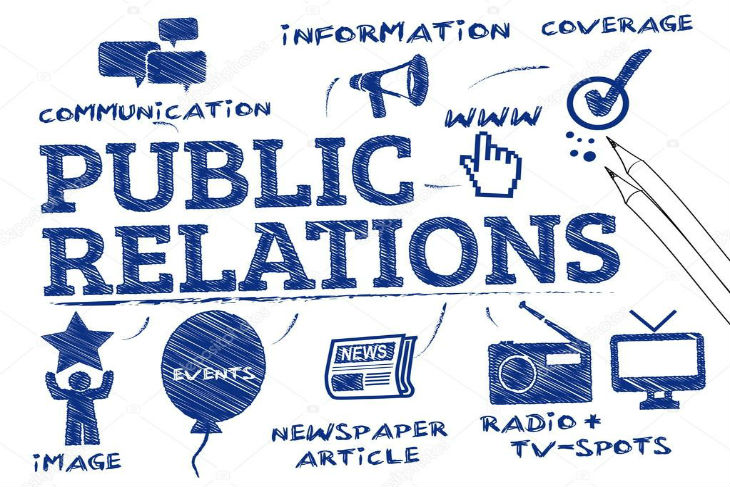
PUBLIC RELATION
DIRECT MARKETING
1 ADVERTISING
Advertising is an impersonal form of communication.
It promotes any goods/services.
This is the most used tool for promotion.
Through advertising, complete details about goods can be shared with customers.
Subsequently, a large number of the population can get ready to buy our product at a single time.
Various common modes of advertising include→ Newspapers, Magazines, Radio, Television.
SOME FEATURES OF ADVERTISEMENT ARE
PAID FORM
Advertising is a paid form of communication.
Thus, the marketer has to bear the cost of advertising.
IMPERSONAL FORM
It is an impersonal form of promotion.
There is no one-to-one contact between the customer and the advertiser.
MERITS OF ADVERTISEMENT
MASS REACH
Advertising has a larger reach, and it can engage a large number of people at once.
ENHANCED CUSTOMER SATISFACTION AND CONFIDENCE
Advertising develops confidence amongst the existing and new buyers.
Moreover, They feel more comfortable and assured about product quality.
EXPRESSIVENESS
With the latest technology advertising has become a powerful medium to communicate.
Moreover, through advertisements, simple things are display in an attractive way.
Thus, the buyers get into the influence and buy the product.
CHEAP
It is cheap because of its mass reach.
The total cost gets divided over a large number of people.
Hence the cost per person reduces.
DEMERITS OF ADVERTISEMENT
CONFUSES THE BUYER
As a large number of Ads of a similar product are telecasted on the TV.
Also, Each company claims to be better than the other.
Henceforth, this confuses the buyer of which product to choose.
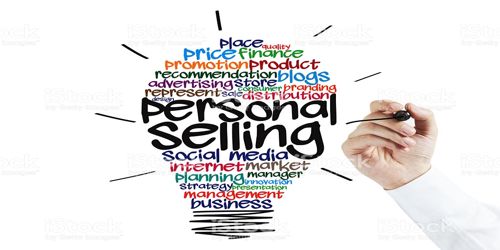
2 PERSONAL SELLING
Personal selling involves one-to-one communication amongst the buyer and the seller for sale.
In this form of promotion, the company needs to hire a salesperson.
This salesperson contacts buyers.
He creates product awareness, but his main motive is to make a sale.
SOME FEATURES PERSONAL SELLING OF ARE
1 PERSONAL FORM
It involves direct face-to-face interaction between the seller and the buyer. Hence this requires personal contact and further leads to interactive discussion.
2 DEVELOPMENT OF RELATIONSHIP
This form creates a friendly relationship between the salesman and the buyer.
This healthy relation generally proves to be beneficial for sales.
SOME QUALITIES OF A GOOD SALESMAN
1 PHYSICAL QUALITIES
A good salesman should have a healthy physique and attractive personality.
2 TECHNICAL QUALITIES
A good salesman should have complete technical knowledge about his product.
3 GOOD COMMUNICATION SKILLS
Success in this field majorly depends upon communication skills.
3 SALES PROMOTION
Sales promotion means small incentives that encourage buyers to make an instant buy.
It includes cash discounts, sales contests, offers, and free sample distribution.
It top-ups other promotional efforts like advertisement and personal selling
This only includes those activities that are to provide short term incentives.
SOME OF THE SALES PROMOTION TECHNIQUES INCLUDES
1 Discount
2 Product combination
3 Lucky draw
4 Usable benefits
5 Contests, etc.
4 PUBLIC RELATIONS
It refers to a variety of programs to promote and protect a company’s image, or it’s products in the eyes of the public.
Hence, the PR Dept. is useful when there is some negative publicity about the company.
ROLE OF PUBLIC RELATION
1 PRESS RELATIONS
The company should always have a positive image in front of the media.
2 PRODUCT PUBLICITY
When the company has to launch a new product the promotion takes place. This is through seminars or conferences.
These seminars and conferences are organized by the PR department.
5 DIRECT MARKETING
Direct marketing means targeting the customer and persuading them to buy the product.
Some of the common ways used for direct marketing include messaging, emails, and texts.
Direct marketing generally eliminates the middlemen like advertising media.
We can check the effectiveness of direct marketing.
compared to advertising or any other.
PROMOTIONAL MARKETING STRATEGIES
Without a plan, we cannot do our targets hence need to have strategies before we start our promotions.
If we don’t form a strategy beforehand, there are high chances to fail and further leading to massive losses.
Few effective Promotional mix strategy consist of→
1 EMAIL MARKETING
We can promote our products and services through email marketing.
email marketing to be beneficial most of the time. It is one of the Most crucial promotional marketing tools.
Through emails, and this we can invite our subscribers to various events.
We can share updates and promote our products and services.
2 SOCIAL MEDIA MARKETING
Social media marketing is one of the most potent promotional marketing tools.
One of the most used and active social media platforms are Instagram and Facebook.
3 CONTENT MARKETING
It is again an excellent method to attract the audience.
You should interact with your audience and try to give them expert tips about your product.
These tips should help them in decision making about the buy of the product.
You should catch on to the requirements of your target audience.
and also try to cater to their needs as possible.
You can start your own brand’s blog and cover hot topics about your product.
It is one of the essential promotional marketing tools.
4 INFLUENCER MARKETING
Most of the decisions about buying a product depend upon the emotions of your customer. The experiences are more valuable to your customer even more than the brand.
You can check out the bloggers and influencers who like your product.
For this, you can use Instagram hashtags and ask them to refer your product to their audience.
You can even send free samples of your product to some of the influencers. Choose influencers whose opinions matter to your targeted audience.
Ask them to be your brand ambassador if they like your product.
It can boost your sales.
5 REFERRAL MARKETING
According to a study, people to believe a recommendation more than any promotion.
To encourage your audience to refer your product/service.
you should offer them some benefit in return.
You can reward them with bonuses or discounts each time they refer to your product.
this boosts the sale of your product.
CONCLUSION
Promotion refers to all such activities which aim to inform customers about the product offered. This convinces them to buy these products.
The promotion comes under marketing, and it is one of the four Ps of marketing.
Promotion is of 5 different types that are→
1 Advertising
2 Personal Selling
3 Sales Promotion
4 Public Relation
5 Direct Marketing
And the various strategy that can be used for promotion include
Email marketing, social media influencer, content marketing, referral marketing, etc
We see outbound marketing everywhere in our daily life and It helps organizations to be aware of their brand.
To clarify In this competitive edge, there is cut-throat competition prevailing everywhere. And Every company or organization tries to survive in the market. So, They use different marketing strategies. Outbound marketing strategy is one of them.
Also, Offensive marketing, Offline marketing, One to one marketing, Outdoor marketing, Outbound marketing, Pay per click, etc..
So They use different marketing strategies for different purposes.
Here we are discussing one of their marketing methods.
Index
What is Outbound Marketing?
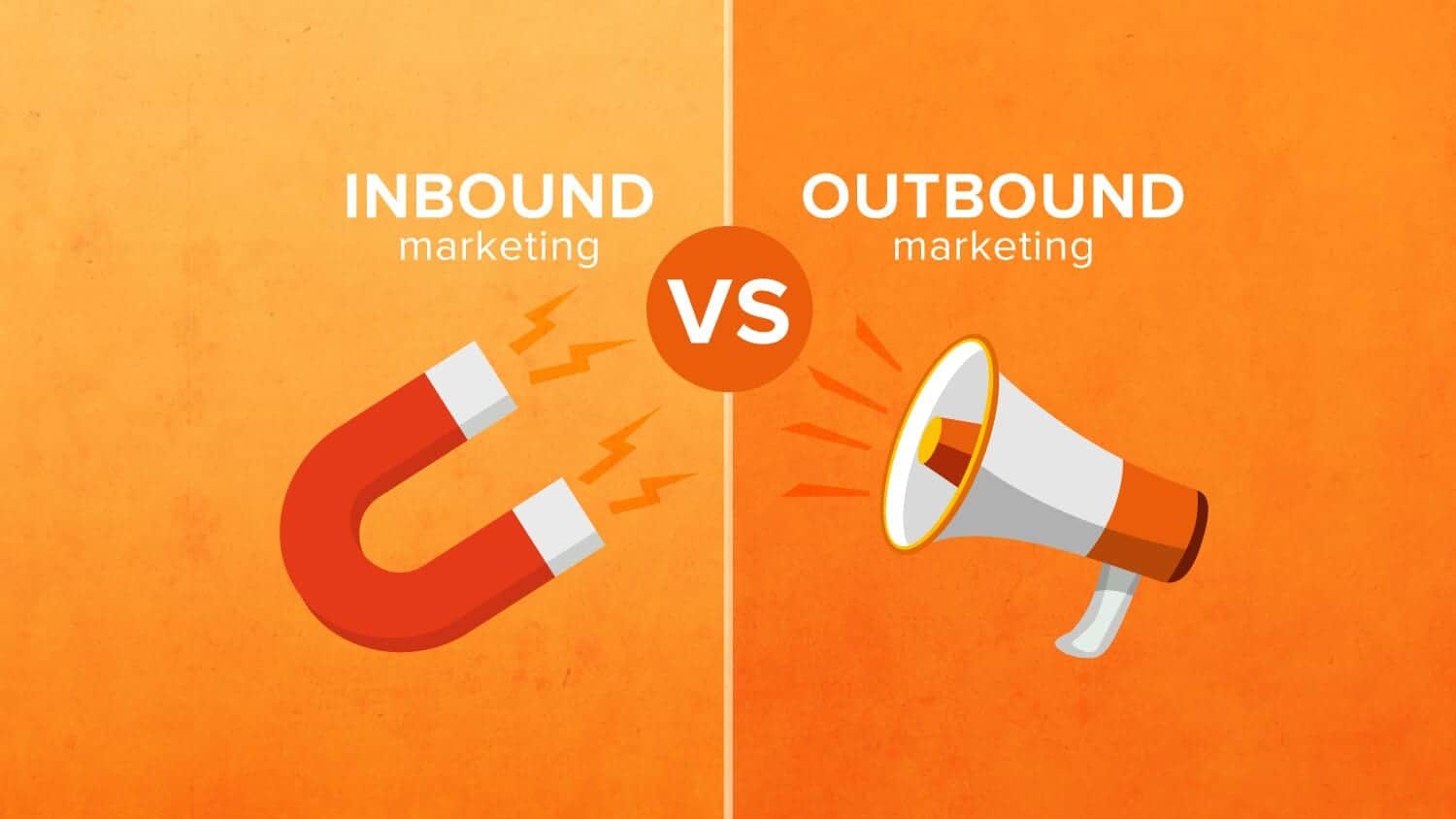
Outbound marketing is a strategy that comprises different marketing strategies and techniques that simultaneously used to target a large range of people.
So, this marketing is a marketing type where a company sends messages regarding their product and services to the audience.
Meanwhile, It includes advertising (traditional and digital), cold emailing, cold calling, trade shows, and content syndication.
Therefore, In this marketing method, companies target every person.
So, As per research, most of the organizations spend 90% of their marketing budget on this marketing.
So it is hard to track and less profitable.
There are some drawbacks of this marketing, like
– It is difficult to track return on investment (ROI)
– Likewise, there are many blocking methods like, do not call list, spam filter, etc.
– It consists of high cost and low return
Therefore, Organizations who want to improve their sales and return on marketing spend would be well advised to re-allocate an increasing percentage of their marketing budget on inbound marketing methods.
What is inbound marketing?
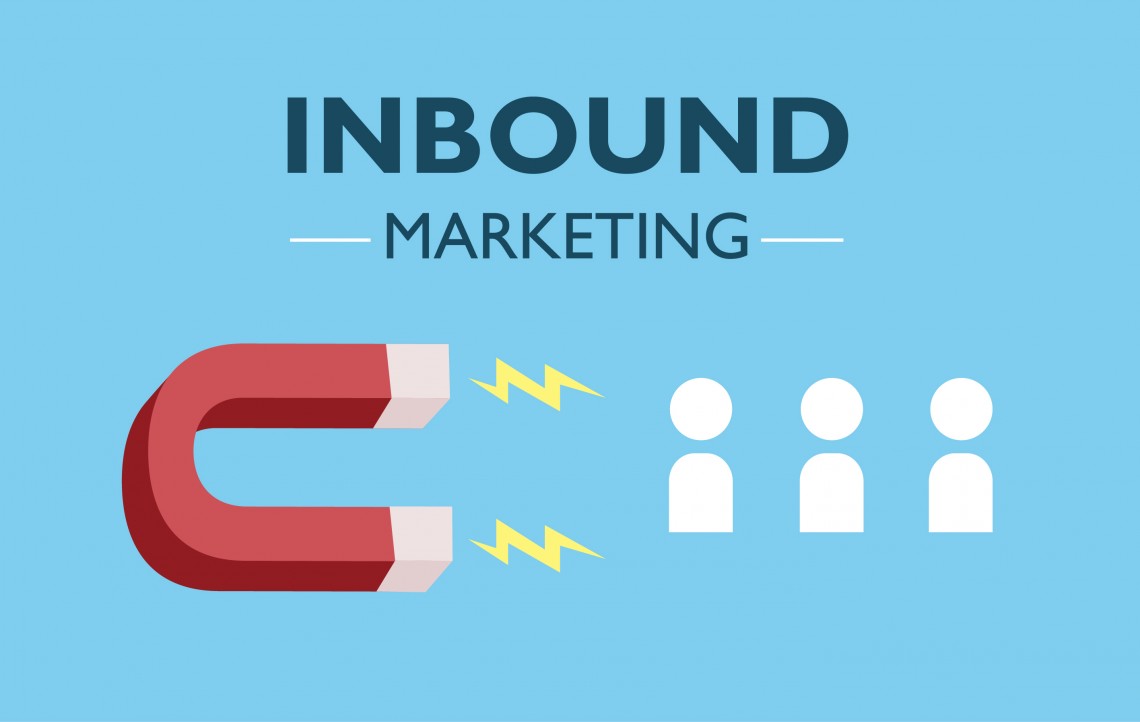
Inbound marketing is the reverse of outbound marketing. In this method, the customers find you when they need you or your product.
For example, Blogging, SEO, and opt-in email marketing
We can add paid search advertising is in inbound marketing. In this method, your ads become visible, only when people are searching for your products or services that you offer.
“Inbound marketing is easier to track. It has a higher ROI and lower overall costs than outbound marketing.
Meanwhile, your next step is to cut costs and increase conversions by shifting from outbound marketing to inbound marketing.
Types of Outbound Marketing Channels
Some marketing channels that you can use to widen your reach and drive sales.
Here are some outbound marketing channels to get you started:
1. Traditional Advertising for outbound marketing
Traditional advertising includes media such as print media, radio, television, billboard, etc. It helps you convey the message to an ample number of people.
So, it is effective for brand awareness campaigns.
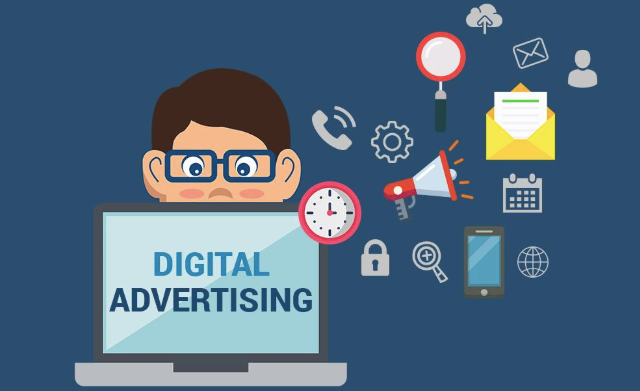
2. Digital Advertising for outbound marketing
You can market through a digital platform called digital advertising or digital marketing. Meanwhile, digital marketing includes Display ads, social media ads, Email ads; video ads, etc.
Most of the brands are using Digital marketing as outbound marketing.
Similarly, digital ads allow you to target your audience based on a range of criteria. Such as interest, demographic, geographic, psychographic, habit, and behavioural characteristics.
Therefore, advanced targeting methods like retargeting and custom audiences can help you connect with an even wider audience segment.
3. Cold Calling for outbound marketing communication
Cold calling or telemarketing is the most disreputable form of communication.
So, In this method, the salesperson makes calls to in his database; they try to convert them into paying customers. He has no prior communication with the customer.
4. Events and Tradeshows
Events and trade shows allow organizations to meet their prospects and similarly, customers face-to-face to generate leads, convert prospects, or retain existing customers.
Outbound and Inbound Marketing Difference
Meaning
1) Outbound marketing is known as traditional marketing.
Firstly, It is a strategy formulated by a brand to connect with the maximum potential customers to make brand awareness and generate maximum sales.
Secondly, the inbound marketing strategy helps you spread brand awareness, you can create content or social media campaign.
Therefore, people will know about your services and products. They might purchase or show interest in your product.
So, inbound marketing helps you nurture leads with relevant content that answers questions. This marketing can’t do that.
Example
2)For example – door-to-door sales or cold calling, trade shows, email blast, etc… . Where a seller approaches someone without knowing if he or she is even a qualified lead.
Some outbound strategies take lots of time and effort, yet may not yield leads,
Content marketing, SEO, blogging are examples of inbound marketing. So it allows you to engage an audience and you can easily qualify as a prospect of lead.
Use
3) You can use this marketing to raise brand awareness, as it connects to a broad audience.
It helps you to get your company in front of the right leads, and help you close to those buyers, who are ready to decide,
For that, you need other tactics and strategies like inbound marketing and excellent customer service.
How to Create an Outbound Marketing Strategy?
Creating an outbound marketing strategy requires inclusive planning considering the impact and irreversibility of mass media campaigns.
Now we will understand how to create a strategy for the organization.
Step 1: Know Your Offerings
To create an effective outbound strategy, first, see which platforms you can use for this marketing to promote offerings, B2B, B2C, or C2C?
If you want to promote B2C products, you can promote it on typical media. You should consider the size of the target audience.
If You want to promote your B2B products; Promote more niche platforms.
Step 2: Know Your Audience
The second step is to create a buyer persona for your product or service. It will help you choose the right marketing avenues to promote your offerings.
When we use similar marketing channels, different offerings, and audiences will require a change in approach.
Research the habits, content consumption preferences, etc. of your audience to pick the right platforms to market your offerings.
Step 3: Research Your Competitors
You should research your competitor. You should keep an eye on your competitors. Observe what they are doing and what they are missing. And find the ways to stand out from them.
Guerrilla marketing is one of the most common tactics to outwit your competition.
Step 4: Create Campaign Messaging
Create a list of the key messages that you want to communicate to your audience.
The campaign messaging should consist of the campaign name, headline, slogan, and hashtag. You can viral it by using storytelling techniques to audience engagement.
Step 5: Choose Your Platforms
You can choose an online and offline platform. You should allocate budget carefully to ensure that the campaign gets a maximum audience.
After you select the platforms, you need to develop a strategy for each channel.
For example, for social media ads, you need to plan the target audience, bidding, etc..
For newspaper ads, you can work with an ad agency for the media buying process.
How to make outbound marketing more effective?
Here are the top five outbound marketing best practices that you can plan for business
1. Stay away from Shady Marketing Tactics
Sometimes, marketers follow tactics that are shady and ineffective for quick wins.
Like, they buy email lists, send unsolicited bulk messages, not keep an unsubscribe link in emails, etc.
If you want to send them promotions via emails or text messages. You should take the user’s permission.
2. Set up an ROI-tracking instrument
There are some ways to measure the effectiveness of your campaigns. You can create unique QR codes for offline media outlets to track the right source.
3. Implement CRM Application
The sales department faces the biggest issue of keeping track of leads, customers and prospects.
While CRM software applications are capable of streamlining sales activities, most of them miss out on tracking phone calls.
4. Build an Outbound Content Distribution Channel
Marketers should build an outbound content distribution workflow to support their content marketing initiatives. There should be a process to follow every time new content is published. Here are some examples:
1. When you publish a new content piece you can email subscribers.
2. Answer relevant questions on various forums along with the link to the content piece
3. Try to Collaborate with brands and influencers in your niche to enhance the content reach.
5.Personalize
Your message should be relevant to their need and goal It is also not disruptive to their life. It can produce excellent results for your company. If you do it in the right way. And you can use paid outbound tactics suitable for you. Understand the needs of your customer. If you are using Facebook, you can choose audiences who have an interest in your service or product.
6)Strategic
It’s important to apply outbound marketing tactics in the spaces where they can provide you with the greatest returns. It will be one of the fastest ways to get your company out ahead of the competition. It’s important to remember that it’s not the only marketing tactic out there, and it shouldn’t be the only component of your marketing strategy.
Conclusion
The key to a marketing strategy that delivers growth for growth one has to understand how to balance inbound and outbound tactics for the best results.
Use outbound marketing where you can get those quick wins: targeted and remarketing ads, calling consumers back to you at the end of their buyer’s journey, and raising brand awareness. You should remember that it is a tool to help you build on an already solid marketing foundation.
FAQ
what is outbound marketing?
outbound marketing is a marketing method in which companies try to reach a large range of people to show their products or services.
What is inbound marketing?
Customers find your products when they need them. It is called inbound marketing.
Hello Marketers, Today you will learn about the Best Guide of Post Click Marketing and How it works,
According to Definition, Post Click Marketing is defined as the sale of the product online by marketing techniques after clicking pay per click ads is known as Post Click Marketing.
In this, you will learn how post-click marketing works online to generate sales of your products.
So Let’s follow the following steps to gain the Knowledge of Post Click Marketing.
Let’s Find out
What is Post Click Marketing?
Post Click Marketing is that marketing when the customer or consumer online click the pay per click ads,
And then after clicking or post-click, the online marketing techniques involve, Which provides the best landing page to the customer or consumer online,
Where easily the details of the product is mentioned that how to buy that product or related advertising or content and,
So that sale of that product is generated easily without any interruption.
Or we can say Post Click Marketing makes the purchasing process easier by providing a good landing page to the online customer,
And focusing on that customer when the customer clicks on any business pay per click ads.
Post Click Marketing Example
Suppose, you are travelling to someplace and you very hungry, you have no food then,
You suddenly find out the big banner on the road, where the title mentioning that Good Hygiene Best food after 5 to 10 kilometres,
And then you travel to that place for the best good food or you are surprised after seeing nothing,
Now you see only small shops where you have to take your ingredients to make your meal or food yourself.
So Similarly These are happening with the customer online, when they click on any pay per click ads online they are being transferred to any business profile page,
Where no guidance is provided of that product, how to buy that, which the consumers have clicked on advertising ads.
So, Post Click Marketing is one of the best methods which helps the consumer online purchase,
We can say when the consumers click on pay per click ads and then with the help of Post Click Marketing,
They are being transferred to the Good Targeted Landing Page,
Where all the information or guidance is provided of those relevant products and relevant advertisement,
Which makes the purchasing of the goods easily,
Or guidance is provided to the Consumer about how to buy that product easily.
What is Landing Page?
A landing page is a single page that has a single purpose so this isn’t the same as your home page that can have a whole bunch of different purposes,
So you’re on typical home pages the about us there’s a blog there are your products and,
Services there’s work with us and so someone that’s sent to your home page is not they don’t always know what to do,
And so if you’re looking for a specific action if someone just came from an ad that says sign up for a webinar and they can’t find this sign up for the webinar on their home page,
It’s not the same as a landing page that essentially strips out all the unnecessary stuff and,
So you’ll just see you know headline a sub-headline generally you know a picture that describes your product or service or your potential customer,
And call-to-action button that says sign up now, download this buy this now and,
So just from that first screen that you’re looking at it’s very clear what you as a marketer want the customer to do you know give me your email,
Start using this free trial and then generally if you’d say below the fold so like that first screen you see,
But As you scroll down you’ll see the benefits of using the product or service or signing up and trust indicators are a big thing as well and so if you have a certain number of clients,
Or downloads on if you’ve come out in different you know newspapers are blogged different things,
That kind of show that you’re trustworthy incredible and that they want to be doing this with you,
And then as you get to the bottom of the page a lot of times you’ll see another one of those call-to-action buttons,
It’s similar to the one up above just kind of reminding you hey here’s what we want you to do by visiting this site you know click the button give us your email and,
Then You know you’ll get something in return what I thought would be one of the best things for us to do to be able to visualize this,
If you’re not very familiar with landing pages is why don’t we happen on the computer,
And I’ll walk you through some different use cases for landing pages and,
Then I’ll also compare the landing page to the home page of the same company and you can see there what the differences are okay.
What is Post Click Automation?
96% of ad clicks don’t convert,
Advertising platforms like Google and Facebook make it incredibly easy to create relevant ads for each of your audiences,
Which helps maximize clicks but not conversions when someone clicks on a personalized ad and is brought to a generic landing page,
They balance creating personalized landing pages used to be a nightmare,
Now post-click automation is poised to change everything,
What’s post click automation, it’s a stage in the funnel that converts clicks into conversions,
There are four pillars of post-click automation Ad mapping, scalable, creation personalization and experimentation.
First, you need to be able to visualize your ad campaigns to determine actionable conversion opportunities,
And connect relevant post-click pages to every ad.
Next, You need to be able to create, manage and update post-click landing pages as quickly as you do ads.
Then you need your post-click experiences to automatically update the content of your page based on visitors demographics online behaviour and stage in the funnel.
Finally, you need to be able to optimize your pages for higher conversions.
To do this you need to understand how visitors interact on your pages and test page variations,
You’ll also need robust analytics and full-funnel attribution to maximize your advertising ROI.
Benefits of Post Click Marketing
It increases the sale of the product to the targeted audience.
If someone doesn’t buy any product after clicking pay per click ads, which takes them to the landing page,
Then re-targeting can be done or cookies can be used to show them relevant ads to the customer.
So that the product can be sold easily.
It is cheaper than any traditional marketing.
Post Click Marketing Strategies
Advertising
Advertise your products based on pay per click with the help Google AdWords or any other platforms
Use SEO
It is the free technique to market your products or rank an article related to your products, But it takes time.
Landing Page
It is one of the most important parts, It is connected to your advertisement when consumer clicks on your ads,
Which are running based on Pay per click then it takes the customer to the landing page.
Here’s the game start, means make your landing easier so that no ln technical person can buy that product easily.
Mention or guidance should be step by step there on the landing page that how to buy the product easily.
So these are the few steps which can increase your sales online and generate a good amount of money with spending less amount of money on ads.
Conclusion
So Finally, Now I think that you have known completely about Post Click Marketing,
And how it works to generate sales of the products.
Now you can implement this major technique or strategy like Advertising Products, making Landing Page and generating sales with it.
FAQ
What is Post Click?
When the consumer online sees any ads related to that customer requirement, And then he or she clicks on that ads and then that ads take them to the landing page after that, Which sales are generated by clicking on a call to action is known as Post Click.
What is Post Click Landing Page?
After clicking the ads, the customer enters into the new site where related information of that product is provided, And an easy guide available to the consumer that hopes to buy that product that is the Landing Page. We have already discussed the above with good examples.
POS stands for point of sale and at its most of the basic that it is a digital replacement for the cash register,
And it is the way to keep tracking of sales of the customers for your business,
However, that is only scratching the surface,
Today’s POS systems can record data and track customer orders, process credit and the debit cards which connect to other systems in a network and manage the inventory.
In the restaurant industry, many of the POS systems also include, which can store the menu information to manage the gift cards and the loyalty programs and also allow for mobile ordering as well as payments.
Another benefit of modern POS systems is the ability to generate detailed reports on sales, labour, customer behaviour and more.
What is the Meaning of Point of Sale?
The point-of-sale is that thing in which that time and place, where a transaction is completed at retail.
It is that point at which a consumer gives a payment to the shop or merchant for the things that he or she buys or after the provision of a service.
At the point of sale, the shopkeeper made a bill for the consumer for which the consumer or customer buys the product.
And the provide the options for the consumer or customer to make their payment,
After receiving payment the shopkeeper or merchant will also normally provide the receipt for the transaction that is made by the customer,
Usually, the receipt of the bill is printed.
But, It is increasingly being dispensed electronically,
Point of Sale Marketing Examples
A grocery store generally uses a weighing machine at the point-of-sale marketing view,
But hotels and restaurant use the advance software to change the products sold when the consumer ordered their food.
These are the two main examples of point of sale marketing.
Point of Sale Marketing Ideas or Strategies
Getting new customers in your doors is difficult. So when they come in, it’s important to find ways to raise that average transaction value.
The marketing you do around your POS can make a huge difference.
And, while you want to keep your lines short and sweet, there are a few ways you can get people loading up their cards instead of browsing their phones.
Today, we’ll go over 5 of them
First, Displays! Pay attention to your display areas.
Make them colourful and interactive. Fill them with more hands-on items. They should be enough of an obstacle that anyone in line can’t avoid noticing them.
Next, keep the area stocked with impulse buys! This doesn’t have to mean an entire shelf devoted to the latest news on Kirstie Alley’s weight fluctuations. Mix it up.
Just make the product easy to grab and inexpensive. Seasonal and overstocked items also work well. Or in my case, Bubble Tape.
Once you stock the area, you can also use your POS sales reports to analyze how well a certain product is selling.
It’s pretty interesting and easy to do. Keep rotating items until you’ve found your sweet spot.
You can even make this into a game with your team.
Lastly
Small promotions of suggested items also work well.
Just take advantage of the direct interaction. Attaching coupons to your receipts also works well.
You can even take inspiration from CVS and attach 3 to 4 dozen of them. Just remember, the POS is the culmination of the whole retail experience.
Your POS can help increase your sales more than it might seem. I hope this gave you some ideas.
How to Choose a Point of Sale Systems or Types of POS?
Retailers or shopkeepers like all the small business owners that are available have their limited time and the limited resources,
Investing the more money in the advance technology such as a Macbook or iPad or any gadget that is based on the point-of-sale system,
That can help you most to improve your marketing online,
Which then help you the better reach to the consumers or targeted customers, help you manage your inventory easily,
And help you manage your employees while traditional old-fashioned cash registers are PC based point-of-sale systems might have been good enough five years ago 10 years ago 50 years ago,
Today they’re just not good enough anymore,
Traditional cash registers pc-based or otherwise just don’t offer the flexibility and efficiency of iPad based point-of-sale systems,
So Instead of relying on an antiquated appliance such as an old-fashioned cash register,
It’s important to invest an iPad based point-of-sale system they don’t require technicians to come and repair it and there are much lower cost of investment,
To help you manage the online marketing of your clients or consumers or customers, manage your good inventory, or manage your best employees which are working best and iPad based point-of-sale system is essential for the growth of your business.
Generating better reports that help you to make your better online business decisions or reports take raw data from online and turn this into your actionable knowledge or information,
So you can make better or good decisions for the growth of your online company or business,
While reporting is the important things, it’s also important that if you don’t gain information that’s not important in your decision-making,
So What are the few things that only reports can help you to decide on,
Maybe you need to know that should you be open on Friday or Saturday night,
What about understanding how many employees to have in your business on a Thursday morning,
Maybe you need to know what items are profitable, what items aren’t profitable,
These are a few of the things that a good reporting system can help you make decisions on.
And Another thing that a good reporting system when a point-of-sale system can help you with is to understand about your profits and your losses,
You can understand what items are selling best, what items have a better profit margin, what items maybe you should stop selling because no one’s buying them,
Maybe you’re at home and you want to think about tomorrow sales you should be able to access your reports from any location,
Maybe you’re expanding from one location to a second or third location.
Benefits of Point of Sale Systems
Using an iPad based point-of-sale system you can access and generate reports from anywhere,
And cloud-based point-of-sale systems are much cheaper than traditional cash registers or PC based systems,
You can expect to pay a low monthly fee and oftentimes a setup fee to get things started,
Another benefit of iPad based point-of-sale systems is that since the data is stored in the cloud,
They’re much cheaper than systems where the server is inside your store,
You have to call somebody to maintain the server, you have to secure the server, you have to update the server,
With an iPad based point-of-sale system you don’t have to do any of this.
As you look to purchase an iPad based point-of-sale system look for a provider that offers flexible pricing,
Contracts might be optional but whatever you do watch out for hidden fees.
But Security is essential for every business but especially for retailers.
IPad POS systems have their data stored in the cloud much more secure than being in your retail store,
Work with the cloud-based iPad point-of-sale vendor to help you do this.
There are six things you need to consider before buying an iPad based point-of-sale system.
So Will the system meet my need, maybe you’re a one-person business today, maybe you’re a 10 person business tomorrow, maybe you have two locations today
Maybe you have four locations tomorrow make sure you purchase an iPad based point-of-sale system that can grow with your business.
But especially retailers, does the point-of-sale system have reporting, customer marketing, inventory employing, management features that are easy to use?
So these are a few questions you want to ask, a few things you want to think about before you buy your first or your next iPad based point-of-sale system.
Point of Sale Marketing Materials
Point of Sale Marketing Materials are presented in a good way or looking attractive,
Which attracts the customers or consumers or we can say, with the help of attractive looking designing advertising, the customers get attracted towards that product,
So, The sale of products happened immediately at that point.
Some of the materials that increase the sale at a point are
Designing
Price Tags
Packaging Material of the Product
Banners
Wide Posters
Product Roll Stand Design
Conclusion
So now you have full knowledge of Point of Sale Marketing (POS Marketing) that’s what it’s and how it works.
So Implement the Strategies that have discussed above so that it can grow your business fast and easily.
FAQ
What is the Meaning of Point of Sale in Advertising ?
Using the Point of Sale Material for advertising like banners, Price tags etc to attract the customer or consumer attention, so that sale is generated at that point.
How does Point of Sale Work ?
It is the mixture of two components like software and hardware, which generate the sale and create the receipts after point of purchase.